- New
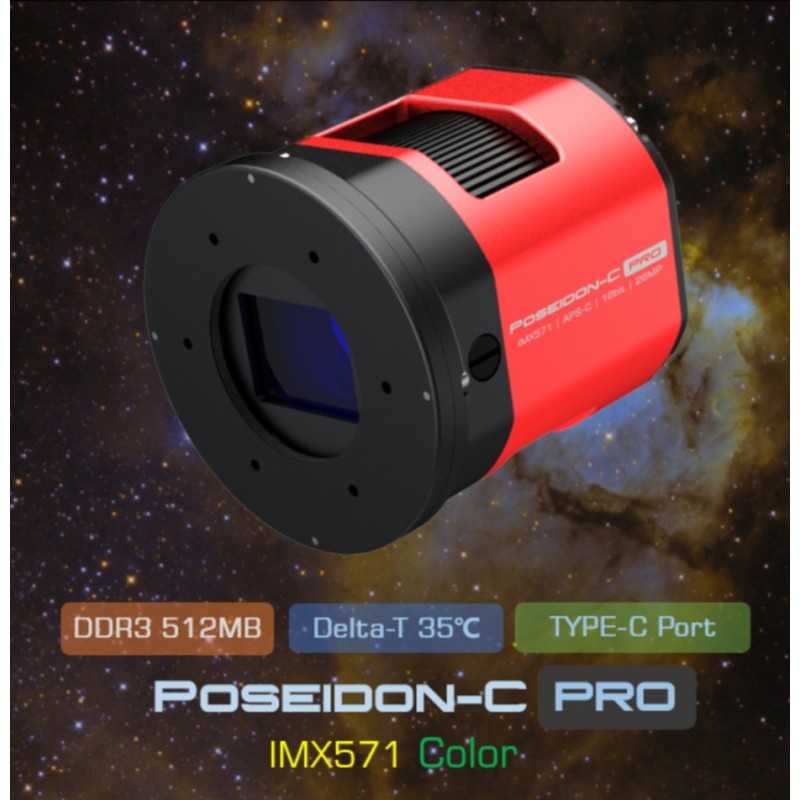






A cooled colour camera for deep-sky astrophotography, the Poseidon-C Pro combines a 26 MP Sony IMX571 APS-C sensor, 3.76 µm pixels and native 16-bit conversion. Features include two-stage TEC cooling, a 512 MB DDR3 buffer and four-point sensor tilt adjustment accessible from the rear.
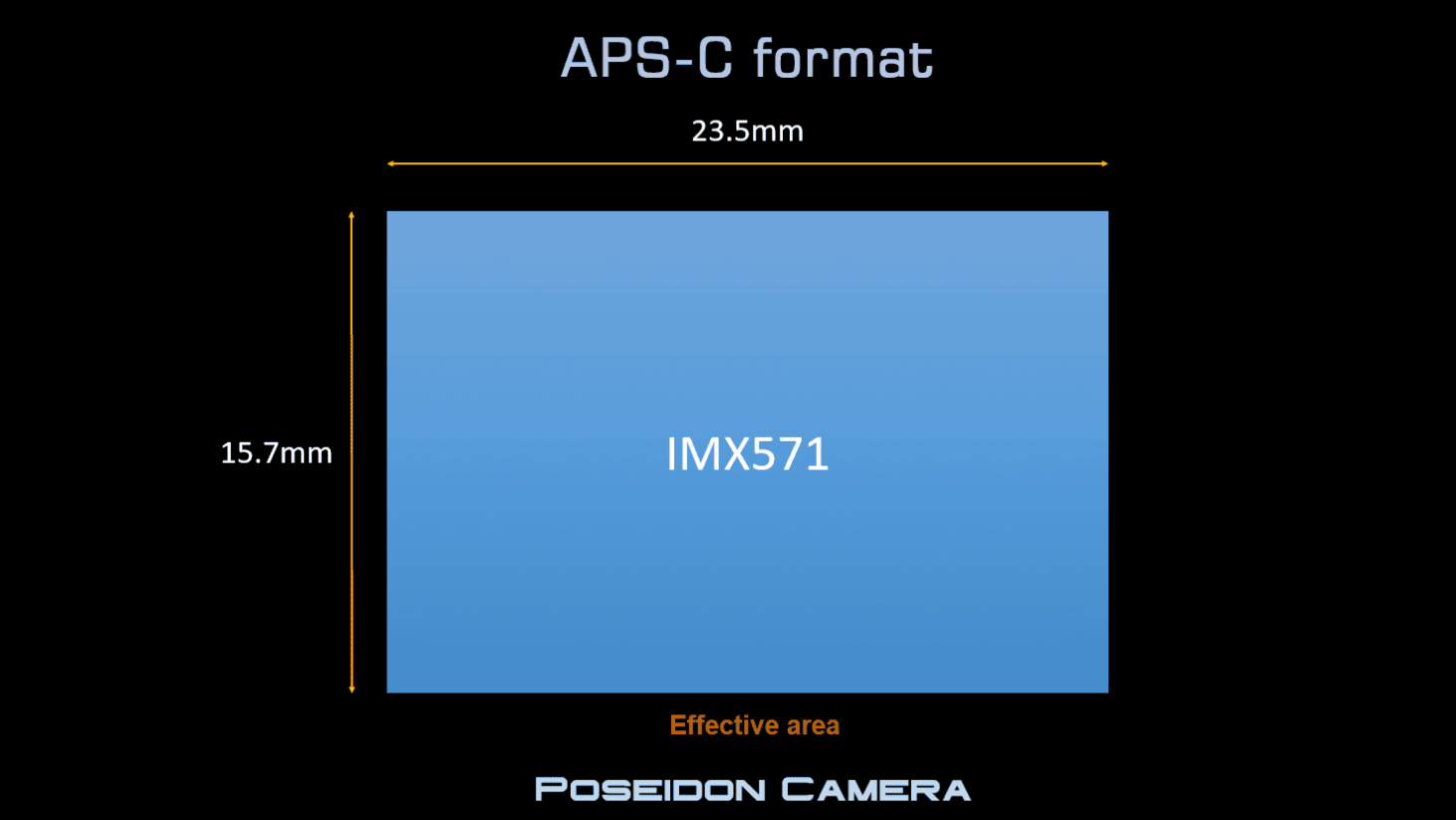
Designed by Player One Astronomy for advanced deep-sky astrophotography, the Poseidon-C Pro features a Sony IMX571 APS-C colour sensor. Its 23.5 × 15.7 mm imaging area and 28.3 mm diagonal provide a large capture format.
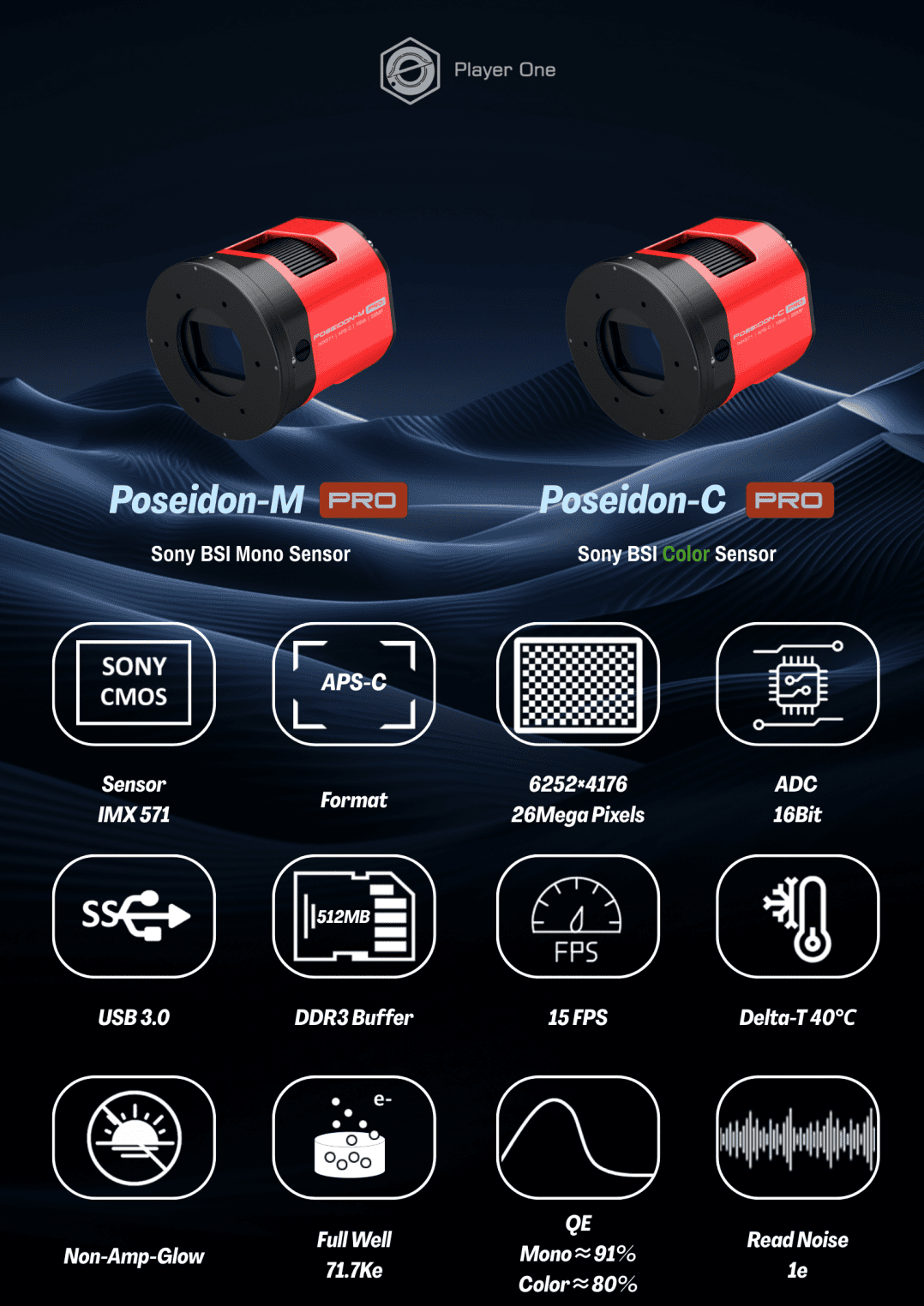
With a resolution of 6252 × 4176 pixels, approximately 26 megapixels, and 3.76 µm pixels, it combines a maximum full-well capacity of 71.7 ke⁻ with native 16-bit analogue-to-digital conversion.
Sony STARVIS technology provides the CMOS sensor with a back-illuminated pixel architecture.
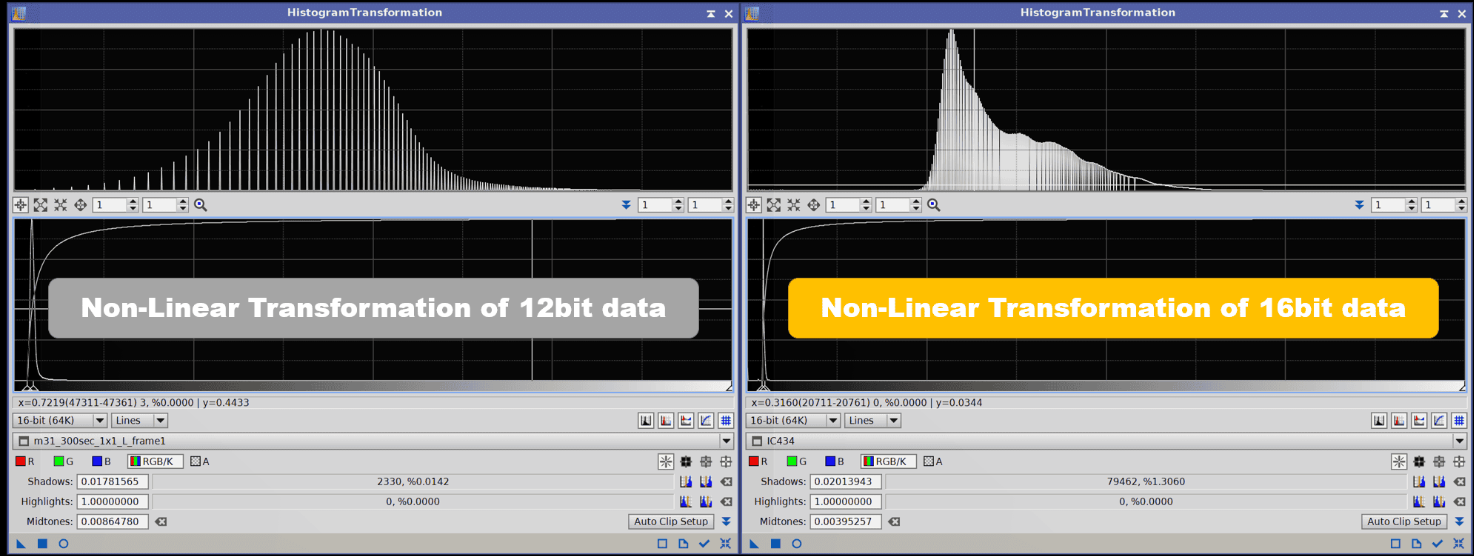
The integrated analogue-to-digital converter distinguishes 65,536 levels, compared with 16,384 at 14 bits and 4096 at 12 bits. This finer digitisation helps preserve tonal detail and smooth transitions between dark and bright areas during nonlinear image processing.
Two modes allow the camera’s operation to be adapted to different imaging requirements:
• Normal mode: a higher frame rate suited to planetary imaging.
• Low Noise mode (LRN): lower readout noise and a wider dynamic range suited to deep-sky imaging.
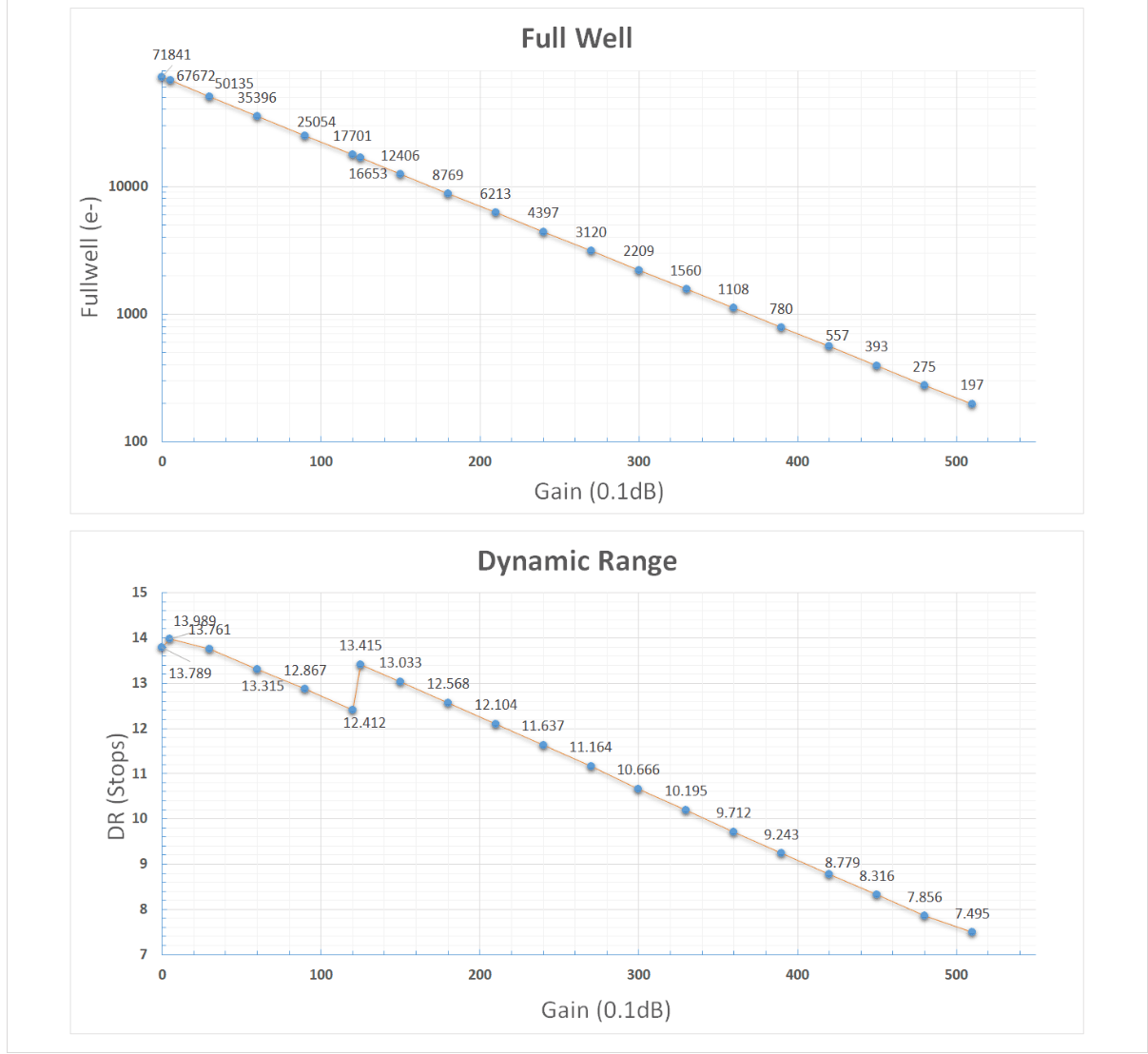
At gain 0, the stated performance is:
• Dynamic range: 14.26 stops.
• Full-well capacity: 71.7 ke⁻.
• Readout noise: 3.96 e⁻.
HCG mode activates at gain 125:
• Dynamic range: 13.58 stops.
• Full-well capacity: 16.6 ke⁻.
• Readout noise: 1.36 e⁻.
Player One states that its readout noise figures come from actual measurements. Users can also perform their own checks with the Sensor Analysis function in SharpCap 4.
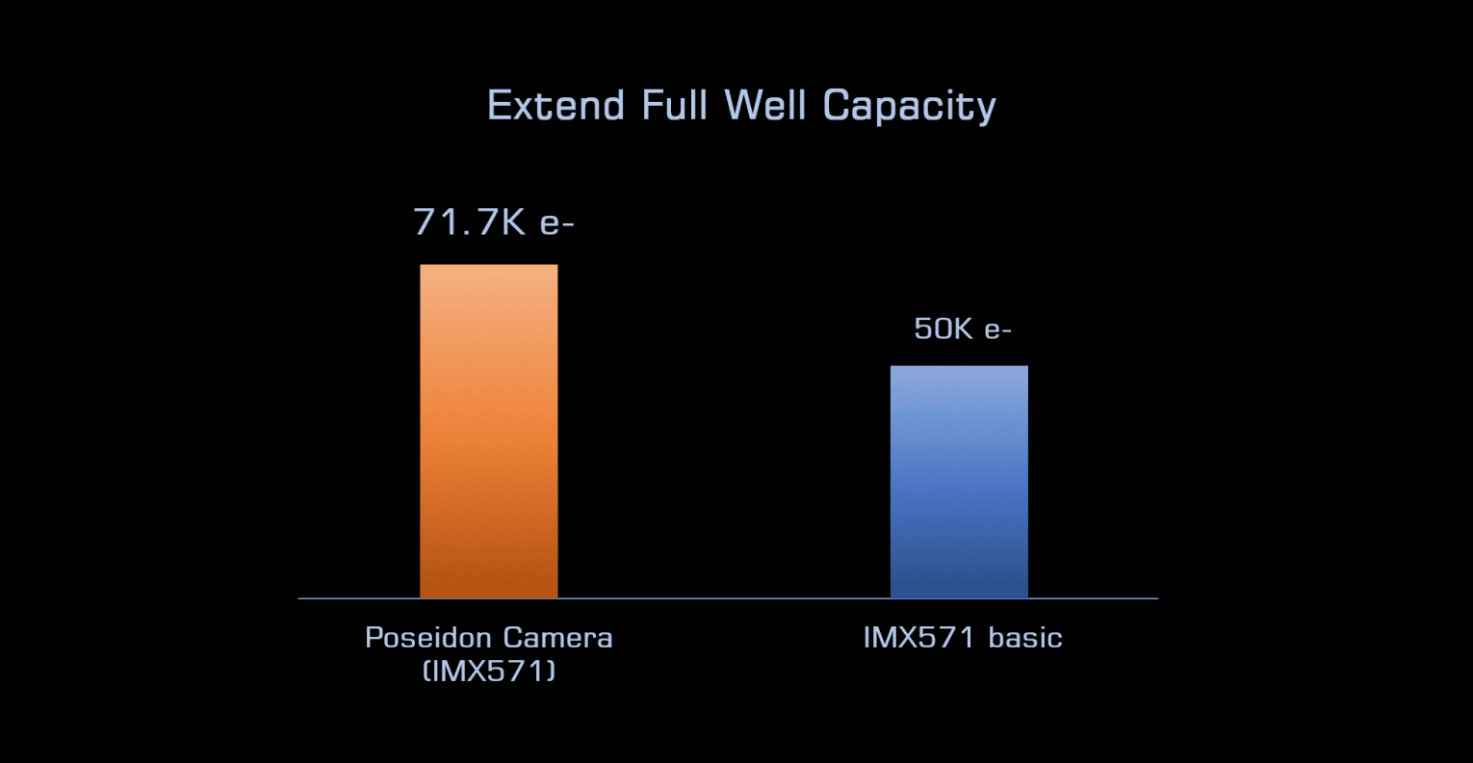
At 71.7 ke⁻, the maximum full-well capacity is more than 40% higher than the 50 ke⁻ figure quoted by Player One for the basic IMX571 version.
The Poseidon-C Pro is free from amplifier glow, or Amp Glow, avoiding this source of unwanted brightness in long-exposure images.
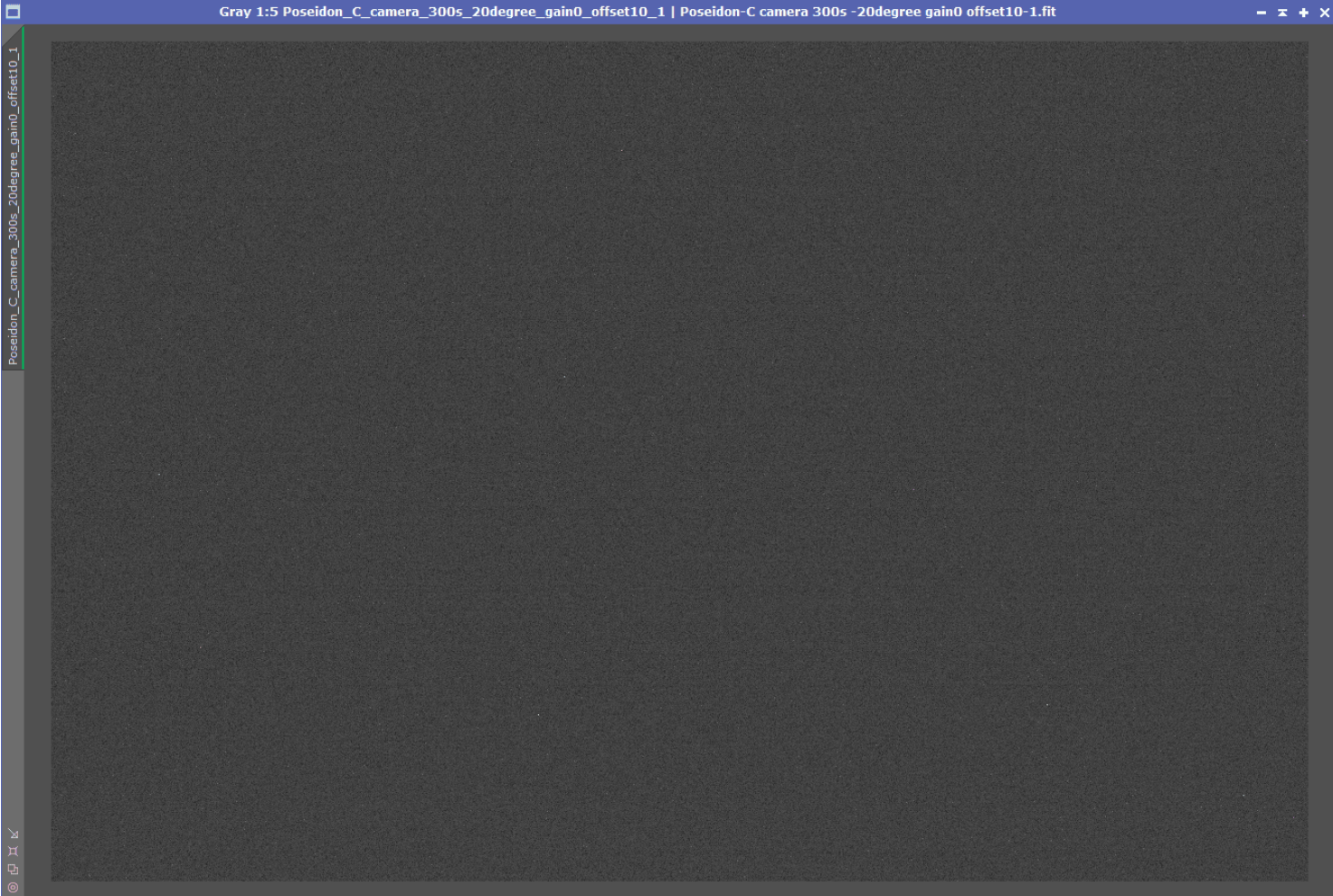
The manufacturer’s demonstration dark frame was captured with the following settings:
• Exposure time: 300 seconds.
• Gain: 0.
• Offset: 10.
• Temperature: −20 °C.
• Display: automatic STF stretching in PixInsight 1.86.
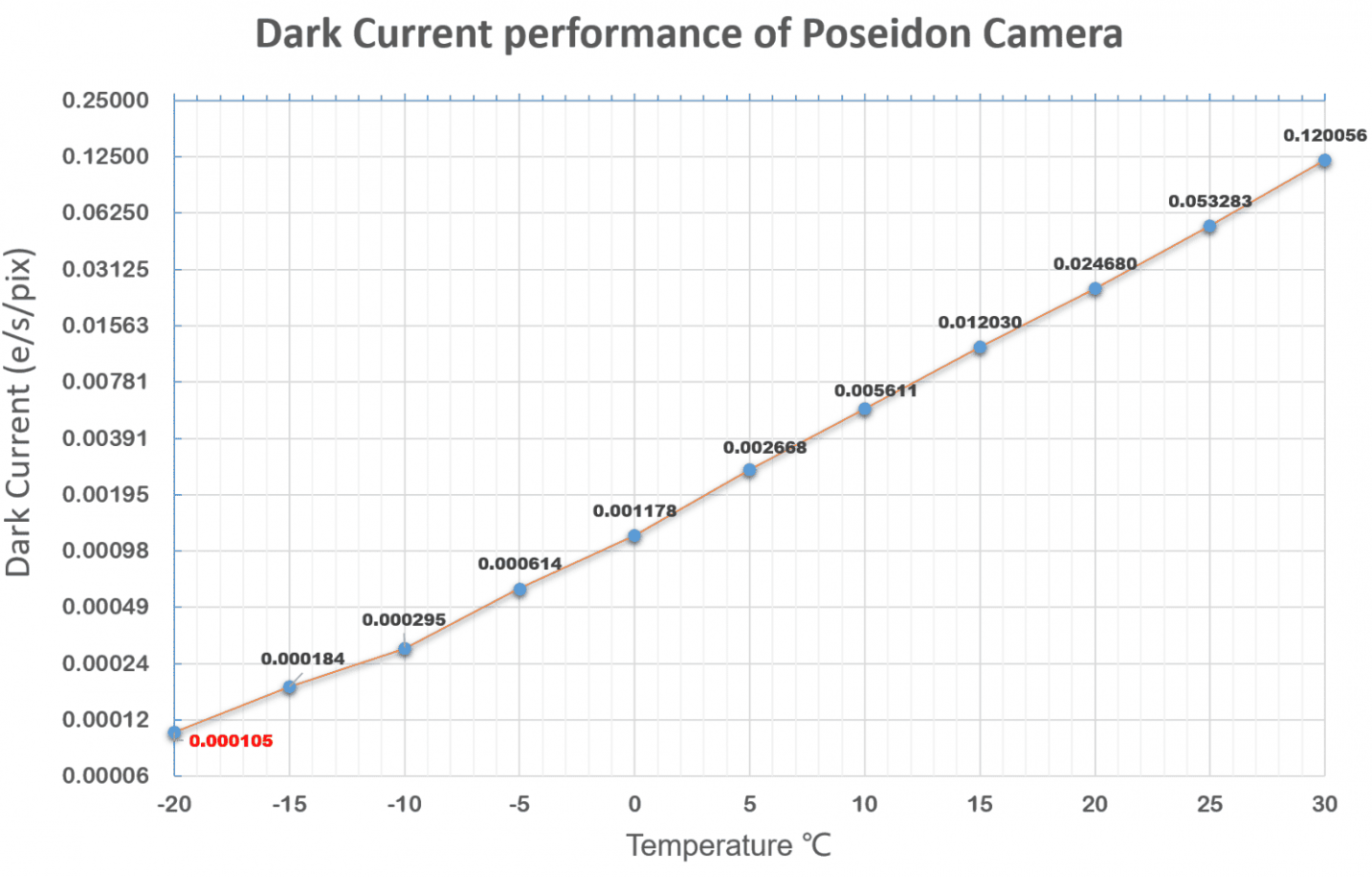
Player One specifies the following dark current values:
• At −20 °C: 0.000105 e⁻/s/pixel.
• At 0 °C: 0.001178 e⁻/s/pixel.
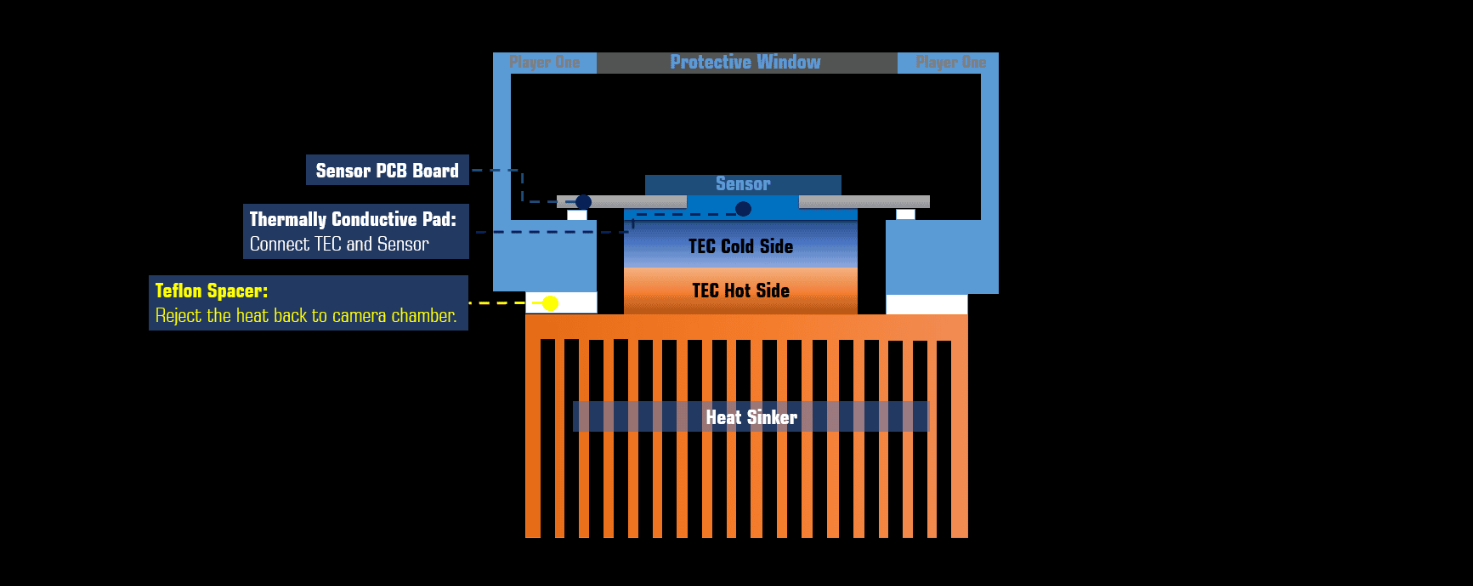
The camera features a two-stage thermoelectric cooling system and a design intended to limit heat flowing back towards the sensor chamber.
Player One specifies a standard temperature difference of 40 °C, with a tolerance of ±2 °C, under the following conditions:
• Ambient temperature: 30 °C.
• Fan speed: 100%.
• Anti-dew heater power: 10%.
For routine use, the manufacturer recommends:
• Target temperature: 35 °C below ambient.
• Fan speed: 70%.
• Anti-dew heater power: 10%.
• Stated power usage under these conditions: 40–60%.
Three parameters can be adjusted through the ASCOM interface:
• Target temperature.
• Fan speed.
• Anti-dew heater power.
The default fan speed is 70%. An integrated heater at the front of the camera helps prevent dew formation, with adjustable power to suit operating conditions.
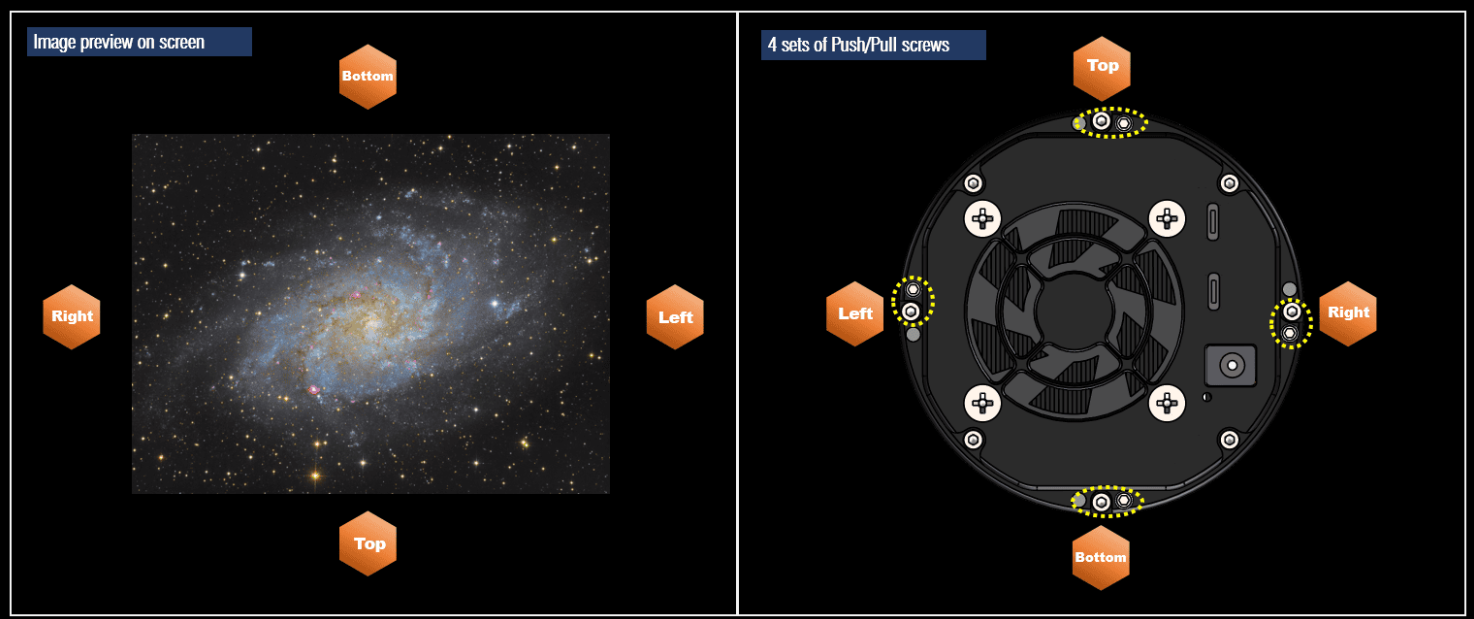
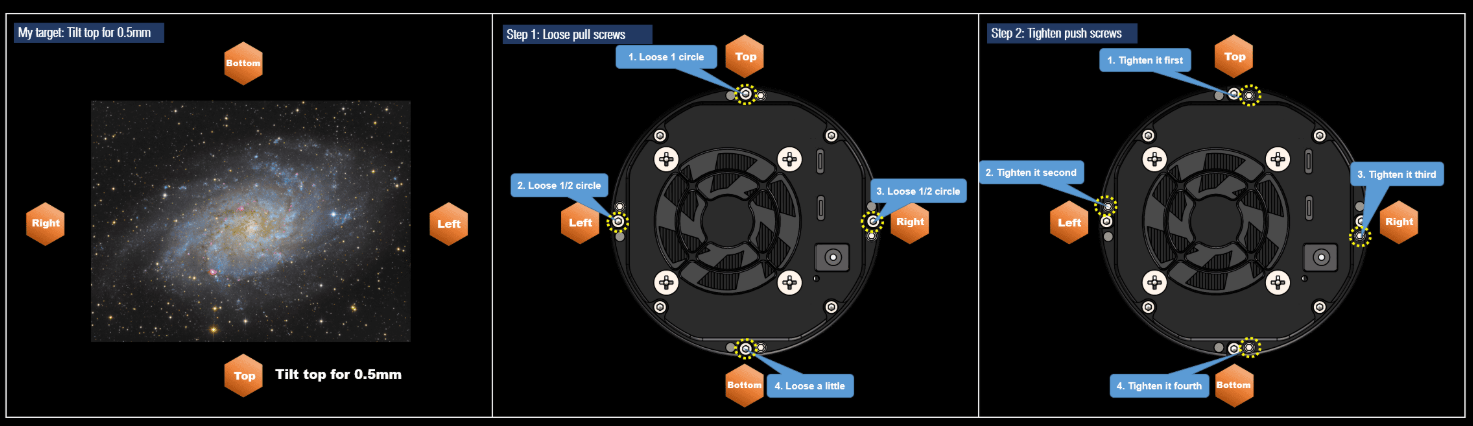
A tilt plate with four adjustment points accessible from the rear allows the sensor’s alignment relative to the optical axis to be corrected. This arrangement makes it easier to identify and adjust the affected image corner.
An integrated high-density foam light seal prevents light from entering through the side gaps.
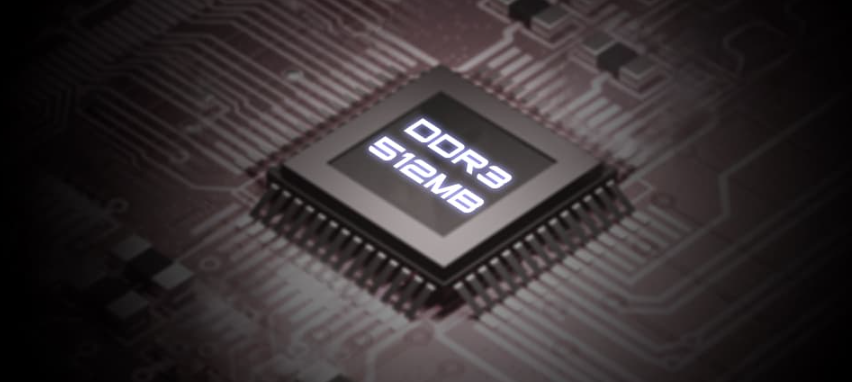
A 512 MB DDR3 buffer helps stabilise data transfers and limit dropped frames. It reduces data-transfer demands, including when using a USB 2.0 connection.
Two rear USB-C data ports sit alongside the power connector. The USB-C format makes connections easier when setting up imaging equipment at night.
The main port supports USB 3.0, allowing the camera to reach 15 frames per second in RAW8 mode.
Actual recording speed also depends on storage performance. Player One recommends a quality SSD to make full use of the camera’s capabilities.
A 12 V DC input with a 5.5 × 2.1 mm connector supplies the power required for TEC cooling.
When cooling is not needed, connecting the main USB-C port is sufficient to operate the camera in uncooled mode.
Overvoltage and overcurrent protection mechanisms help protect the camera and connected equipment.
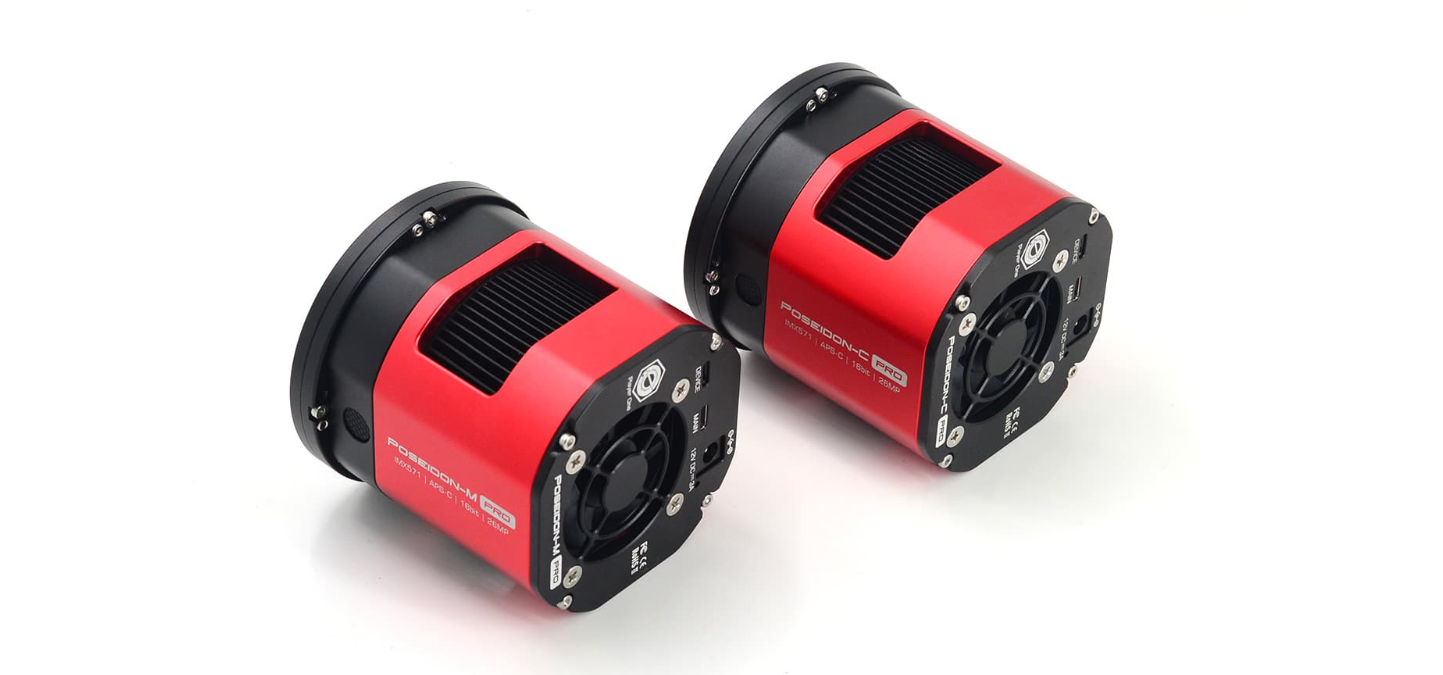
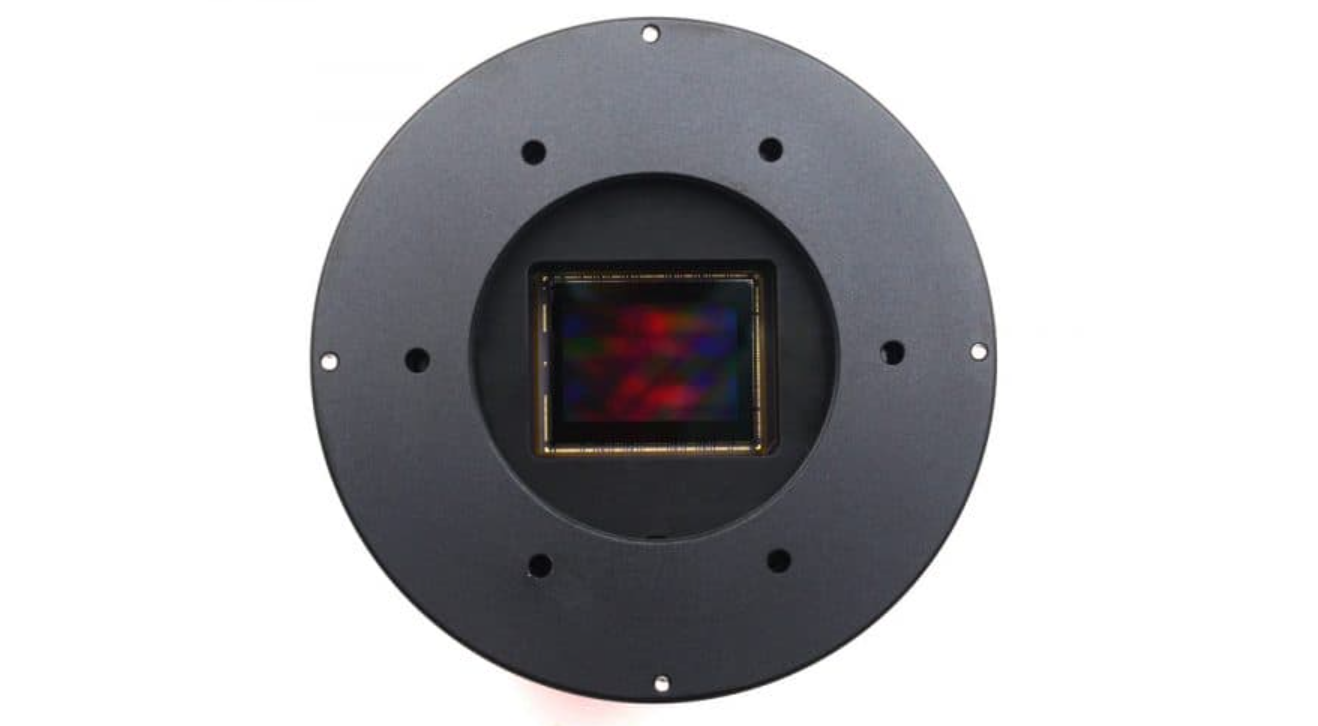
An octagonal body with four curved sides and rounded edges combines a robust structure with softer lines. The red sandblasted finish and black detailing reflect Player One’s visual identity.
The front section is circular, a shape chosen by the manufacturer to avoid diffraction effects associated with a polygonal outline on RASA telescopes.
• Manufacturer: Player One Astronomy.
• Model: Poseidon-C Pro.
• Type: cooled colour astronomy camera.
• Sensor: Sony IMX571 back-illuminated CMOS.
• Technology: Sony STARVIS.
• Format: APS-C.
• Sensor dimensions: 23.5 × 15.7 mm.
• Sensor diagonal: 28.3 mm.
• Resolution: 6252 × 4176 pixels, approximately 26 MP.
• Pixel size: 3.76 µm.
• Analogue-to-digital converter: native 16-bit.
• Conversion levels: 65,536.
• Sampling modes: Normal and Low Noise (LRN).
• Maximum full-well capacity: 71.7 ke⁻.
• Dynamic range at gain 0: 14.26 stops.
• Readout noise at gain 0: 3.96 e⁻.
• HCG activation: gain 125.
• Full-well capacity at gain 125: 16.6 ke⁻.
• Dynamic range at gain 125: 13.58 stops.
• Readout noise at gain 125: 1.36 e⁻.
• Dark current at −20 °C: 0.000105 e⁻/s/pixel.
• Dark current at 0 °C: 0.001178 e⁻/s/pixel.
• Amplifier glow: none.
• Stated RAW8 frame rate: 15 frames per second.
• Buffer memory: 512 MB DDR3.
• Cooling: two-stage TEC.
• Stated standard Delta-T: 40 °C ±2 °C under the conditions described above.
• Recommended Delta-T: 35 °C below ambient.
• Anti-dew heater: integrated, adjustable power.
• Cooling fan: adjustable speed, 70% by default.
• Adjustable ASCOM parameters: target temperature, fan speed and anti-dew heater power.
• Sensor tilt adjustment: four points accessible from the rear.
• Tilt plate light seal: high-density foam.
• Data ports: two USB-C ports.
• Main port protocol: USB 3.0.
• USB 2.0 connection: supported.
• Cooling power supply: 12 V DC.
• Power connector: 5.5 × 2.1 mm.
• Uncooled operation: powered through the main USB-C port.
• Electrical protection: overvoltage and overcurrent.
• Manufacturer’s recommended storage: a quality SSD.
• Body shape: octagonal, with four curved sides.
• Front section: circular.
• Exterior finish: sandblasted.
• Colours: red and black.
Polygon like regular hexagon is very Player One, the DSO cooled cameras we want to make it more beautiful and practical. After a lot of trying, we fix the final style, which uses a scientific and technological octagon to construct the main body line and 4 sides are cambered surface, supplemented by round chamfers to achieve both rigidity and flexibility. The front piece is round to avoid diffraction on RASA.The camera body is a vibrant red, accentuated with classic black trim.The sandblasted coating on the outer surface makes the camera look luxurious and cool, while inside this is a solid scientific instrument.
Rear Adjustment 4 Point Sensor Tilt Plate
When taking deepsky objects, using sensor tilt plate can get a much smaller field curvature of the telescope. We adopts rear Adjustment and 4 point tilt plate, it has a lot advantages in usage.
4 Point adjustment is easier to know which corner is needed to adjust. The built-in high-density sponge shading pad can block the light from the side slits without any side leakage.
For understand 4 point adjustment method, we made a example for users:
Player One cooled camera series use 2 Stage TEC Cooling unit, after improved the structure design to reject the heat back to camera chamber, Camera Delta-T can reach over 40℃.
As an improvement, DDR3 cache in cooled cameras are increased to 512MB. It helps stabilize and secure data transmission, it effectively avoids frame dropping and greatly reduces readout noise.
With the DDR3 cache, the camera does not have high demands on computing needs any longer, it will still has excellent performance even if it is connected to a USB 2.0 port.
Poseidon-C Pro (IMX571) cooled camera based on Sony STARVIS technology, it is back-illuminated pixel technology used in CMOS image sensors.
Poseidon-C Pro cooled camera has APS-C format (23.5mm*15.7mm), this size is quite big for DSO imaging.
Poseidon-C Pro cooled camera has APS-C format (23.5mm*15.7mm), this size is quite big for DSO imaging.
IMX571 sensor has native 16-bit on-chip ADC. Native 16bit ADC (65536 levels) provide higher sample resolution than 12bit (4096 levels) or 14bit (16384 levels). When we do non-linear transformation, 16bit data can endure very strong transform and also could bring much better light and dark transition, furthermore 16bit can make the color more vivid.
Poseidon-C Pro cooled camera is a Non-Amp-Glow camera too!
300s, gain=0, offset=10, dark frame at -20℃ of Poseidon-C Pro cooled camera: DOWNLOAD
Preview of Dark frame: Exposure=300s, gain=0, offset=10, temp=-20℃ STF auto-Stretch in Pixinsight 1.86
Non-Amp-Glow can give us very clean background, much easier to get high quaility images.
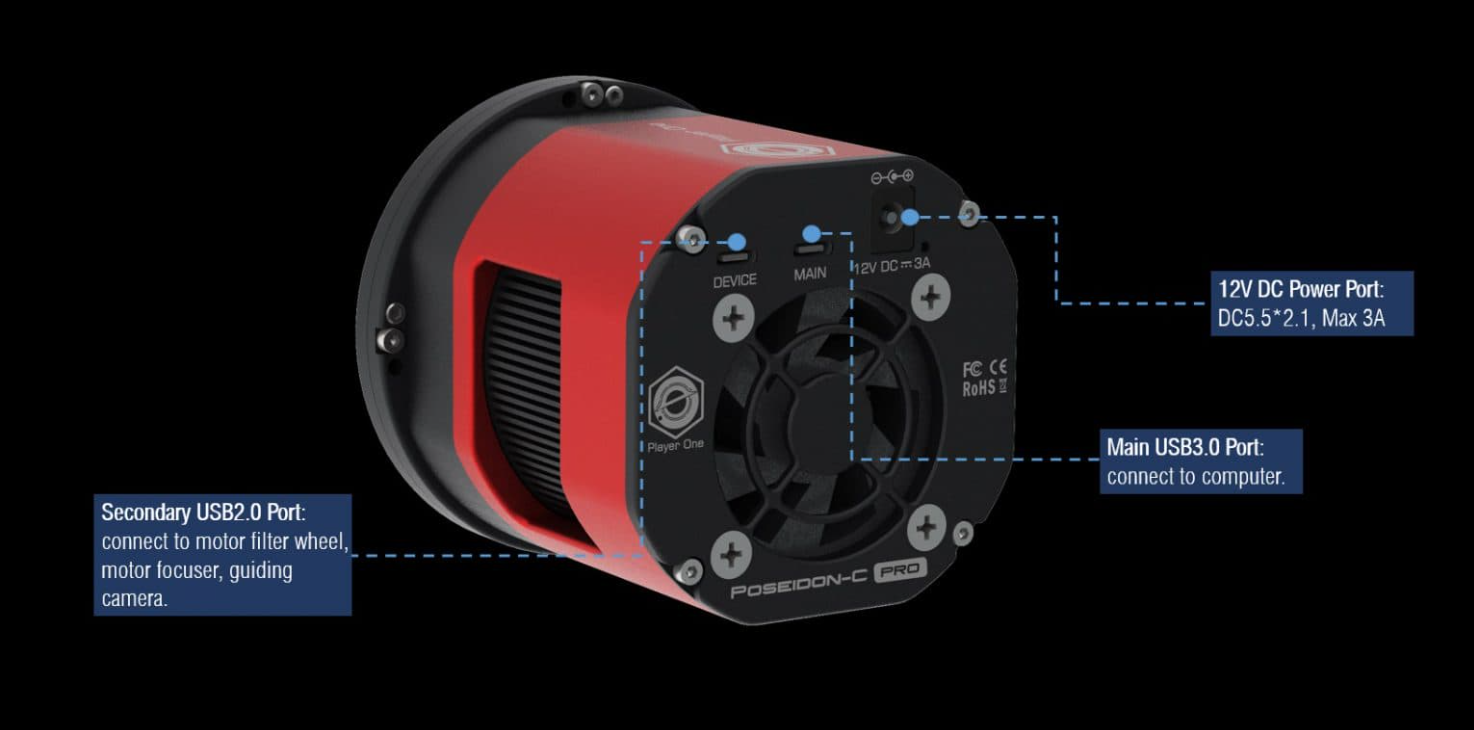
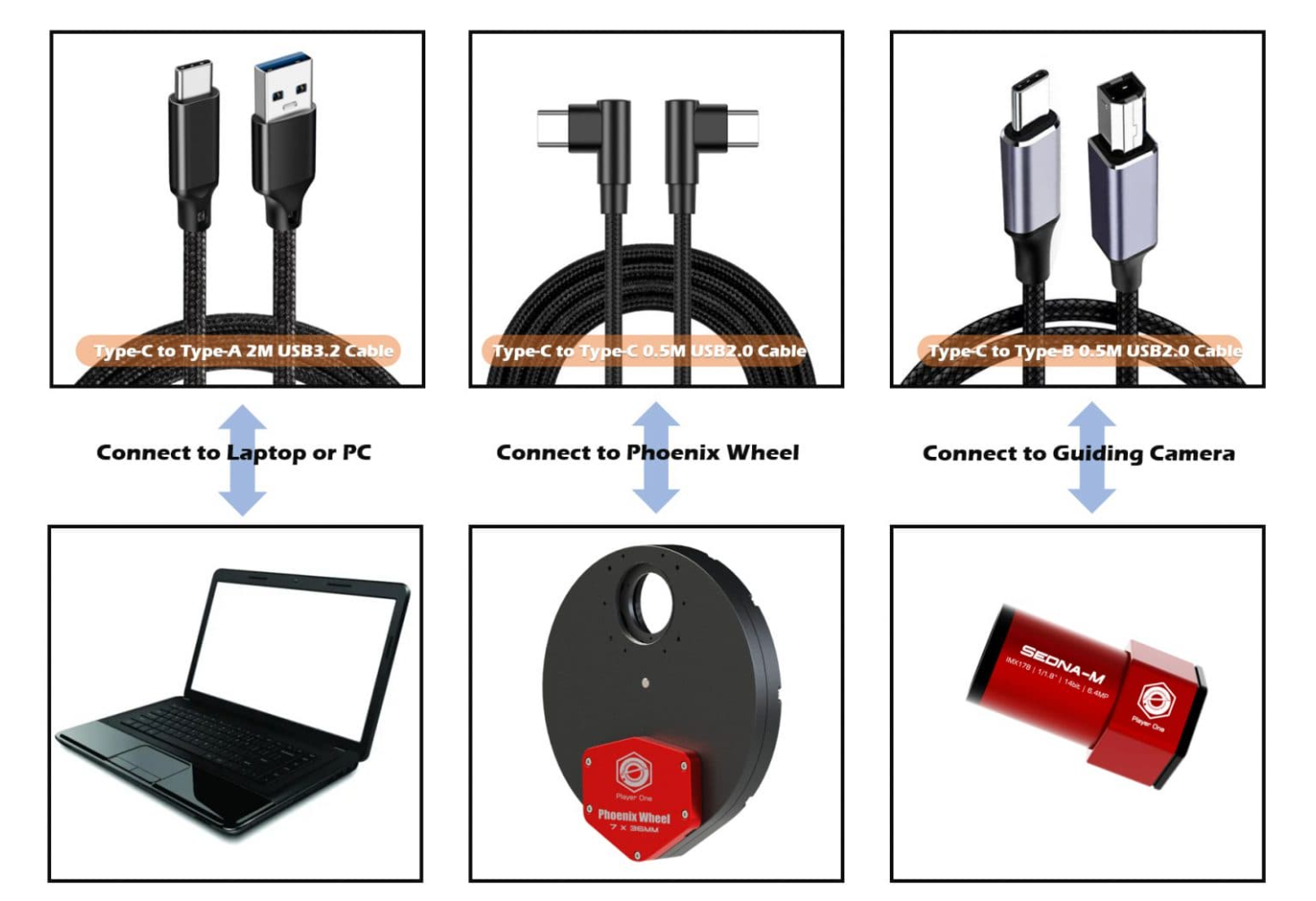
Back piece of cooled camera has 2 Type-C data port and 12V DC 5.5×2.1mm power port.
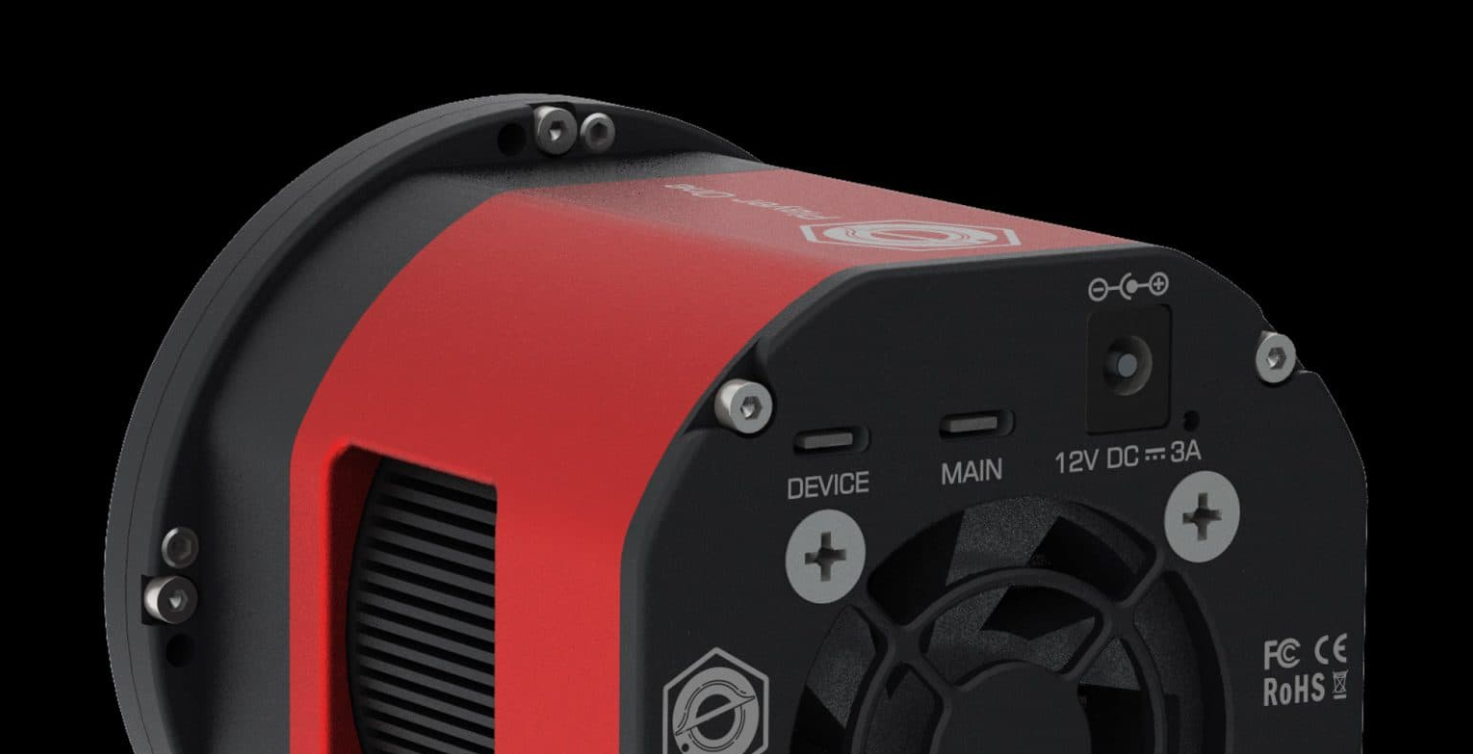
Main data port support USB3.0 protocol, the camera can run 15fps under RAW8 mode. Type-C port is easier to plug in when assemble the imaging equipment in night.
When recording images, since the actual writing speed will be affected by the writing speed of the hard disk itself, when the hard disk writing speed is slow, the recording may not reach the theoretical speed. It is recommended that you use a high-quality solid state drive to record data to give full play to the performance of the camera.
The camera has 12V DC5.5*2.1mm port to provide enough power to TEC cooling system. If you don’t need to power up cooling, only need to connect the main Type-C port, the camera will works as a uncooled camera.
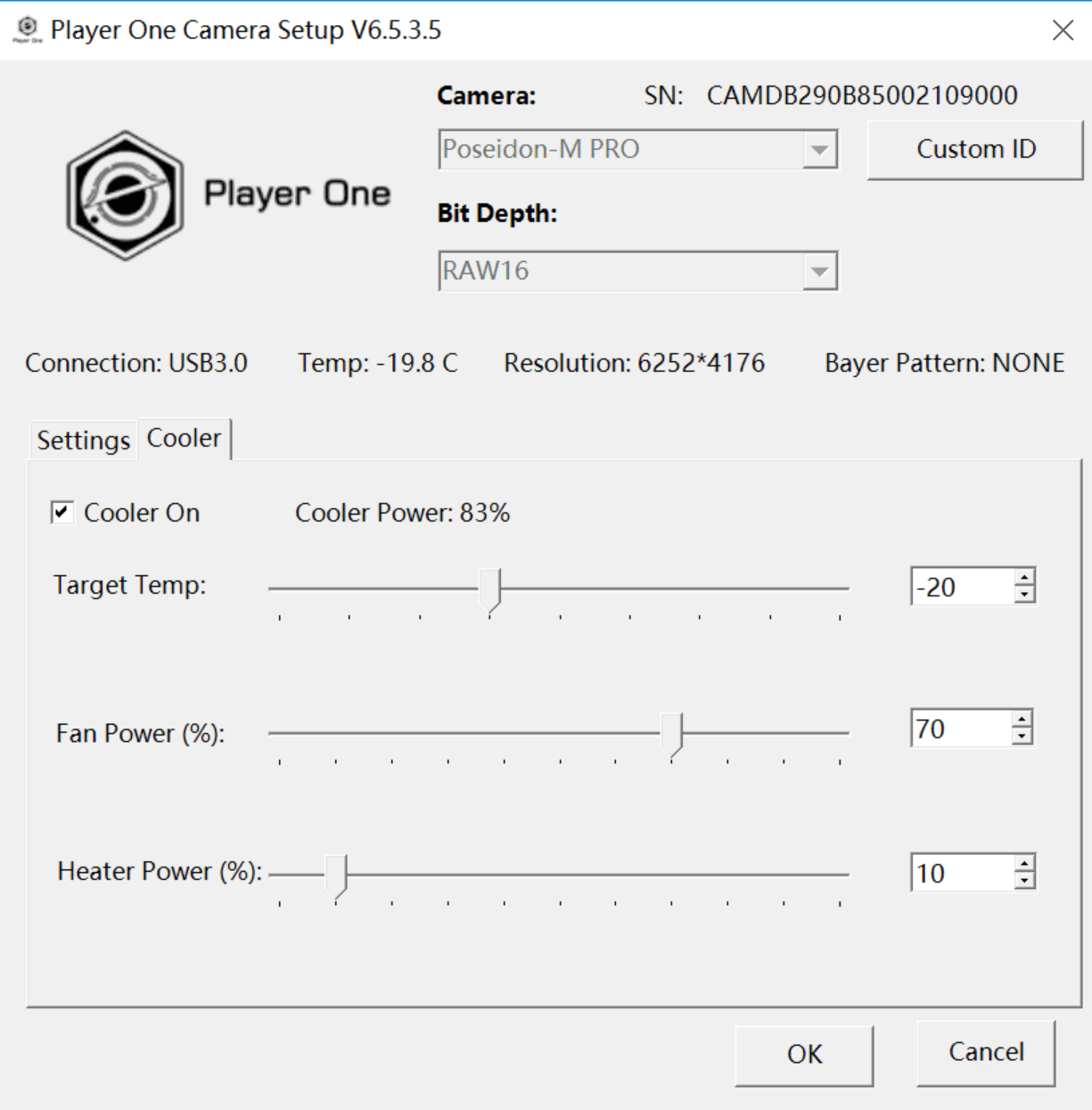
In ASCOM window, we provide 3 adjustable parameters: Target temperature, Fan Speed and Anti-Dew power.
Standard Delta-T: 40℃ (±2℃) , when ambient temp 30℃, fan speed 100%, dew heater 10%.
Recommend Delta-T settings: 35℃ below ambient, fan speed 70%, dew heater 10%, power consumption 40- 60%.
The rotation speed of cooling fan is also adjustable, the default value is 70% speed.
Dew problem is the biggest enemy in astro imaging, the camera integrated anti-dew heater in front of the camera. The heat power is adjustable.
Player One cameras produced by us ensures the safety of your camera and other equipment through overvoltage and overcurrent protection mechanisms.
Poseidon series has dual sampling mode. Normal mode and Low Noise mode, they has different advantages in imaging.
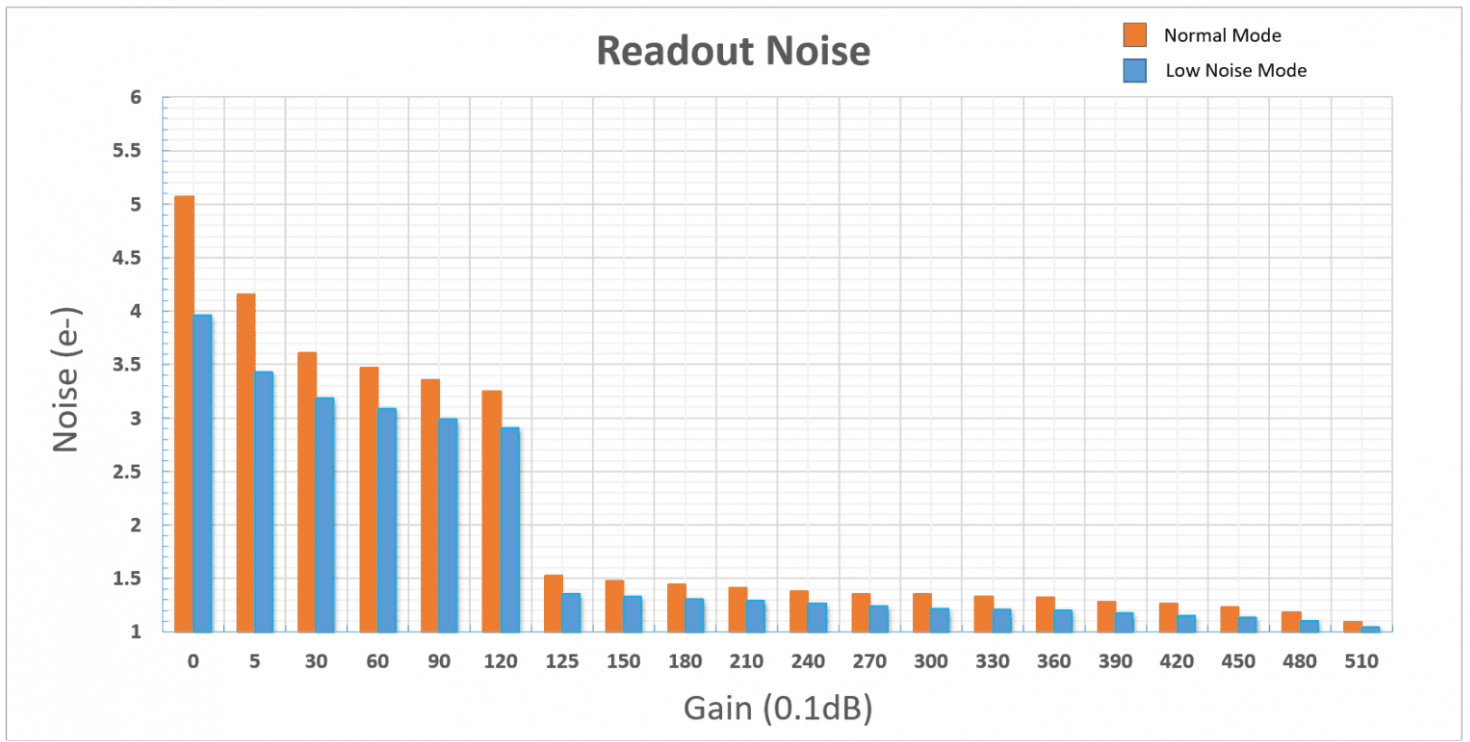
1. Normal mode has faster FPS, it is more suitable for planetary imaging.
2. Low Noise mode (LRN) mode has lower readout noise and higher dynamic range. it is more suitable for DSO imaging.
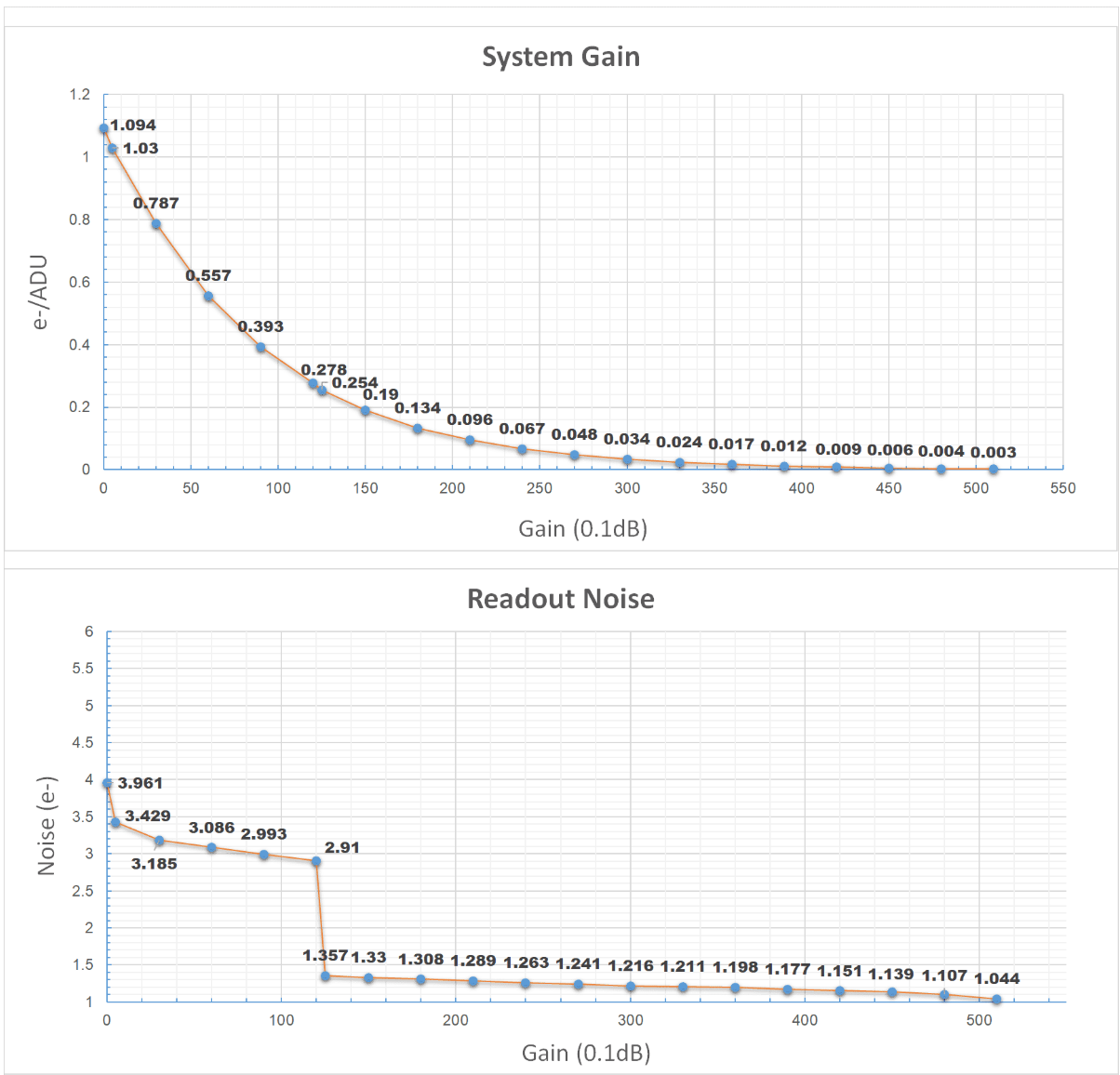
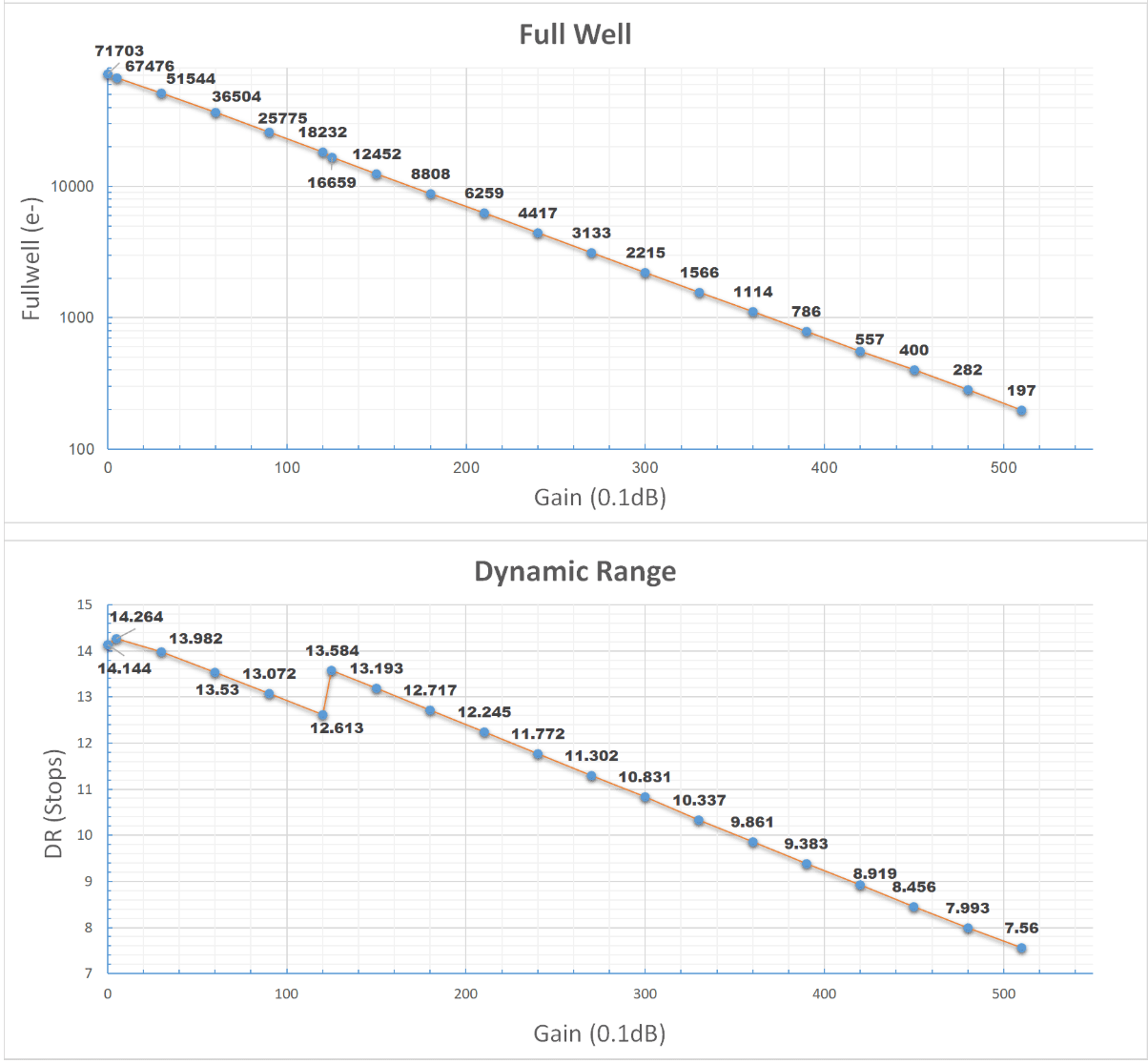
At gain=0, the camera has 14.26 stops dynamic range and 71.7Ke full well capacity, readout noise is 3.96e.
HCG open at gain=125, the camera has 13.58 stops dynamic range and 16.6Ke full well, readout noise drop to only 1.36e.
Low Noise mode
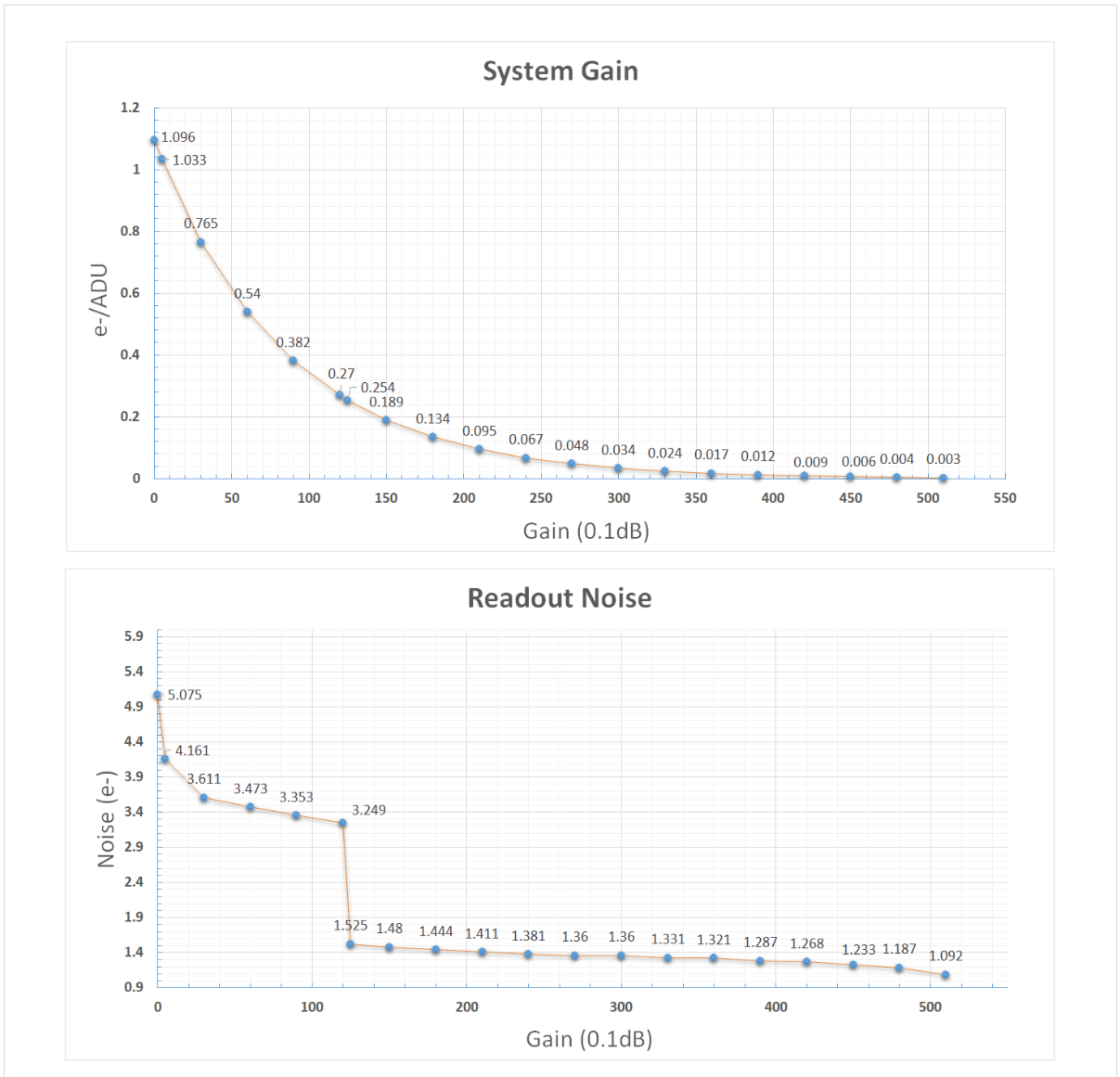
Normal Mode
Poseidon-C Pro cooled camera can run 15FPS under RAW8 mode, that’s much faster than existing models on market.
Poseidon-C Pro cooled camera has 71.7Ke full well, it’s over 1.4 times than IMX571 Basic (50ke).
Regarding readout noise, we promise that all values are obtained from actual tests. And for users, you could use Sharpcap 4 for testing. SC4 has a function called Sensor Analysis, provide a very simple way to test readout noise.
If you are interested in readout noise testing, you may try it yourself, which is very simple.
The dark current is only 0.000105 e/s/pix at -20℃, and 0.001178e/s/pix at 0℃. In entire curve, dark current is almost like a straght a line, which can prove that Poseidon camera has very good quality.
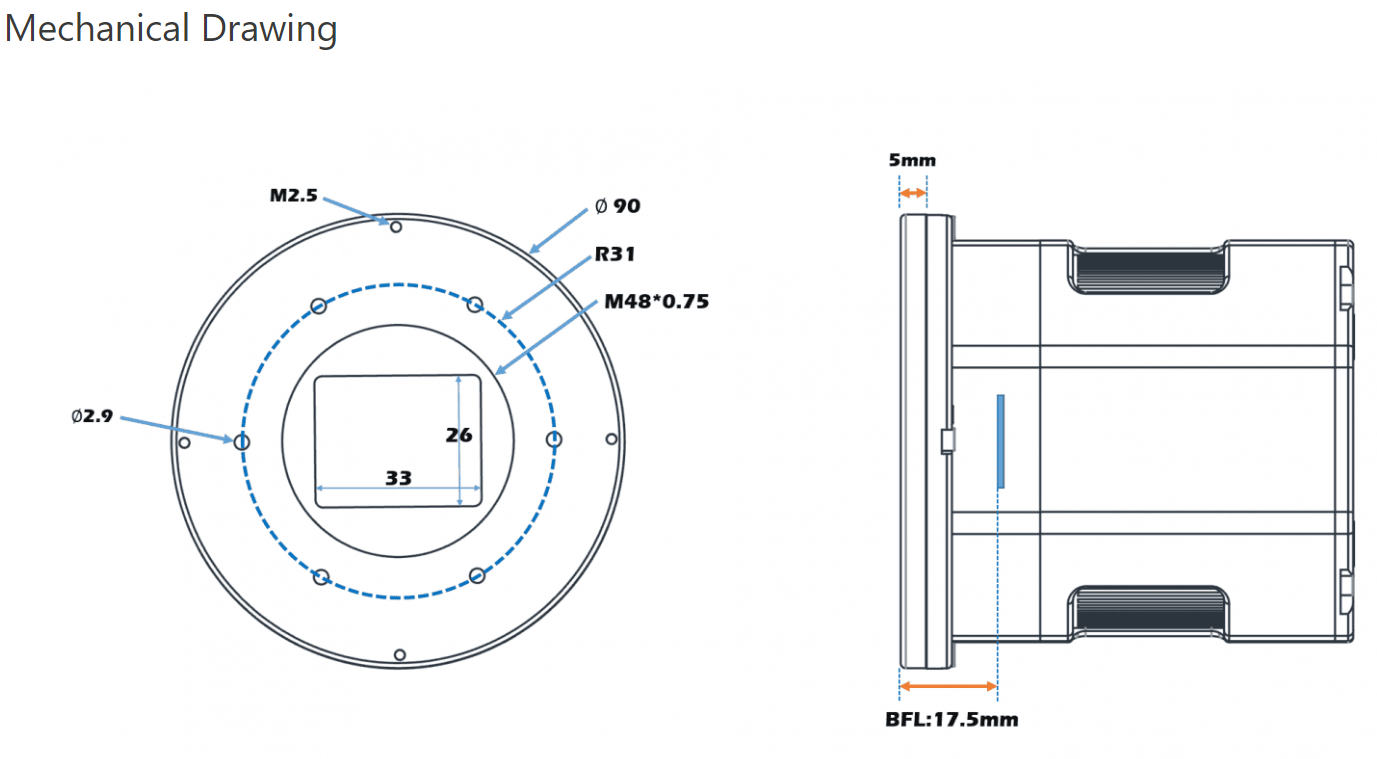
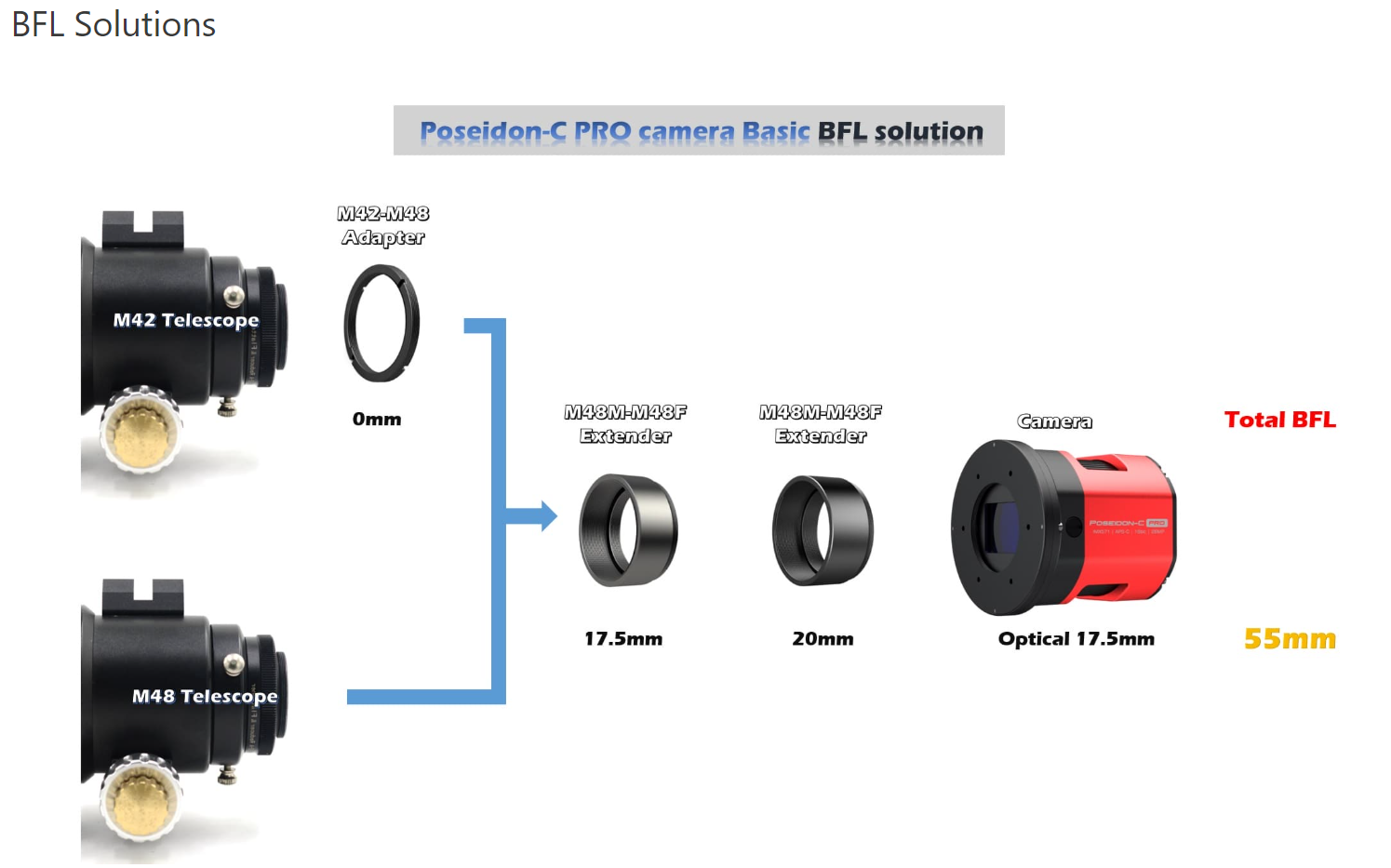
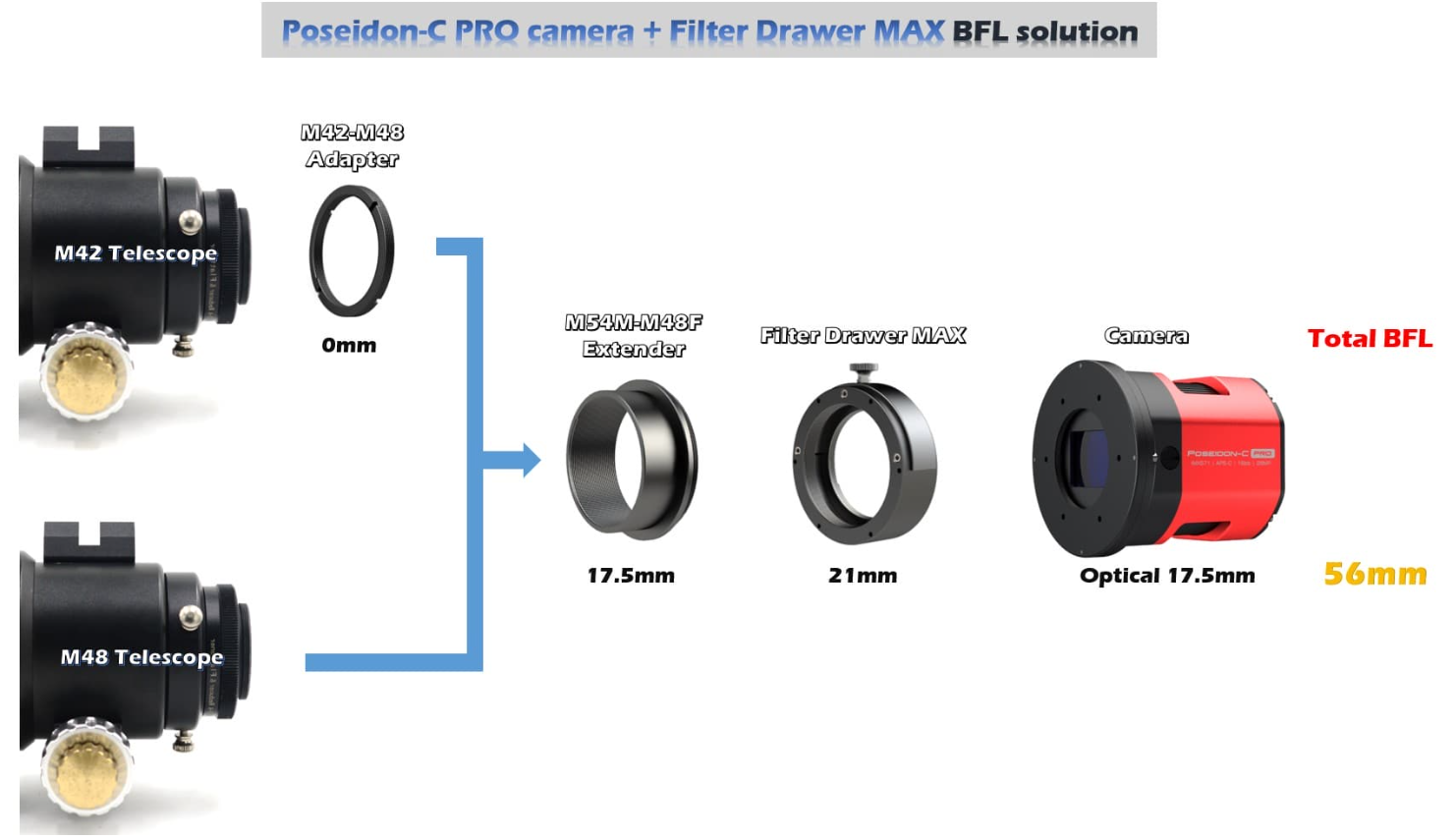
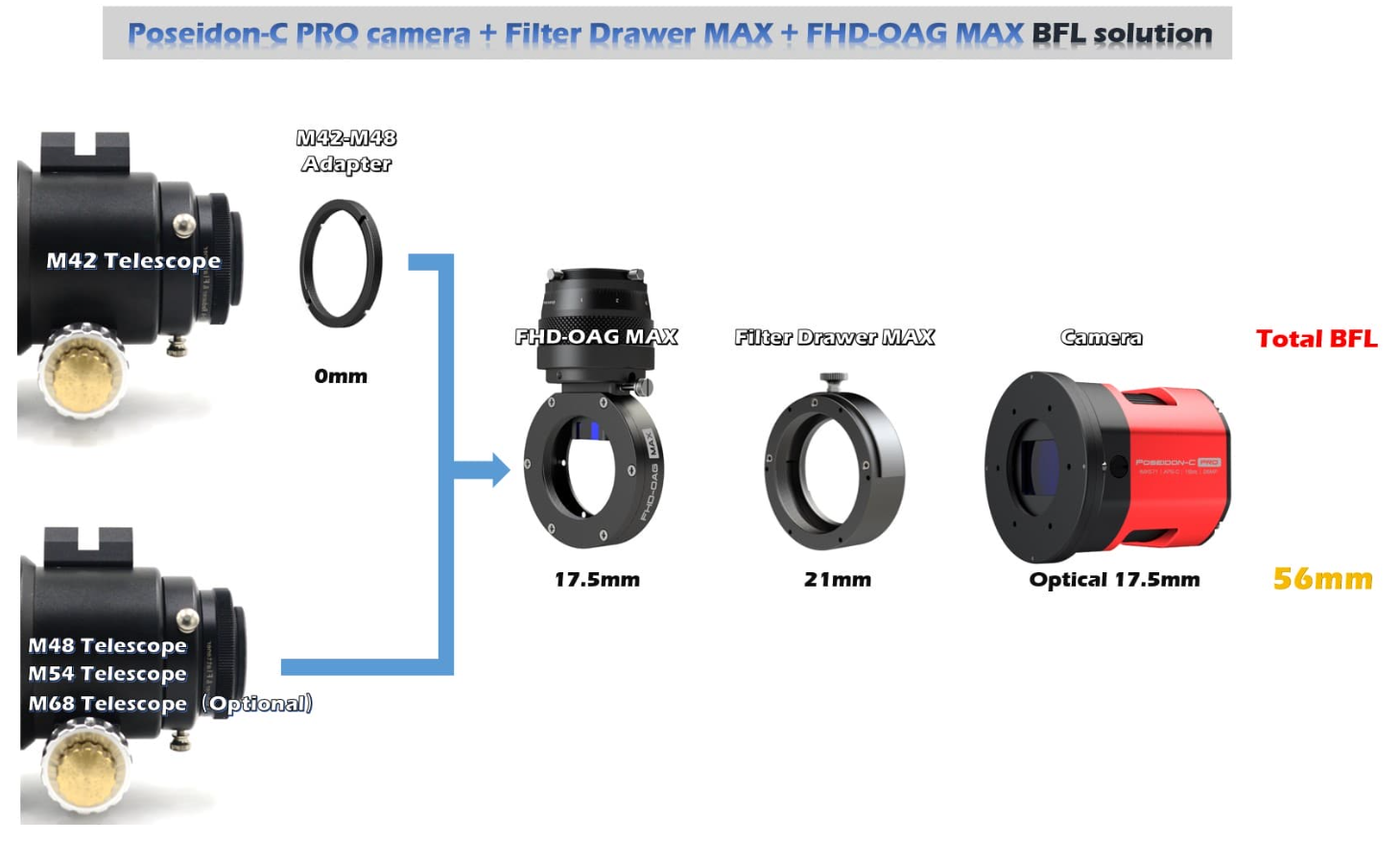
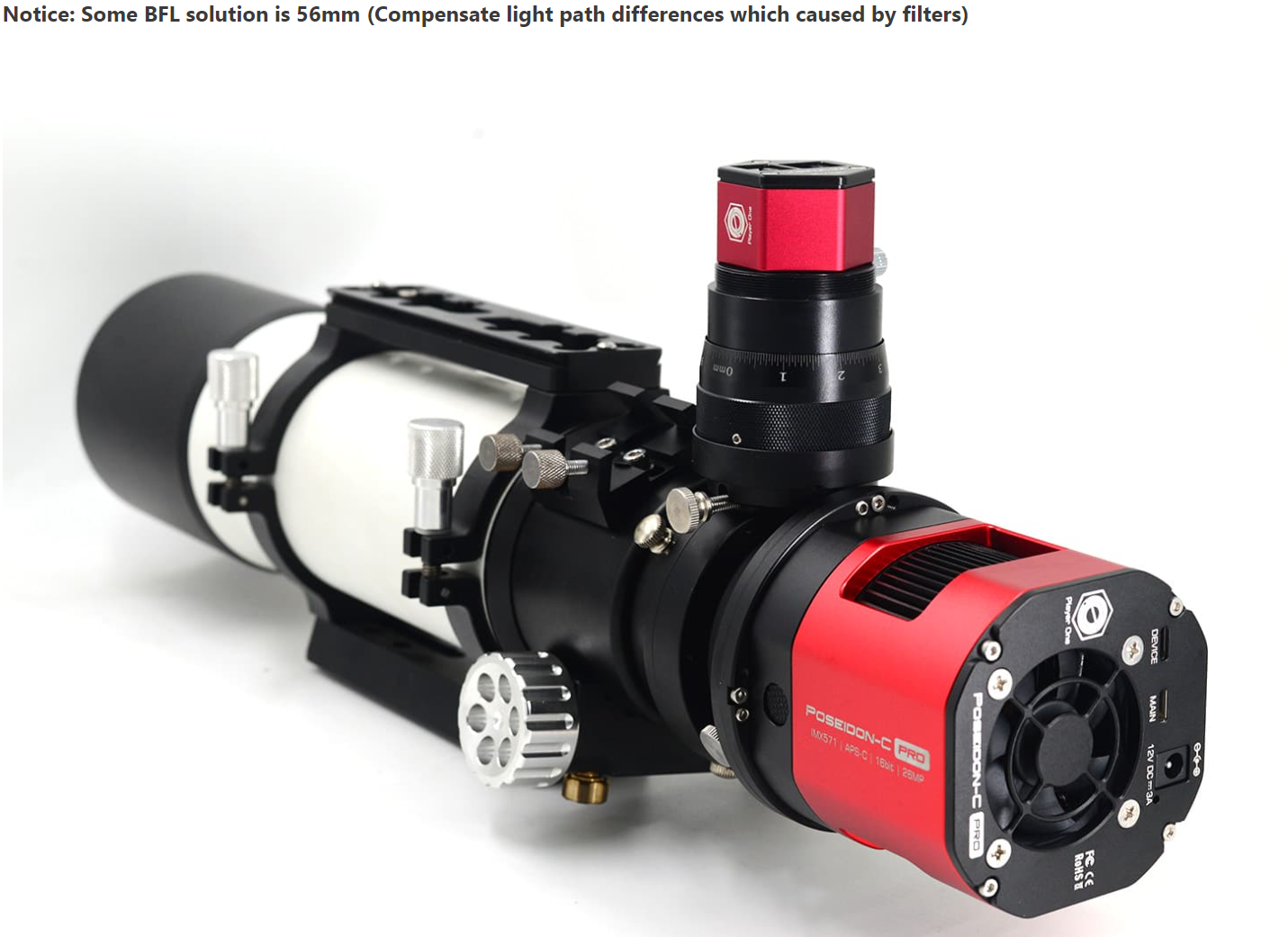
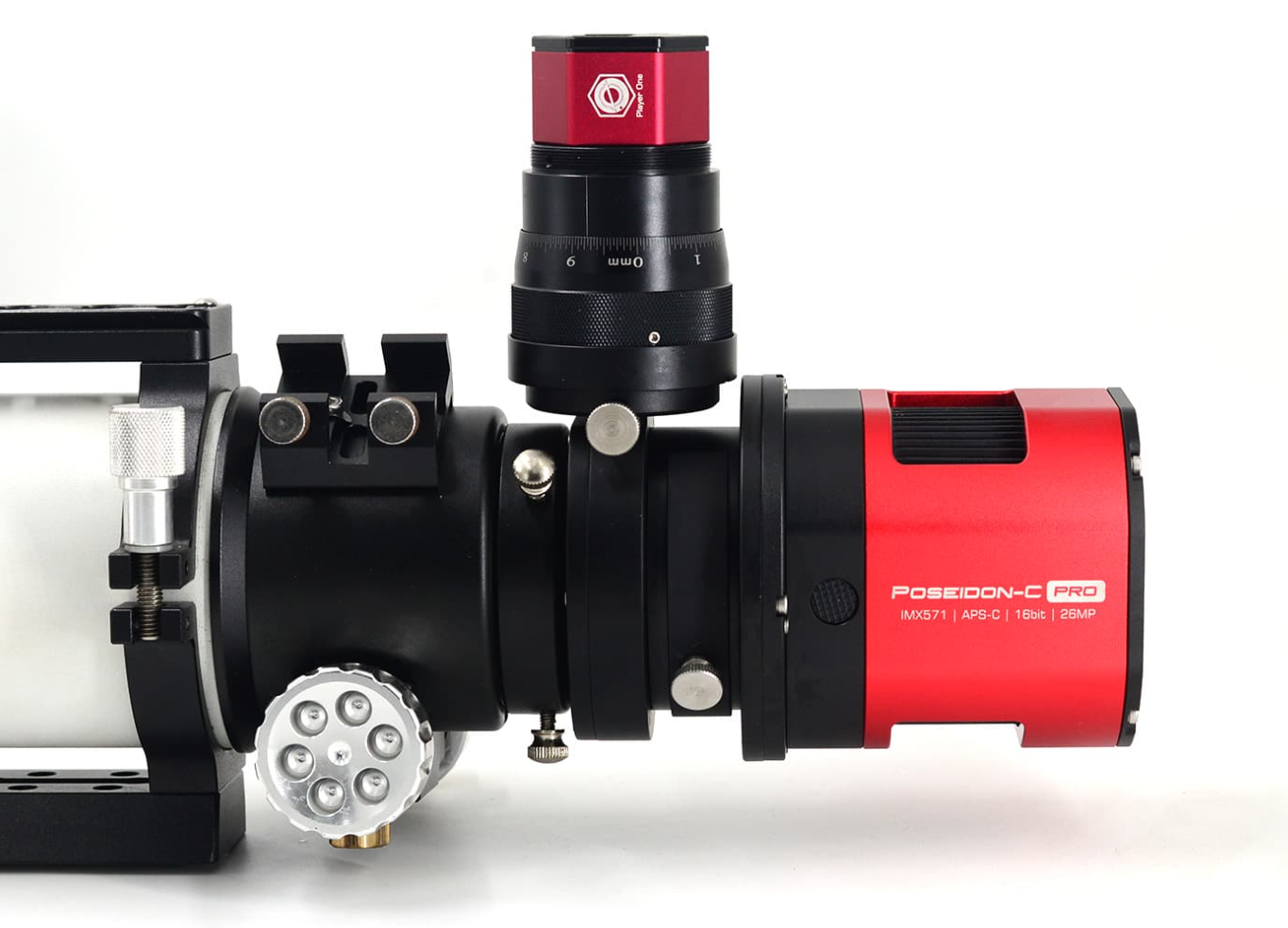
Notice: Some BFL solution is 56mm (Compensate light path differences which caused by filters)

You might also like
A cooled colour camera for deep-sky astrophotography, the Poseidon-C Pro combines a 26 MP Sony IMX571 APS-C sensor, 3.76 µm pixels and native 16-bit conversion. Features include two-stage TEC cooling, a 512 MB DDR3 buffer and four-point sensor tilt adjustment accessible from the rear.