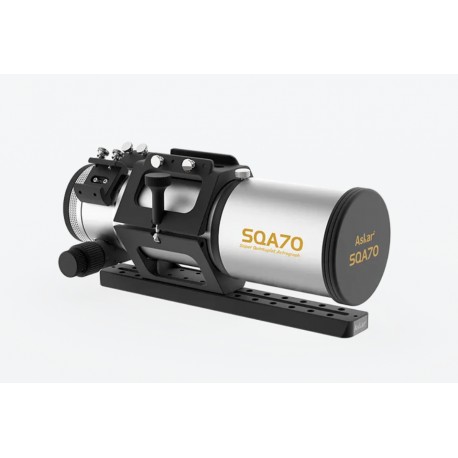







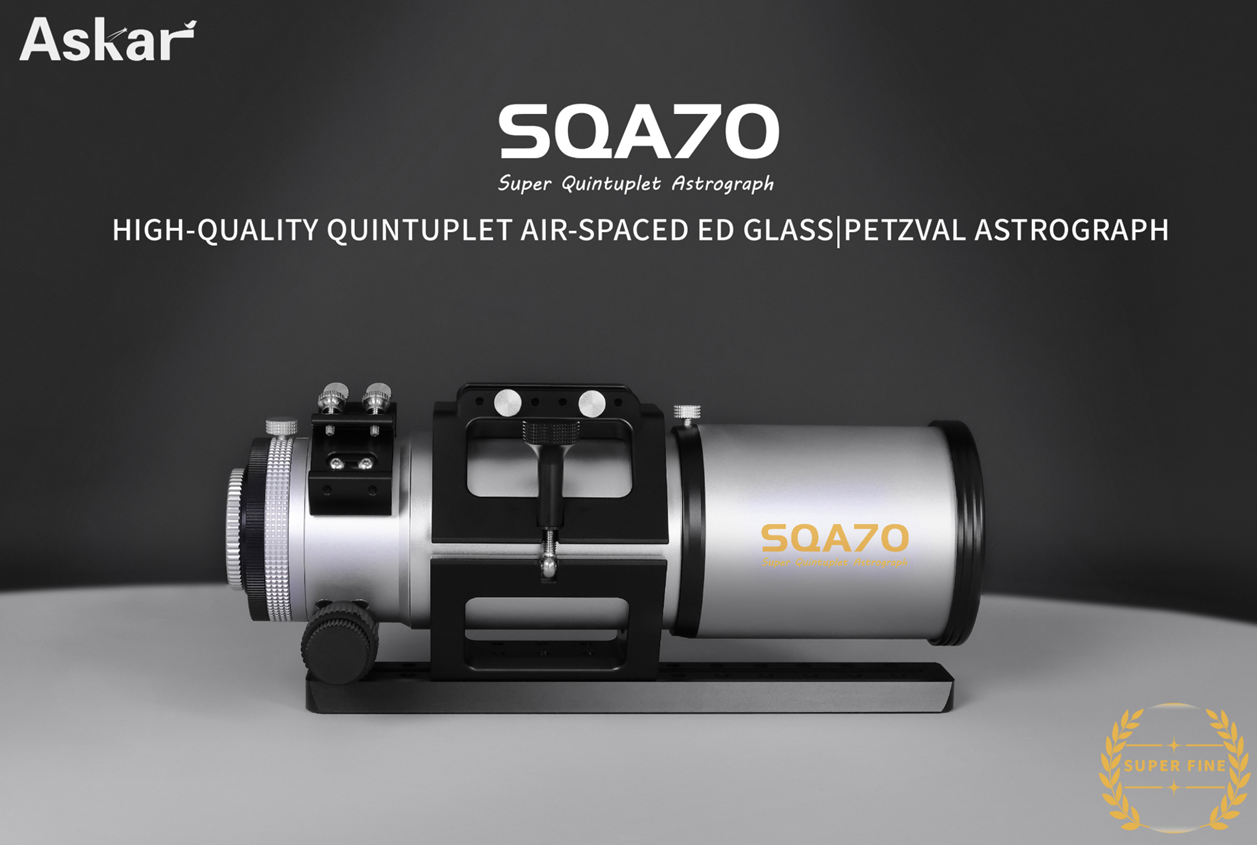
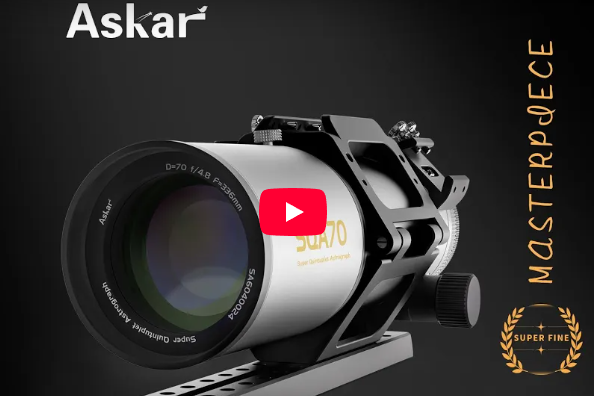
High-quality quintuplet air-spaced ED glass Petzval Astrograph.
EXCELLENT QUALITY
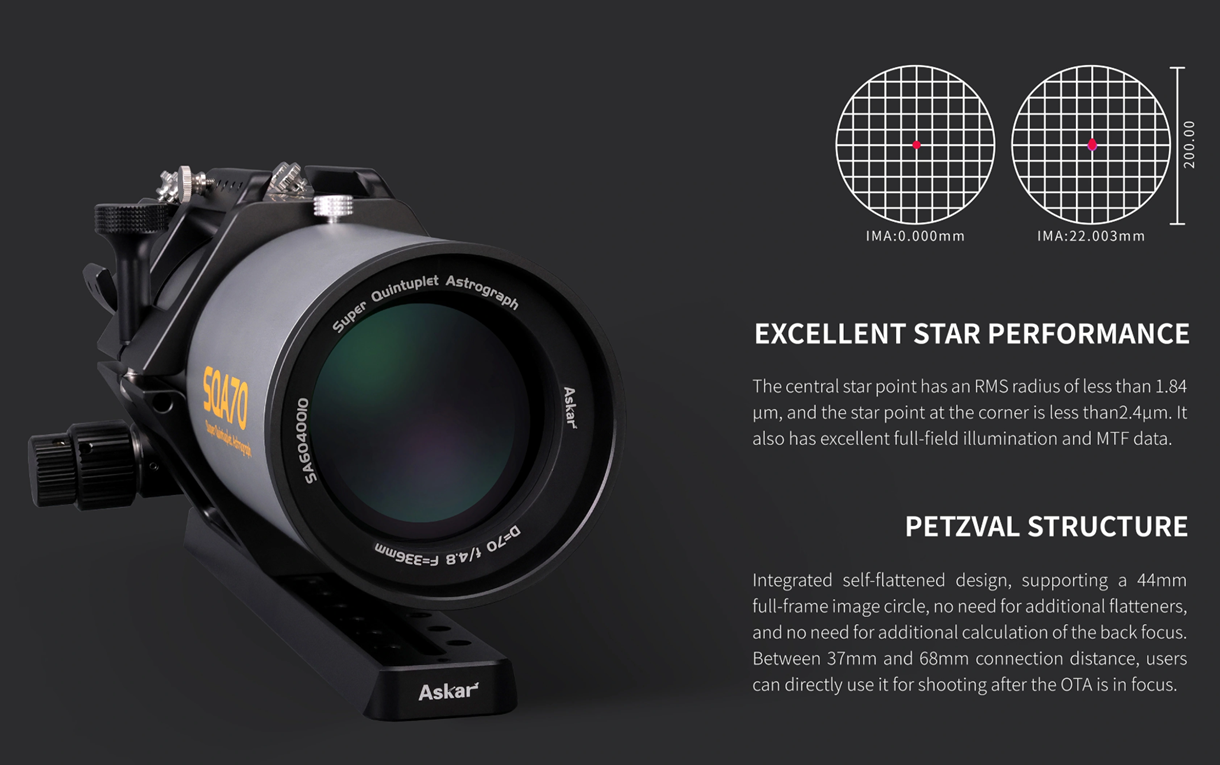
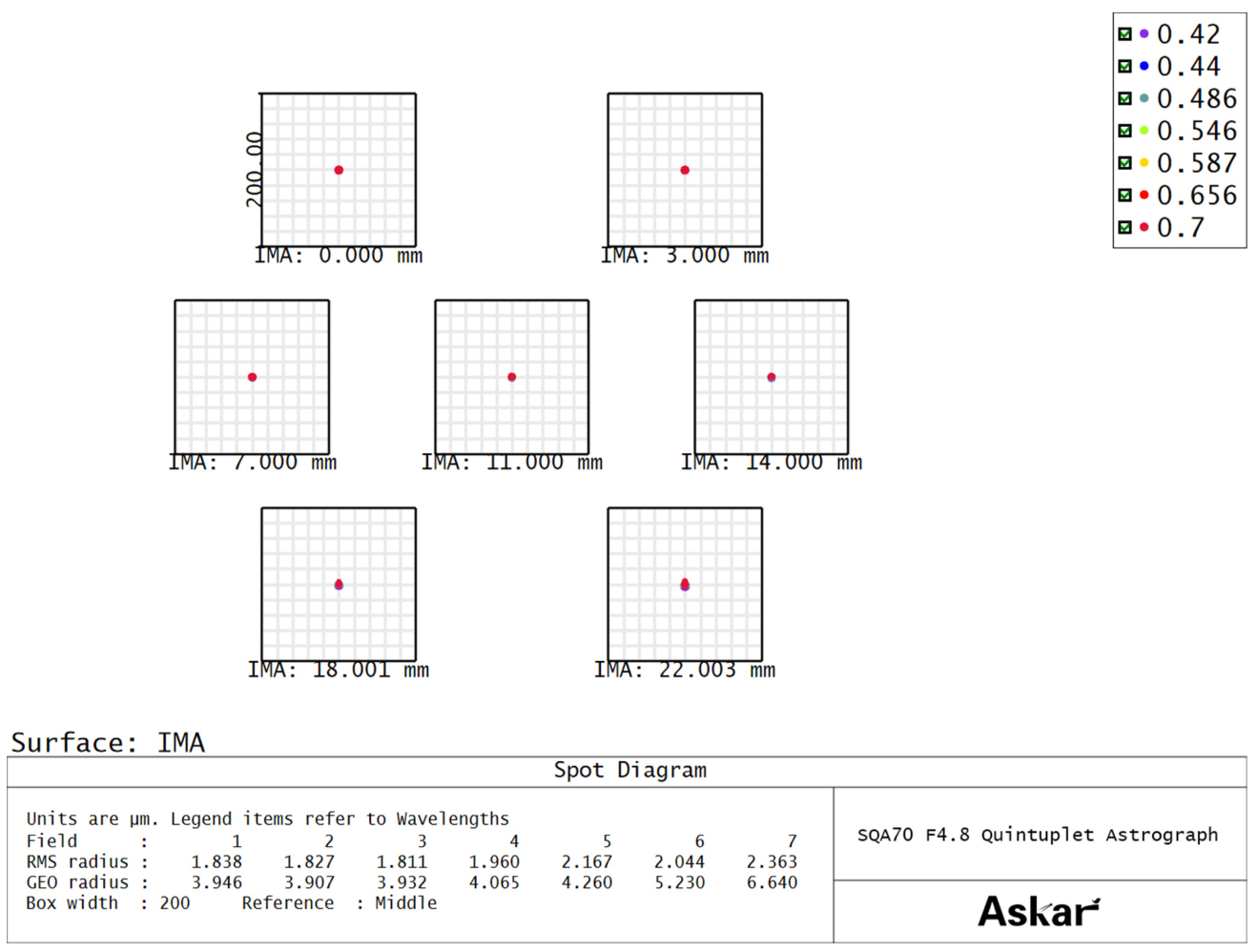
The central star point has an RMS radius of less than 1.84 micrometers, and the star point at the corners is less than 2.4 micrometers.
It also provides excellent full-field illumination as well as very good MTF data.
PETZVAL STRUCTURE
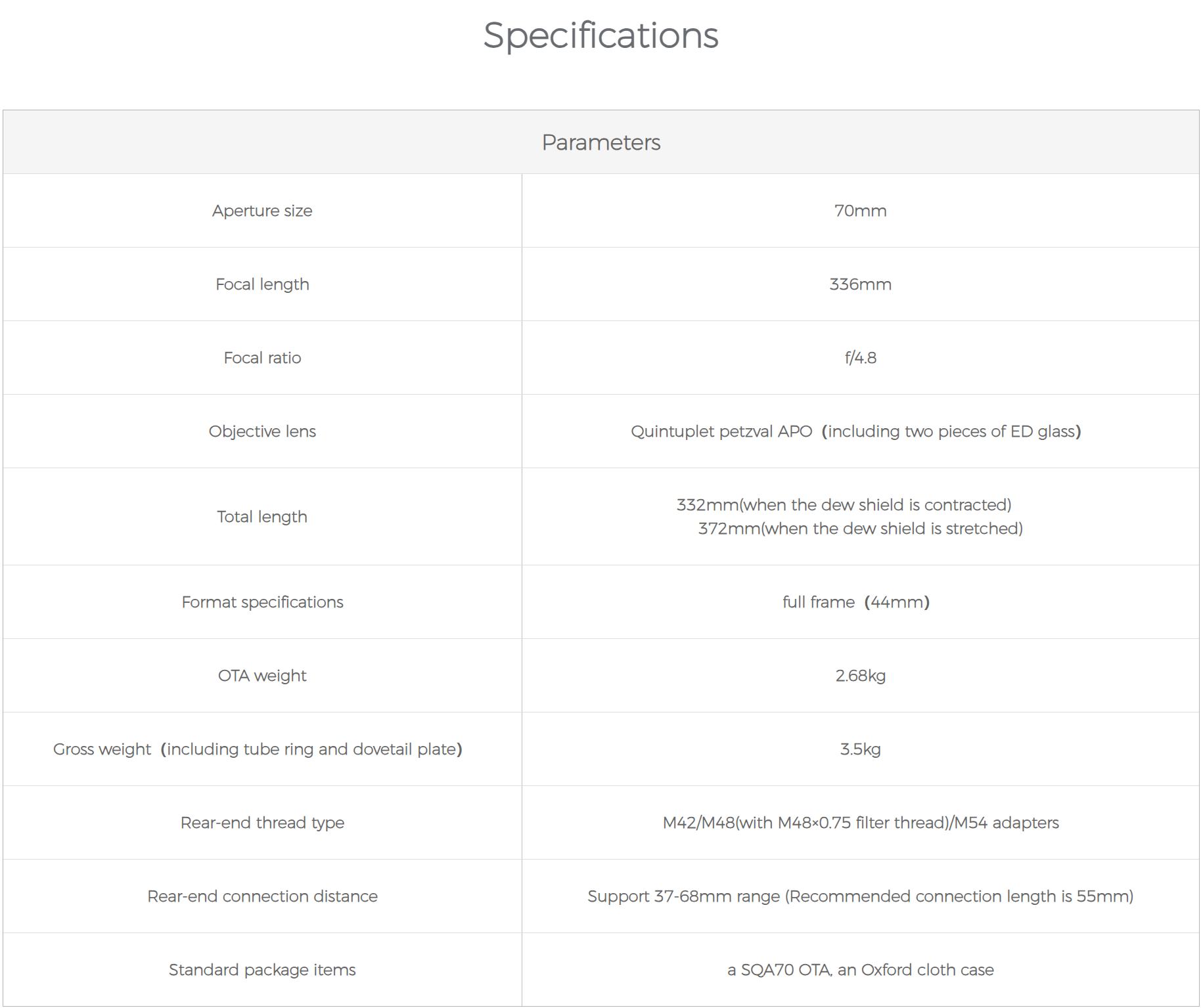
Integrated self-corrected design, supporting a full-frame 44-millimeter image circle without requiring an additional flattener or extra backfocus calculation.
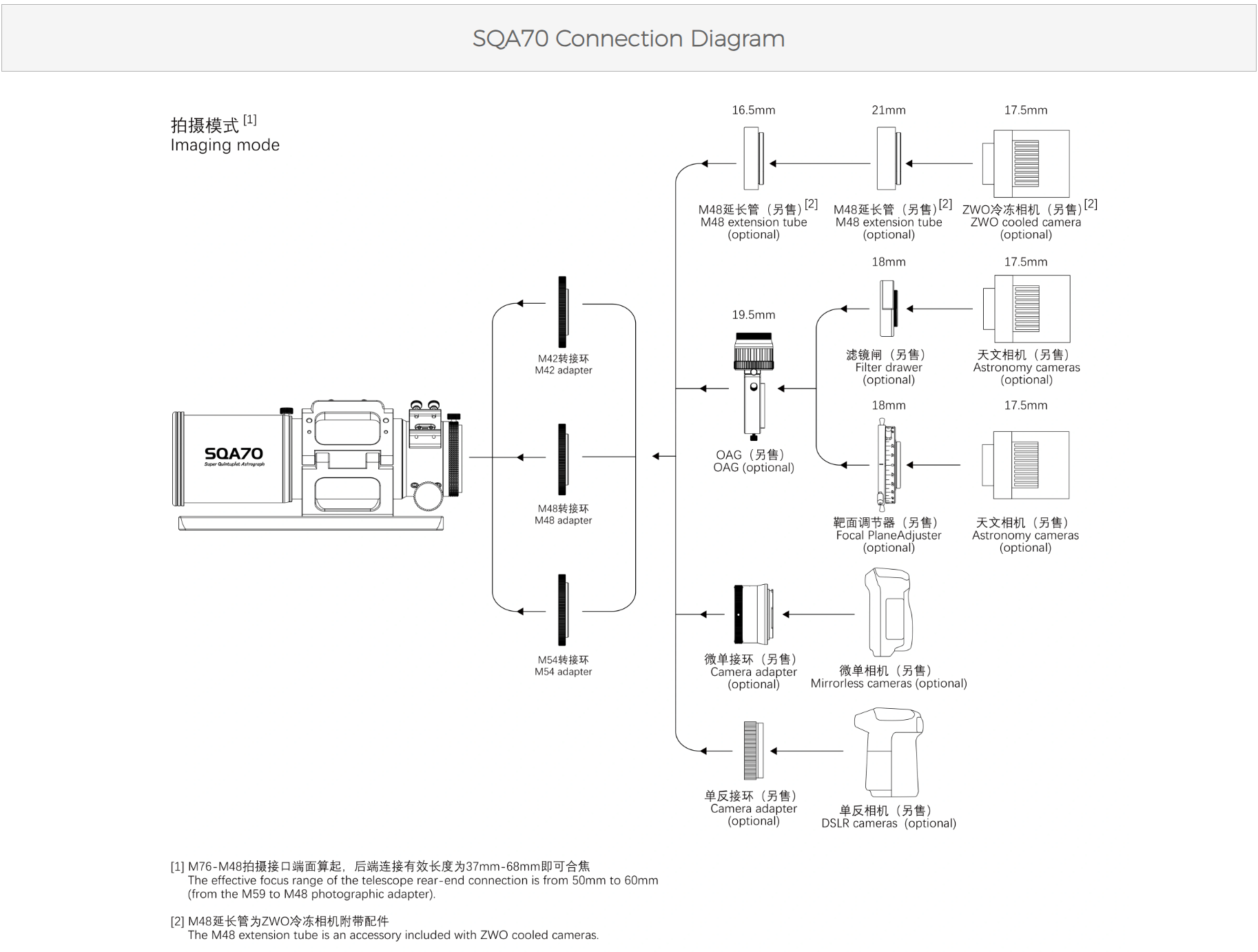
With a connection distance between 37 and 68 millimeters, the user can directly use it for shooting once the OTA is focused.
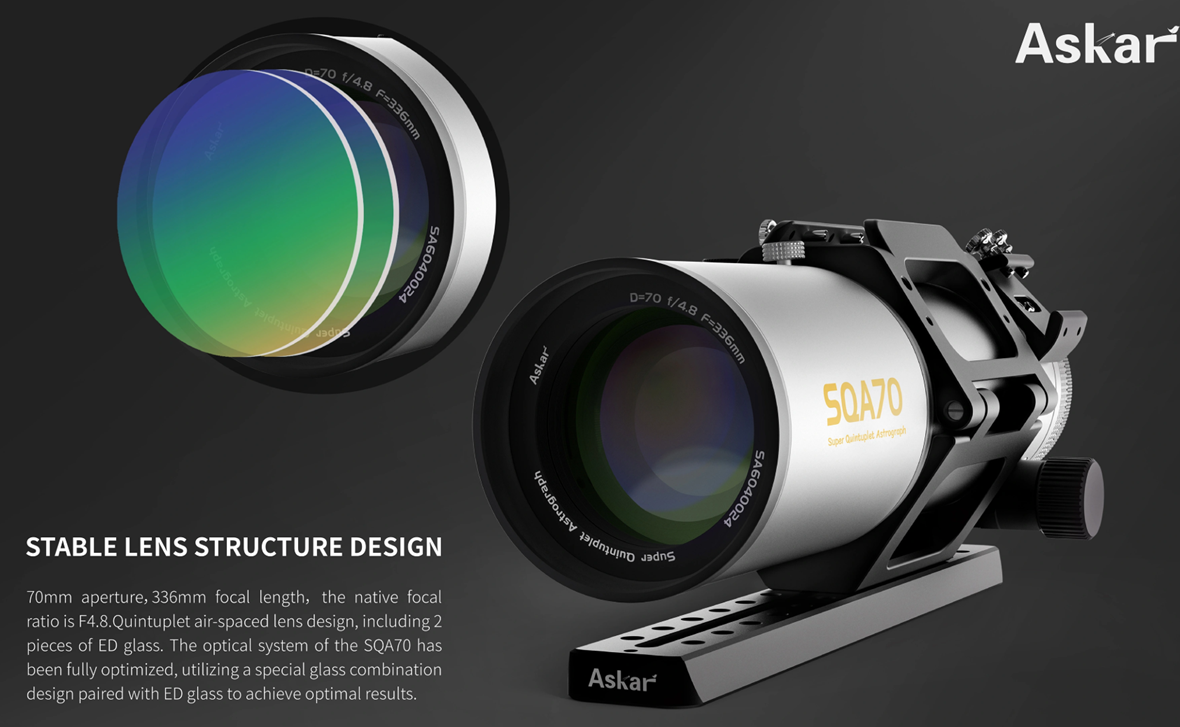
STABLE OPTICAL STRUCTURE DESIGN
70-millimeter aperture, 336-millimeter focal length, with a native focal ratio of F4.8.
Quintuplet air-spaced optical design including 2 ED glass elements.
The optical system of the SQA70 has been fully optimized, using a special glass combination paired with ED glass to achieve optimal performance.
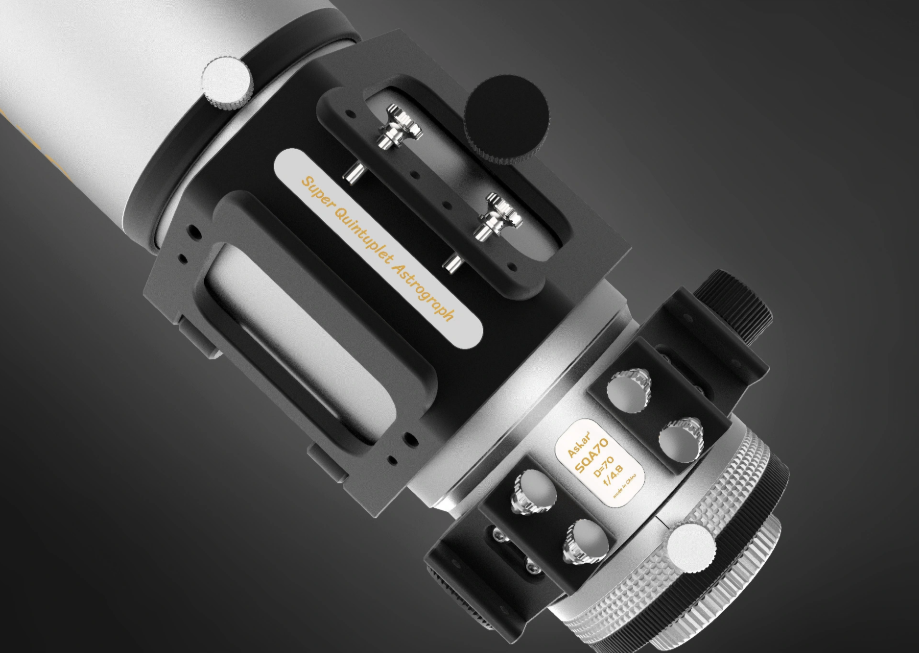
INTEGRATED TUBE RING
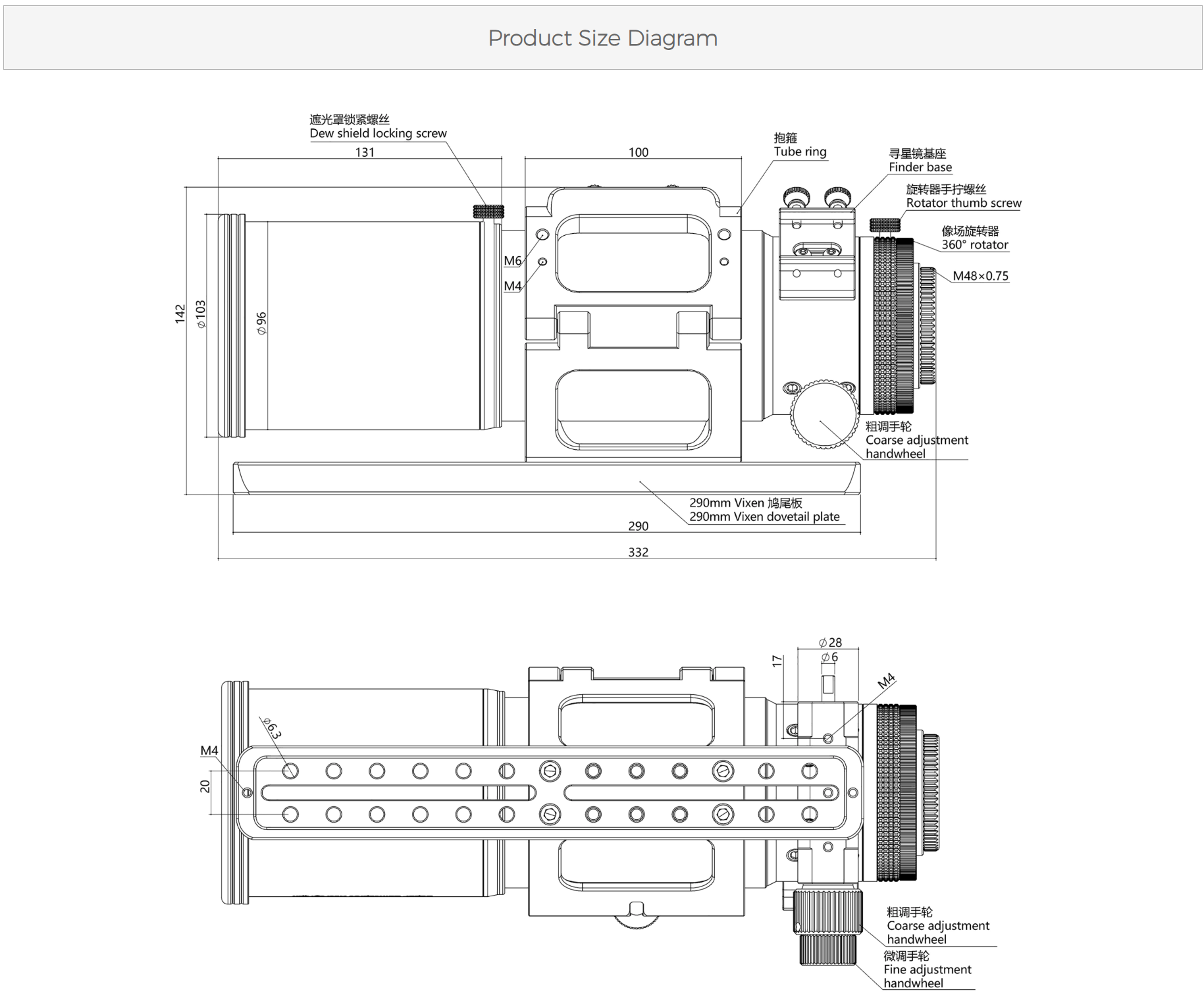
Integrated pair of tube rings with a hollow center design to reduce overall weight. Large thumb screws allow opening and closing the ring without additional tools.
There are 4 M4 and M6 threaded holes on each side of the ring, convenient for mounting a base or dovetail bar and attaching different accessories. A second tube can even be installed for imaging.
The handle at the top of the ring is slotted with a multifunction finder base, allowing installation of astronomical accessories.
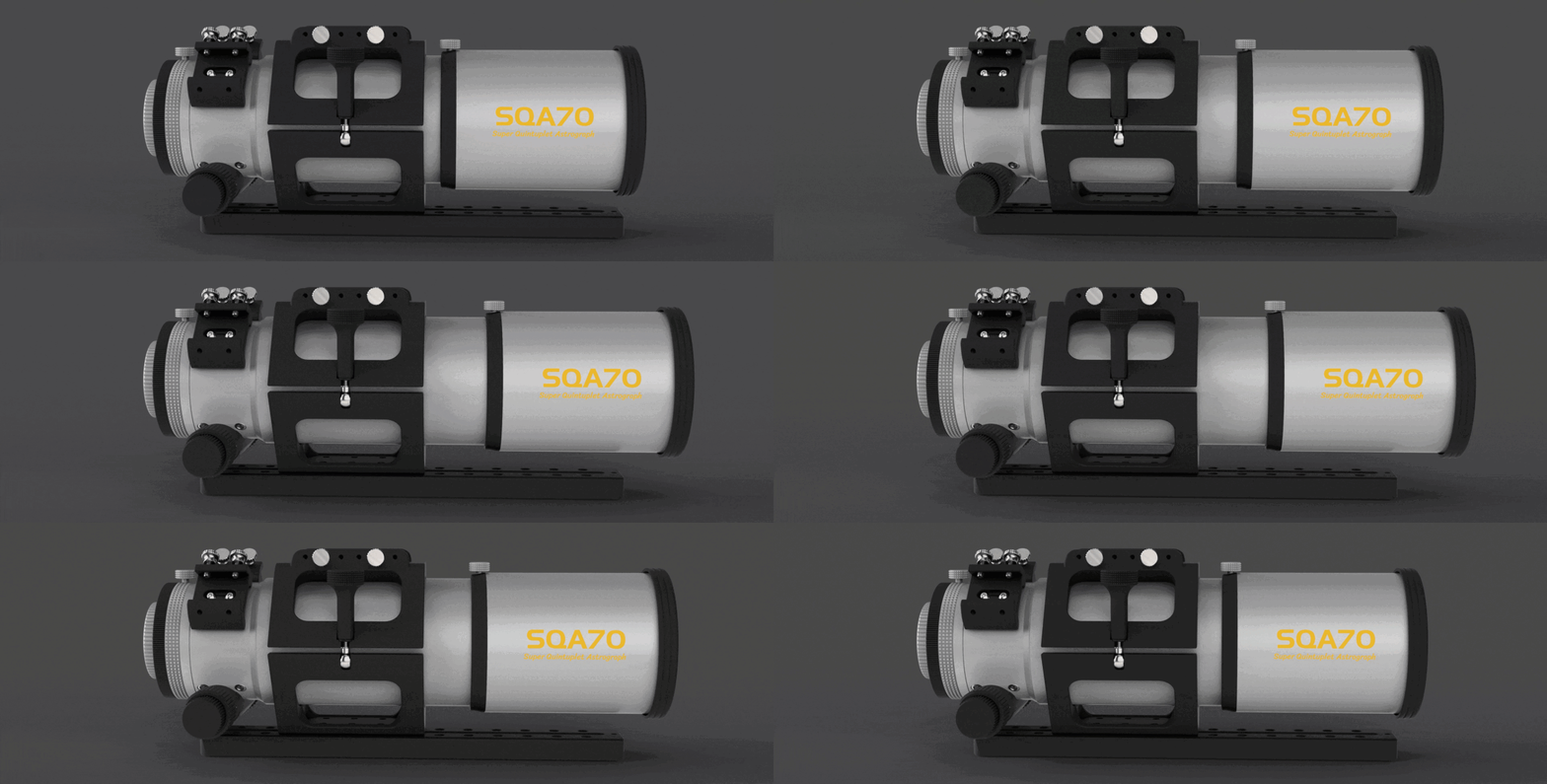
RETRACTABLE DEW SHIELD
The dew shield features a retractable design that can be deployed during use.
It protects the lens from external and internal light sources while also safeguarding the lens itself.
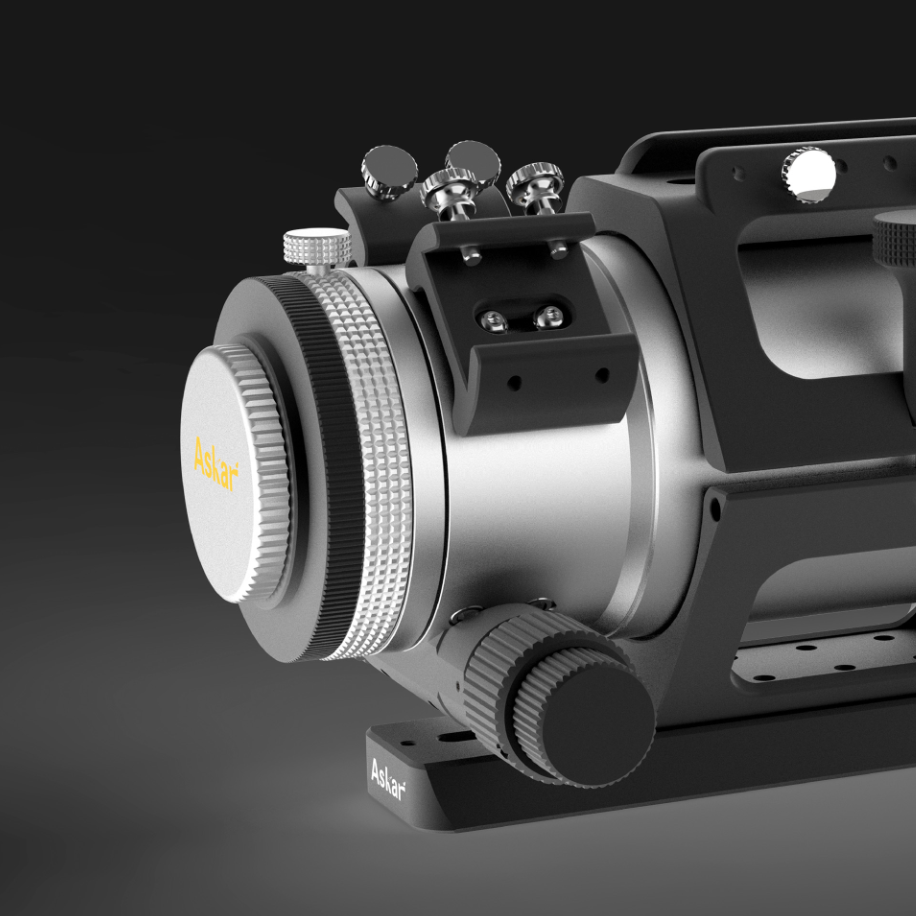
DUAL-SPEED FOCUSER
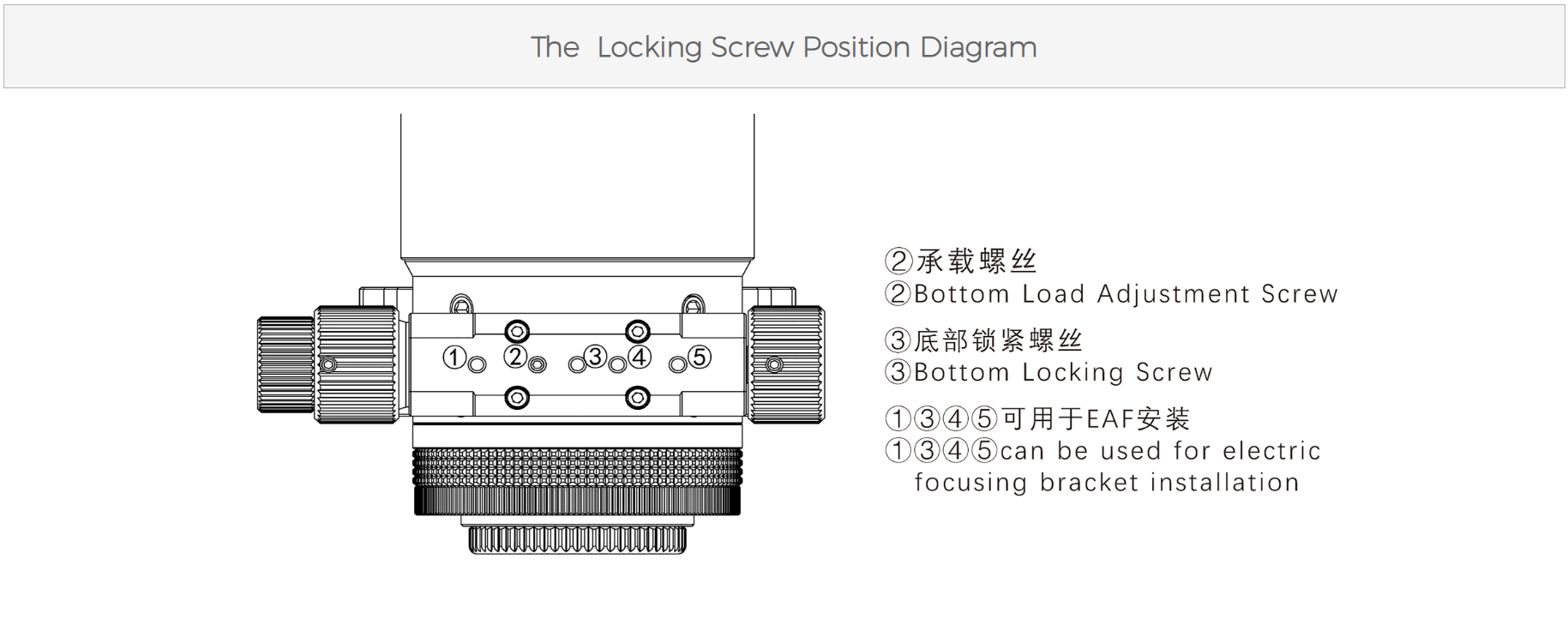
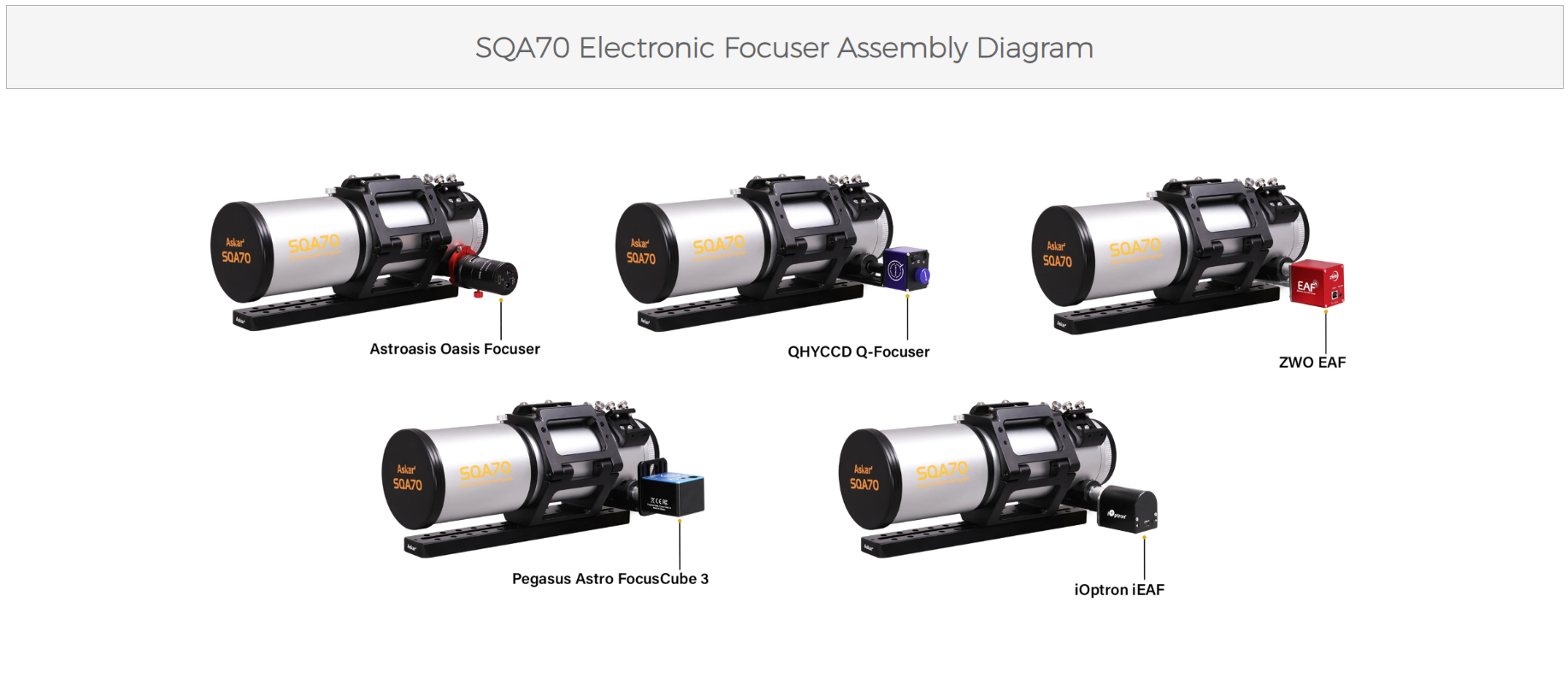
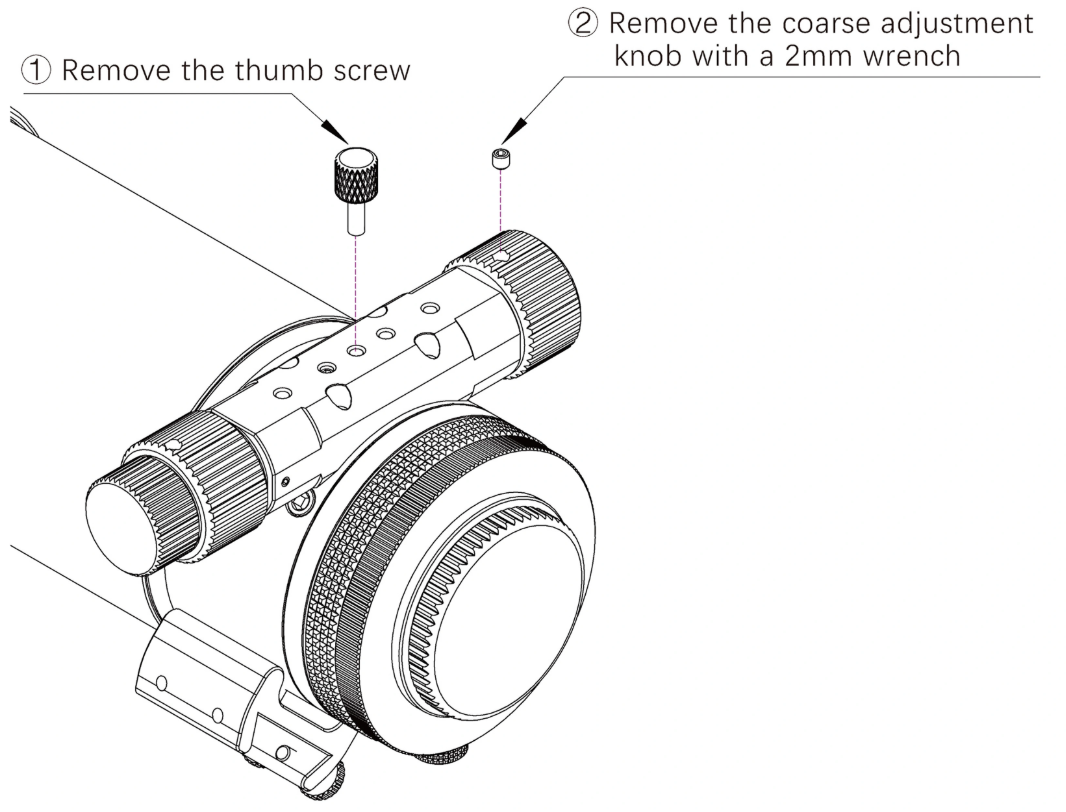
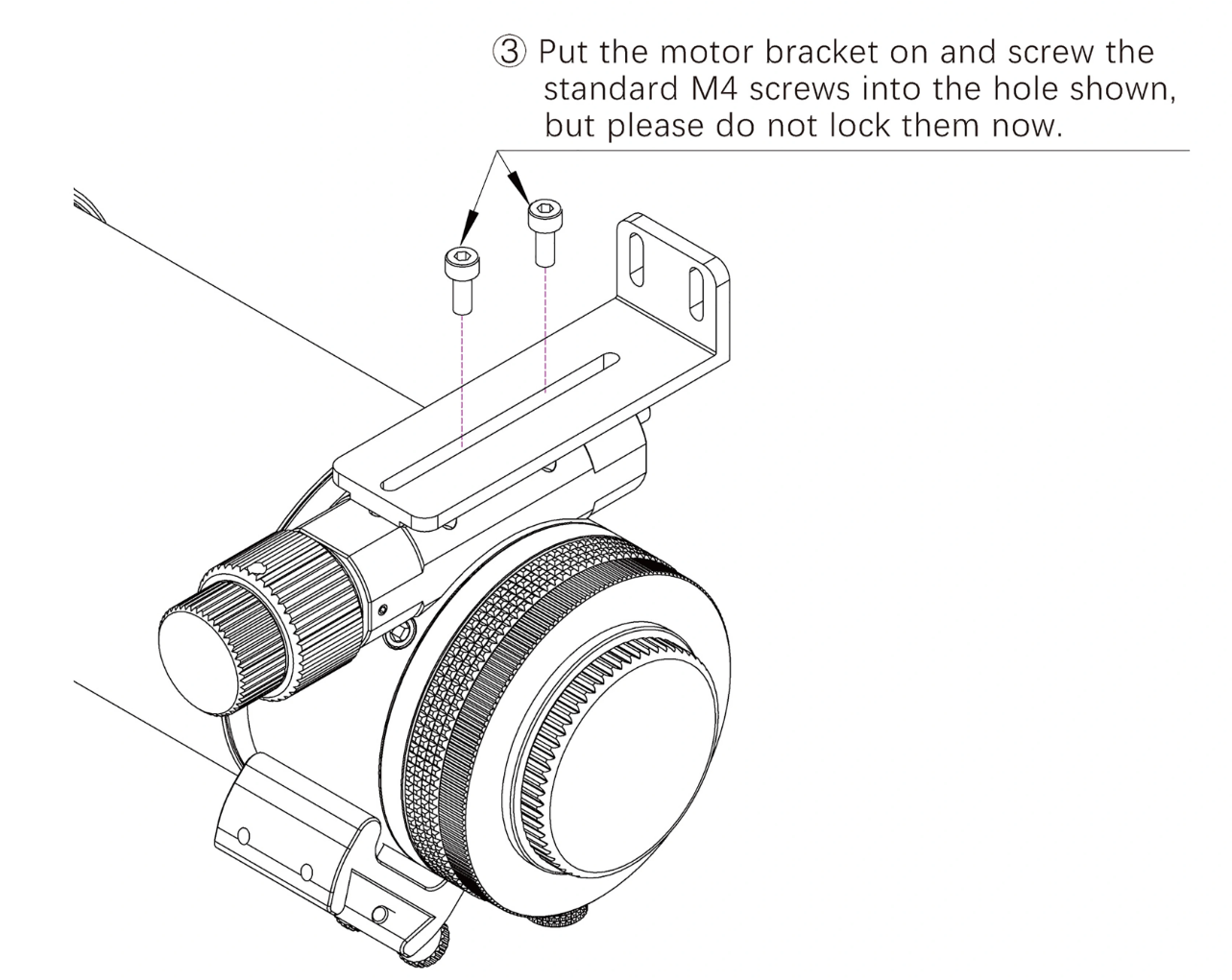
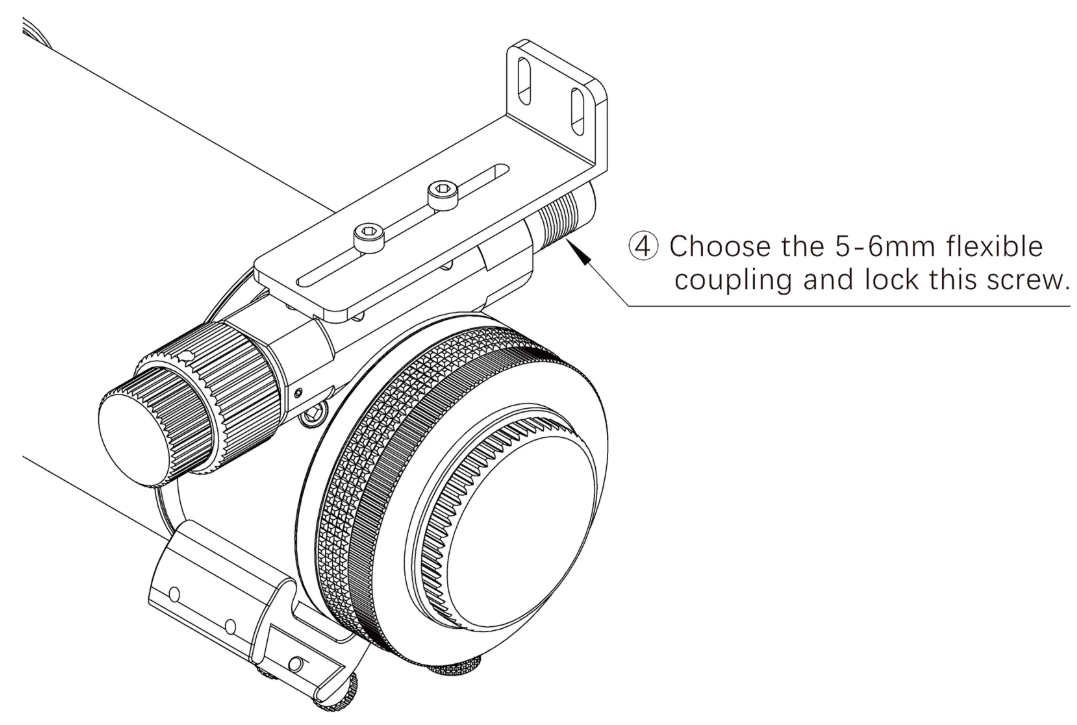
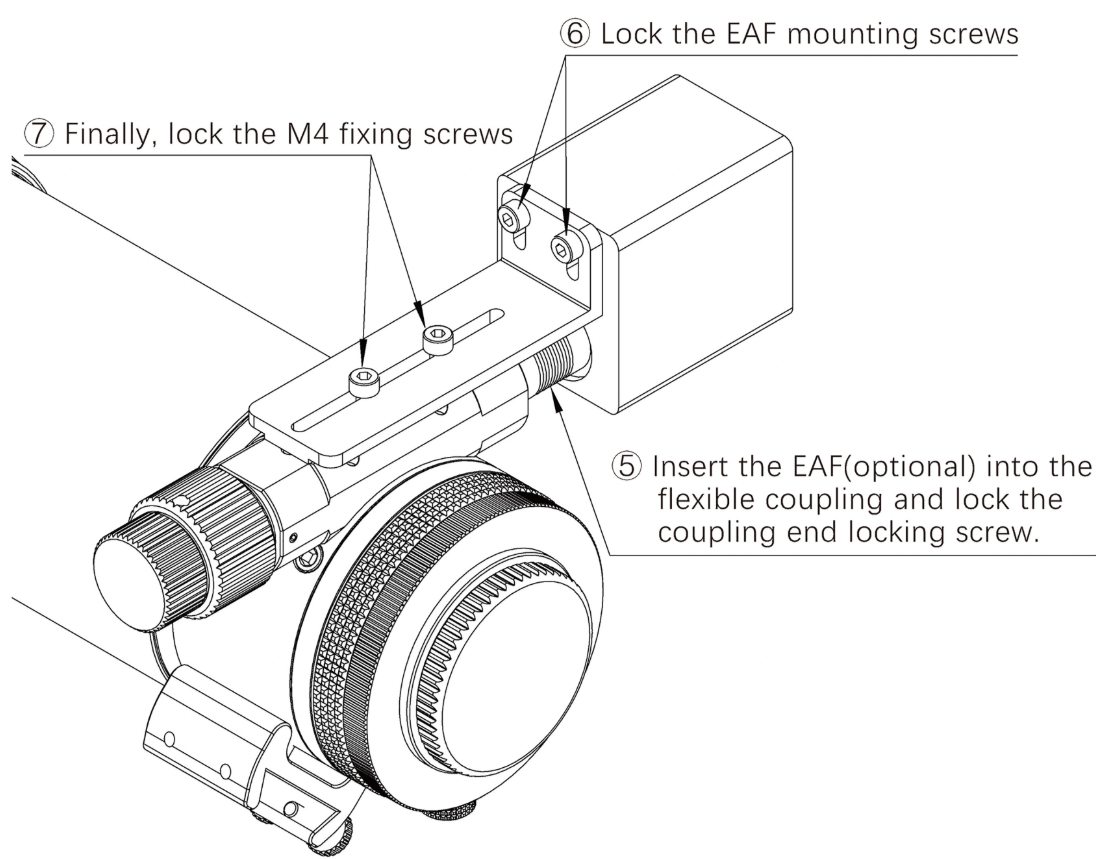
The dual-speed rack-and-pinion focusing system with a 2.5-inch mechanism is compatible with most focus motors on the market.
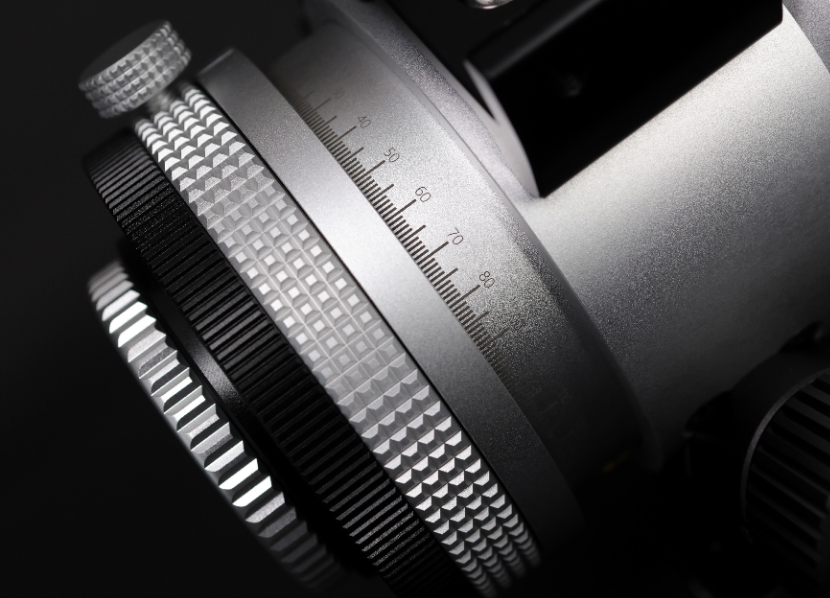
The focusing travel is 32 millimeters, and the focuser tube is engraved with high-precision scales.
The entire focuser body is CNC machined with an internal anti-reflection treatment and matte paint, providing additional measures to eliminate stray light.
360-DEGREE ROTATOR
The rear of the focuser is equipped with a high-precision 360-degree rotator with a scale to adjust and memorize the rotation angle.
It is also fitted with a contoured locking screw ensuring easy locking.
REAR-END ADAPTERS
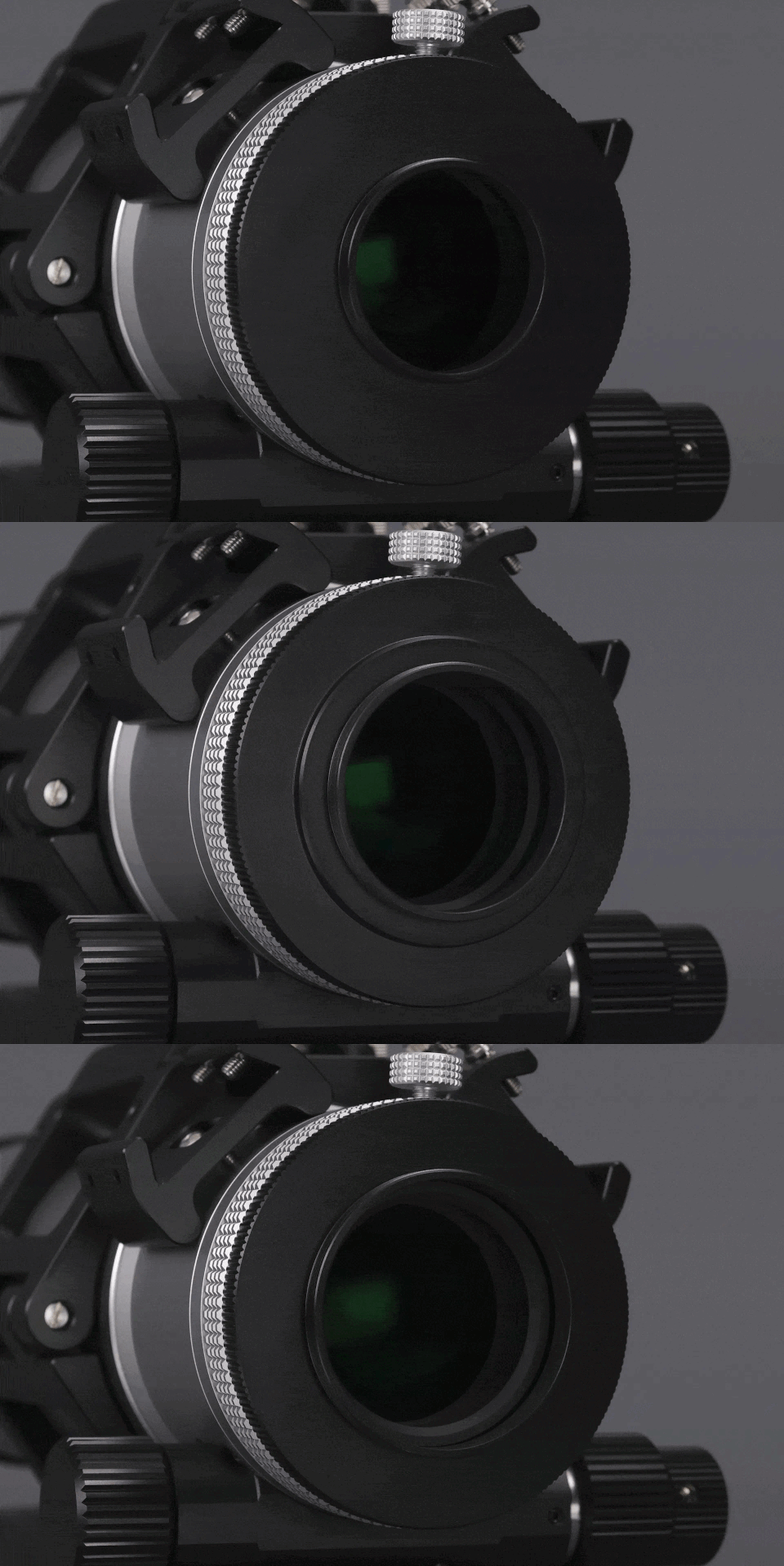
The rear of the SQA70 is equipped with several toothed and ribbed adapters for easy manual rotation without slipping.
The adapters are available in M54, M48 and M42 formats, allowing connection of various accessories such as cooled cameras.
ALL-METAL HANDLE (OPTIONAL)
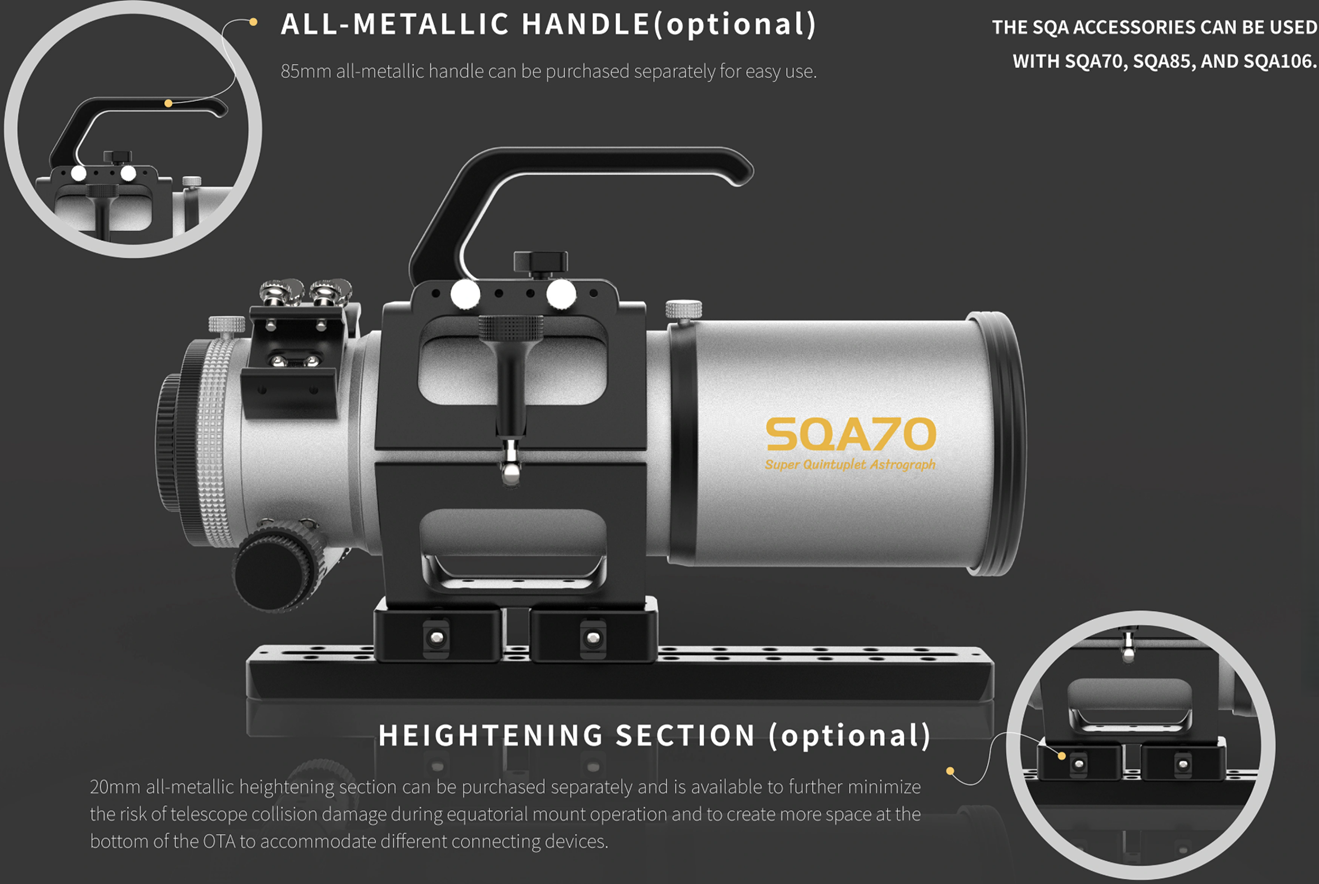
An 85-millimeter all-metal handle can be purchased separately for convenient use.
HEIGHTENING SECTION (OPTIONAL)
A 20-millimeter all-metal heightening section can be purchased separately. It further reduces the risk of telescope collision when operating on an equatorial mount and creates more space under the OTA to accommodate different connecting devices.
DIVERSIFIED PHOTOGRAPHIC APPLICATIONS
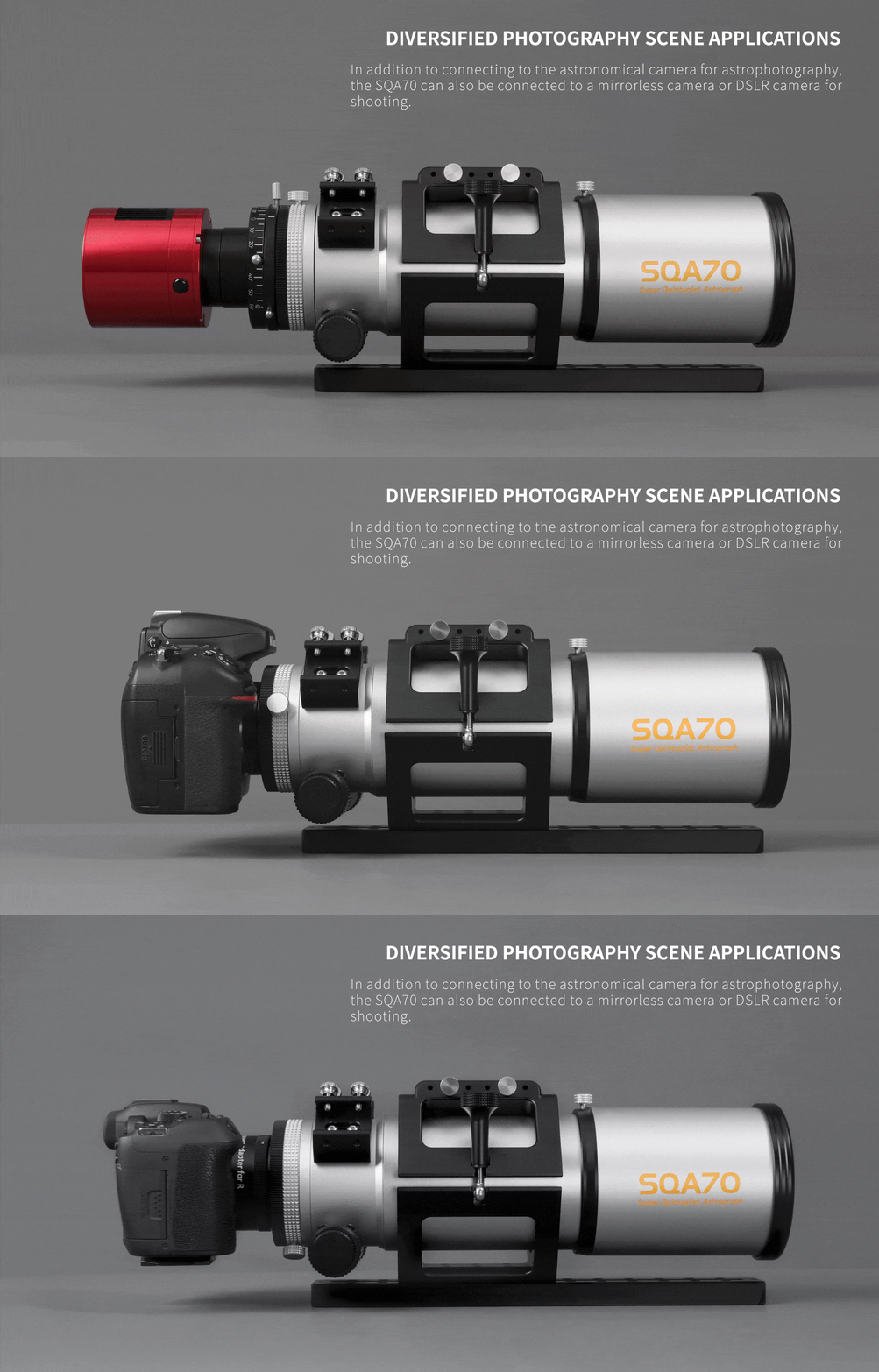
In addition to being connected to an astronomical camera for astrophotography, the SQA70 can also be connected to a mirrorless or DSLR camera for shooting.
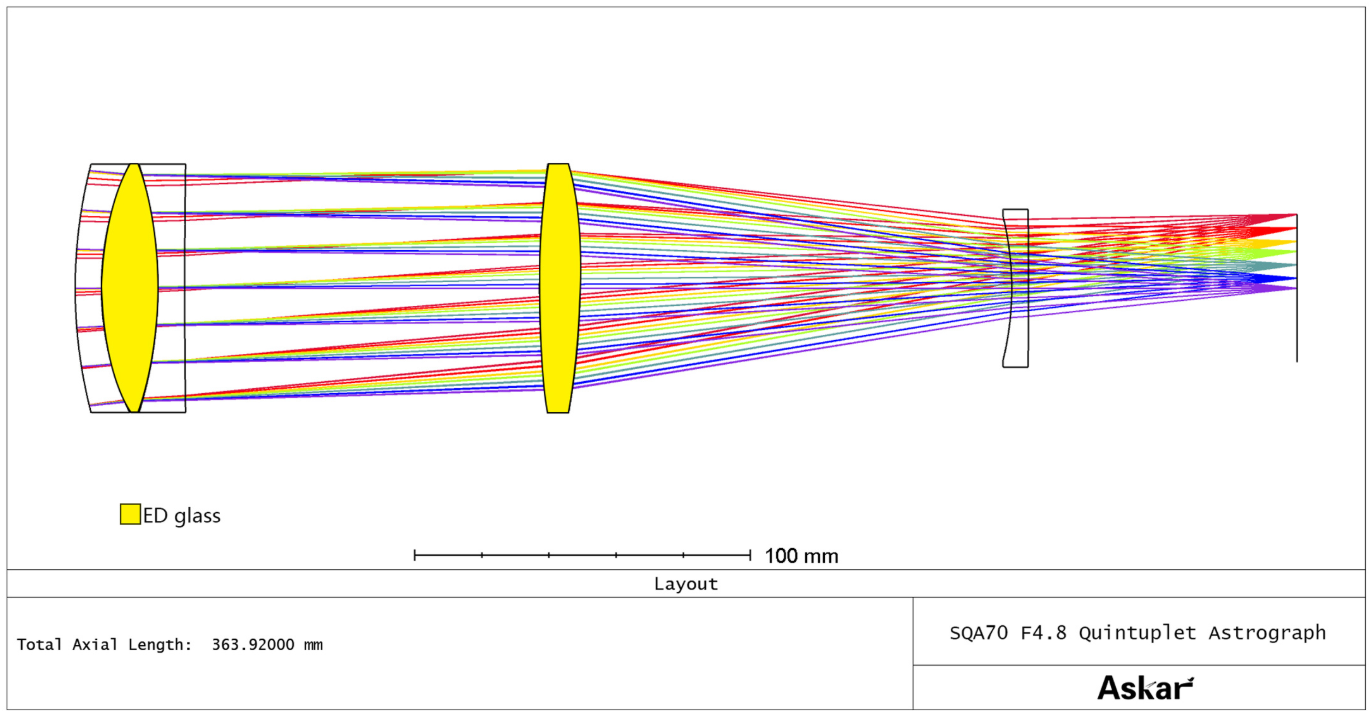
OPTICAL PATH
The SQA70 uses a quintuplet optical design with air-spaced lenses, including two ED glass elements.
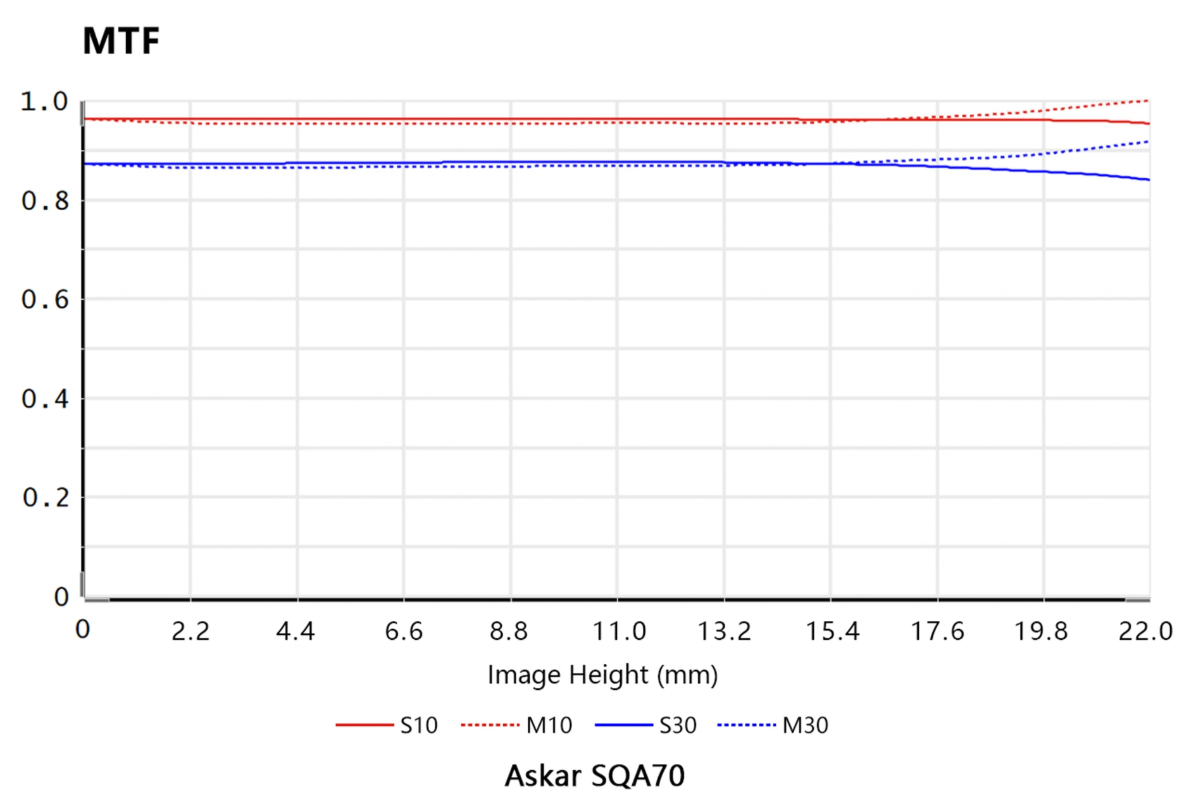
MTF CHART
The modulation transfer function is a quantitative measure of the clarity of an optical image, including resolution and contrast.
The vertical axis represents the MTF value, and the horizontal axis represents the distance from the center to the edge of the image.
In both curves representing low and high frequencies, even at the edge of the 44-millimeter image circle, the difference between the sagittal and meridional lines of the SQA70 remains very small.
At a low frequency of 10 LP per millimeter, the value is higher than 0.9, demonstrating the high resolution and sharpness of the SQA70.
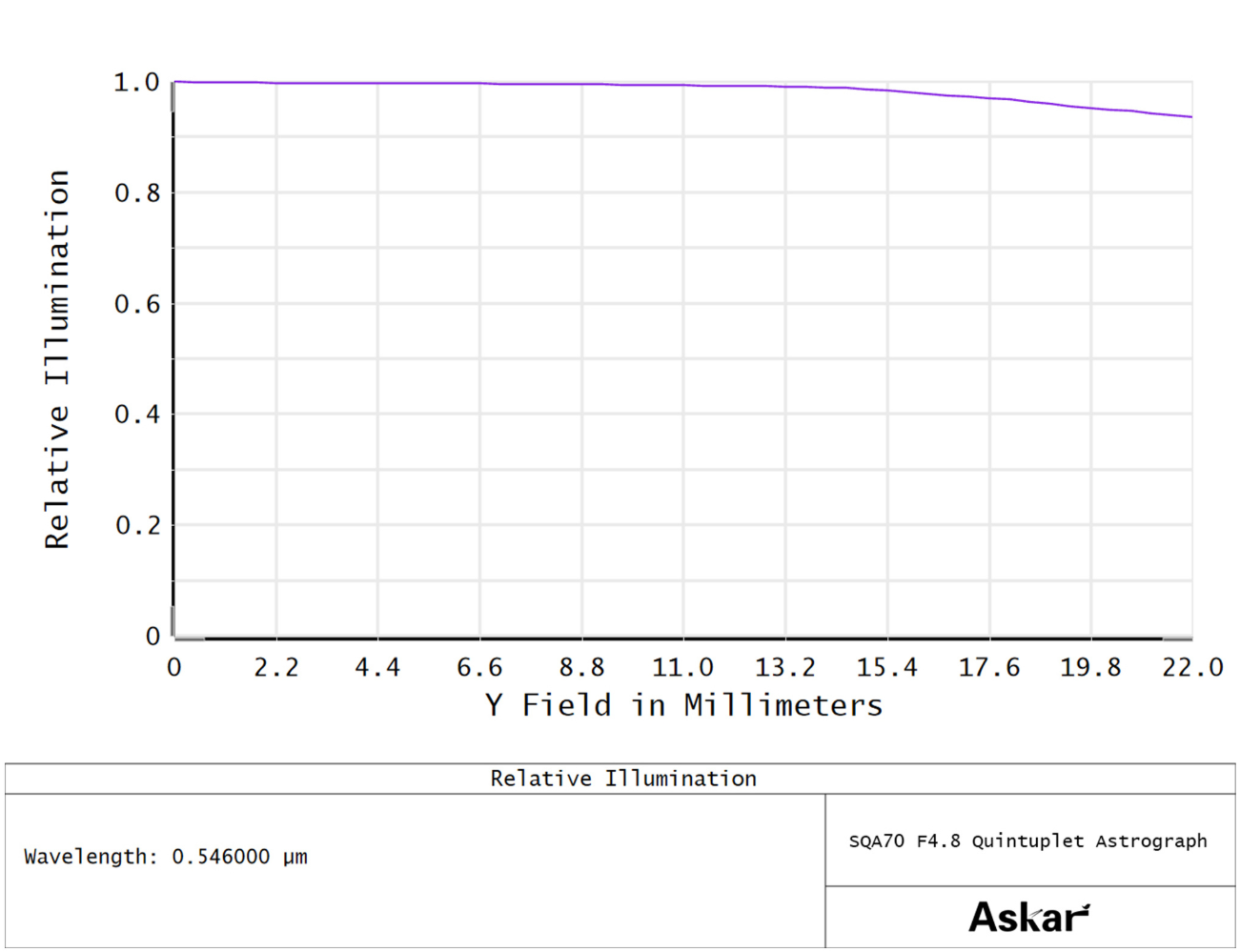
RELATIVE ILLUMINATION
Relative illumination represents the combined effect of light loss and attenuation in the corners of the image. The RI curve illustrates illumination variation in percentage across the entire sensor surface. Illumination variations can affect the image.
The vertical axis represents different illumination percentages, while the horizontal axis indicates the distance from the center to the frame edge.
The SQA70 guarantees high illumination above 90% at a 44-millimeter image circle, thereby reducing vignetting.
SPOT DIAGRAM
The imaging quality of the optical system can be evaluated by analyzing the distribution of spots on the spot diagram.
The SQA70 features a central star point with an RMS radius of less than 1.84 micrometers, and the star point at the corners is less than 2.4 micrometers, showing remarkable star sharpness.
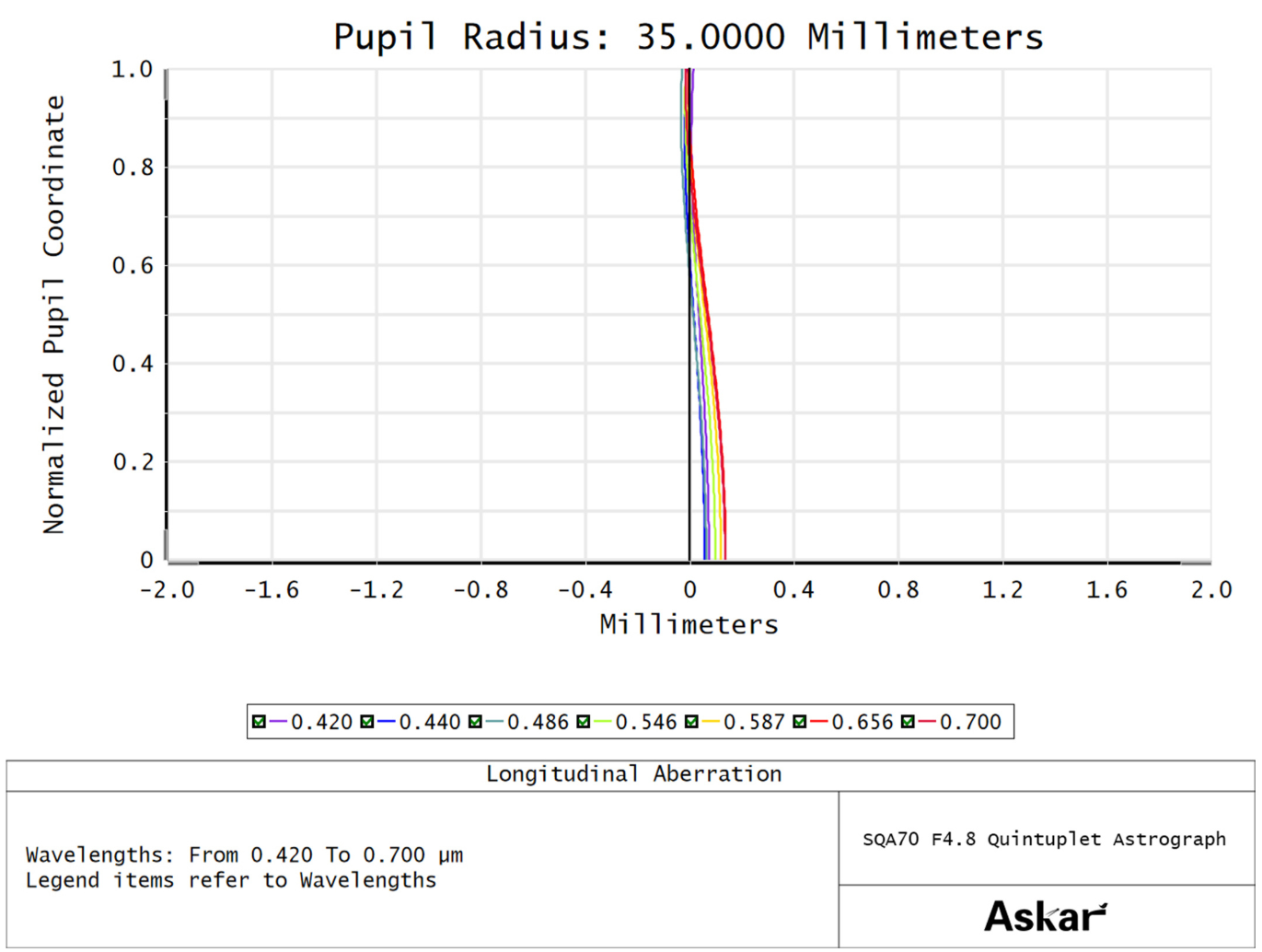
LONGITUDINAL CHROMATIC ABERRATION CURVE
It represents the deviation of different wavelengths of light at the focal point.
The different curves in the diagram correspond to different wavelengths.
Longitudinal chromatic aberration occurs when different wavelengths fail to converge at the same focal point along the optical axis of a lens or telescope, causing inconsistent colors in the image, usually visible as blurred edges or color separation.
The longitudinal chromatic aberration curves of the SQA70 show very small spacing or even overlap, and their curvature is very low, indicating excellent chromatic aberration control.

High-quality quintuplet air-spaced ED glass Petzval Astrograph.