
- Available on request
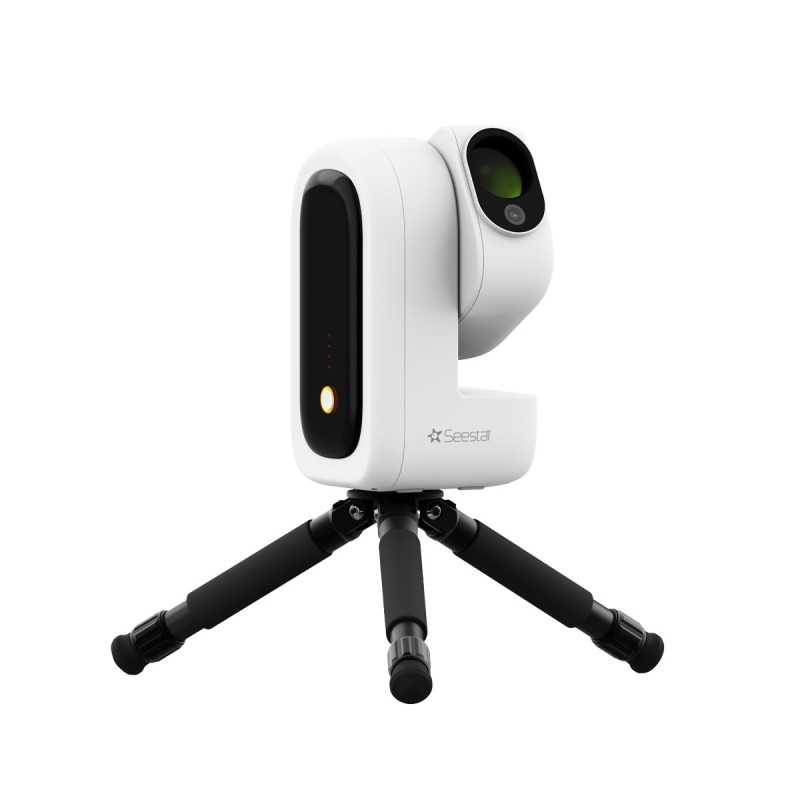







The ZWO Seestar S50 Pro combines a 50 mm apochromatic optical system, dual 4K cameras, a 1/1.2 inch main sensor, Alt-Azimuth and Equatorial modes, deep-sky, Milky Way, solar and lunar imaging in one automated portable system.
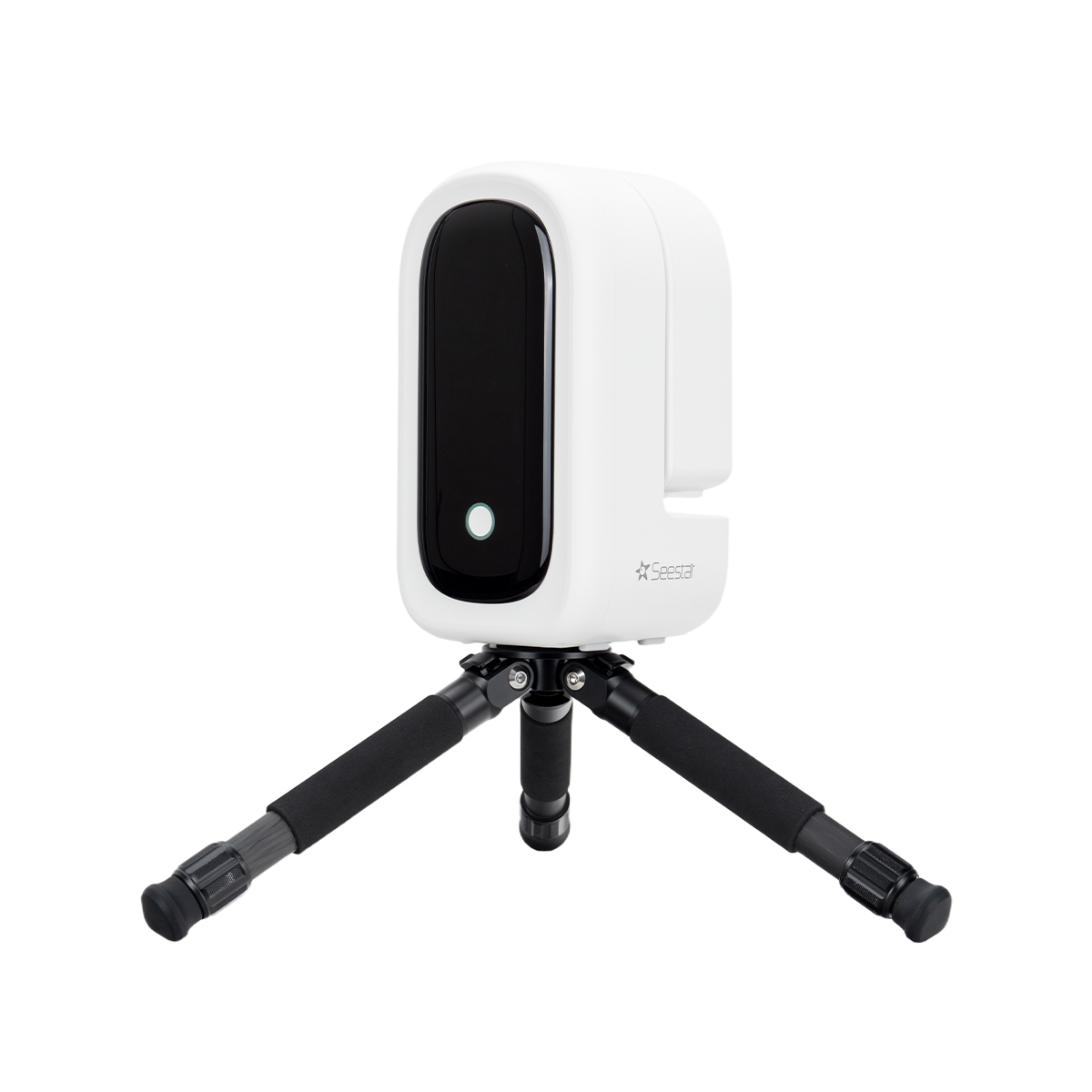
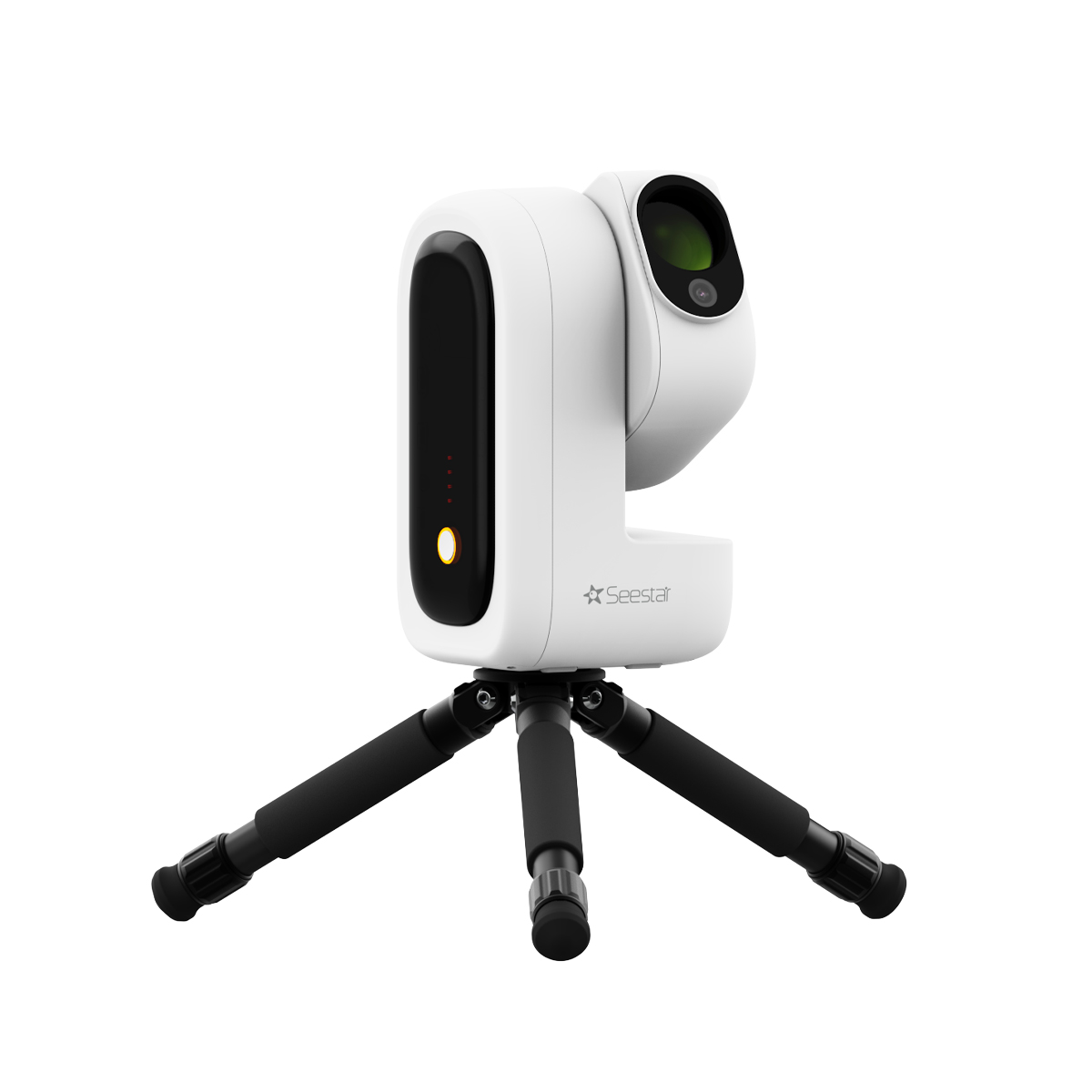
The ZWO Seestar S50 Pro is an all-in-one smart telescope designed to make observing and astrophotography possible without the traditional combination of a separate telescope, equatorial mount, camera and complex wiring. Its imaging system, mount, cameras, filters, battery and electronics are integrated into a compact device suitable for both first discoveries and more advanced astrophotography.
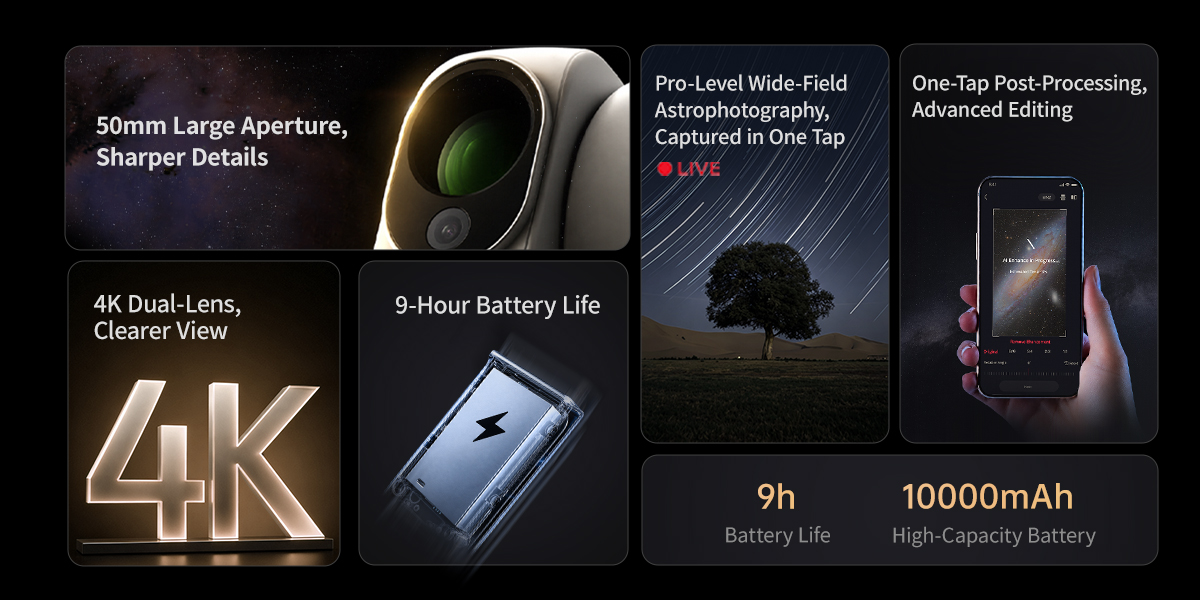
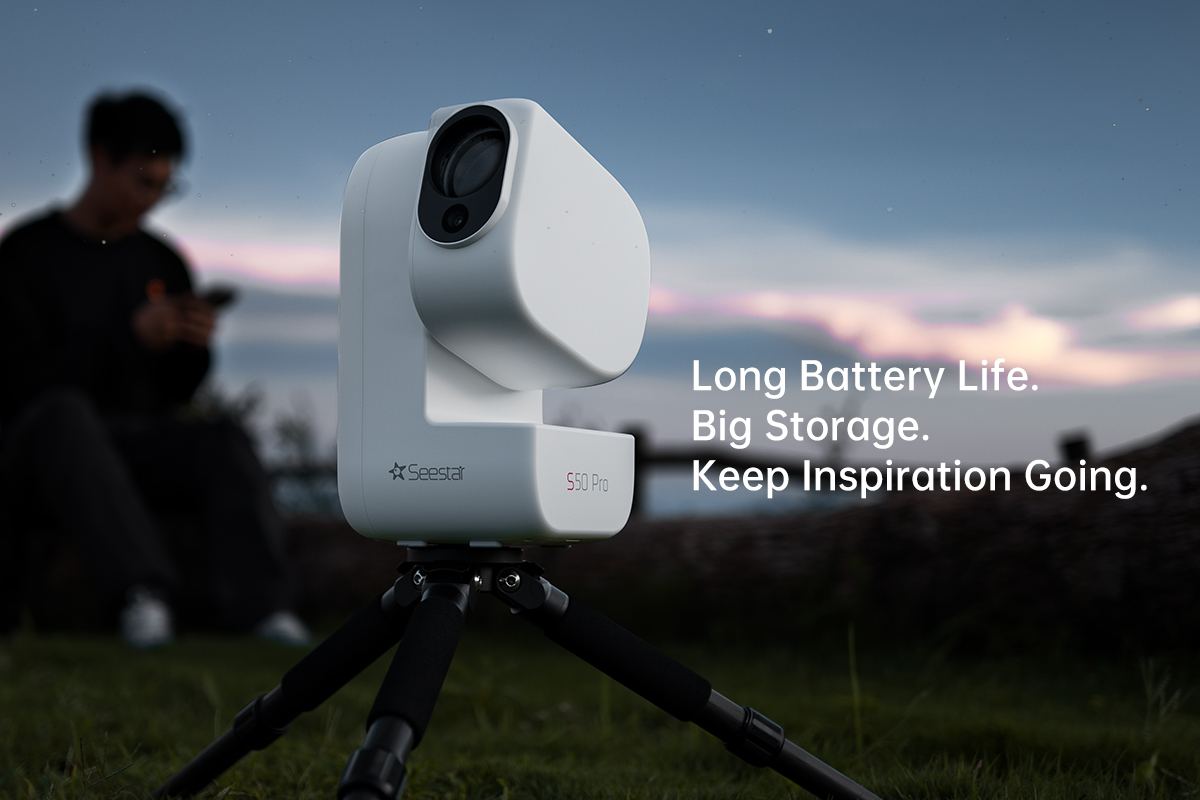
The official documentation highlights five major upgrades: a 50 mm aperture, a dual 4K camera system, wide-field astrophotography functions, advanced in-app image processing and a 10,000 mAh battery providing up to 9 hours of runtime under the conditions specified by ZWO.
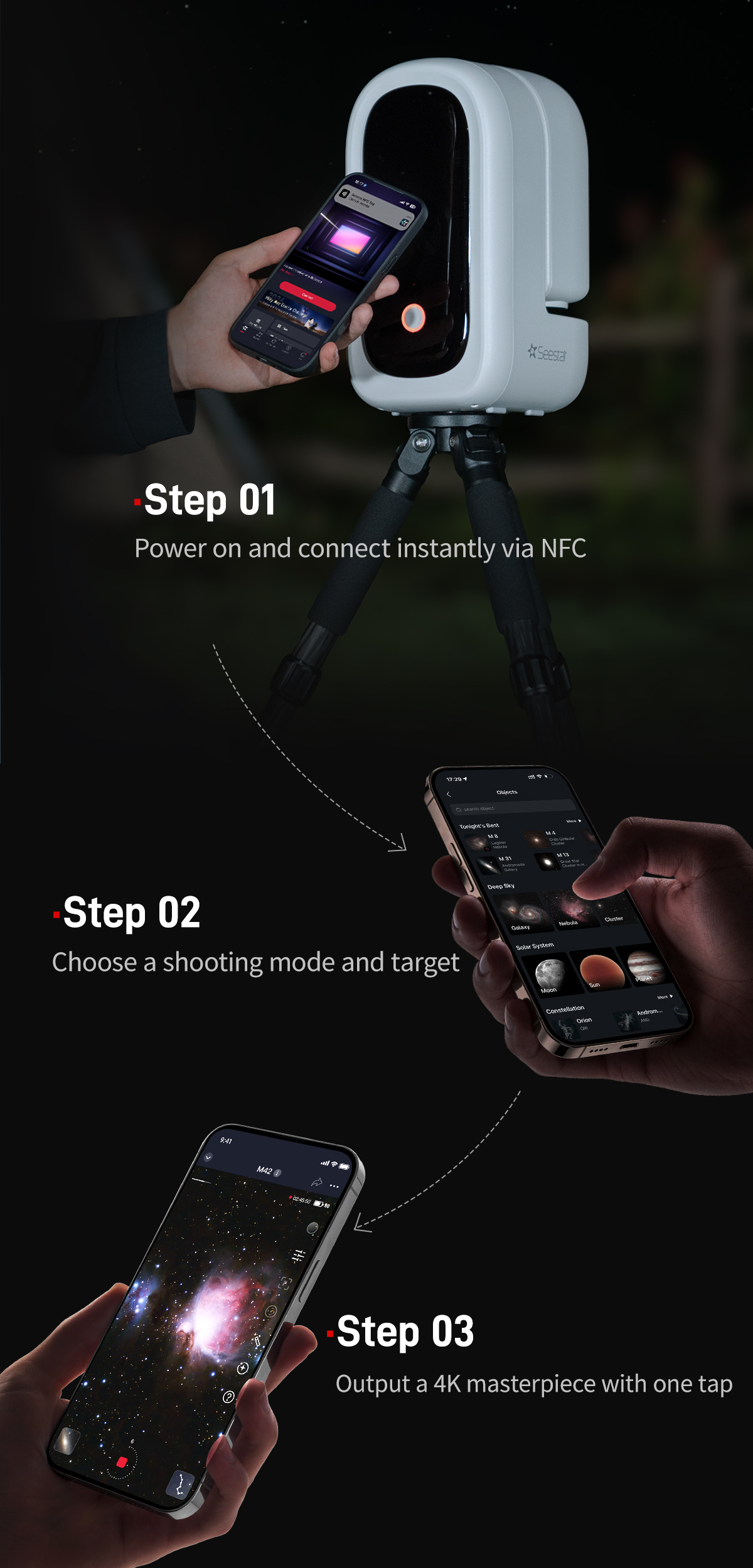
Operation remains intentionally simple. After power-on, a compatible smartphone can connect quickly through NFC. The user then chooses an imaging mode and target, while Seestar handles the operations required to locate, track and capture it.
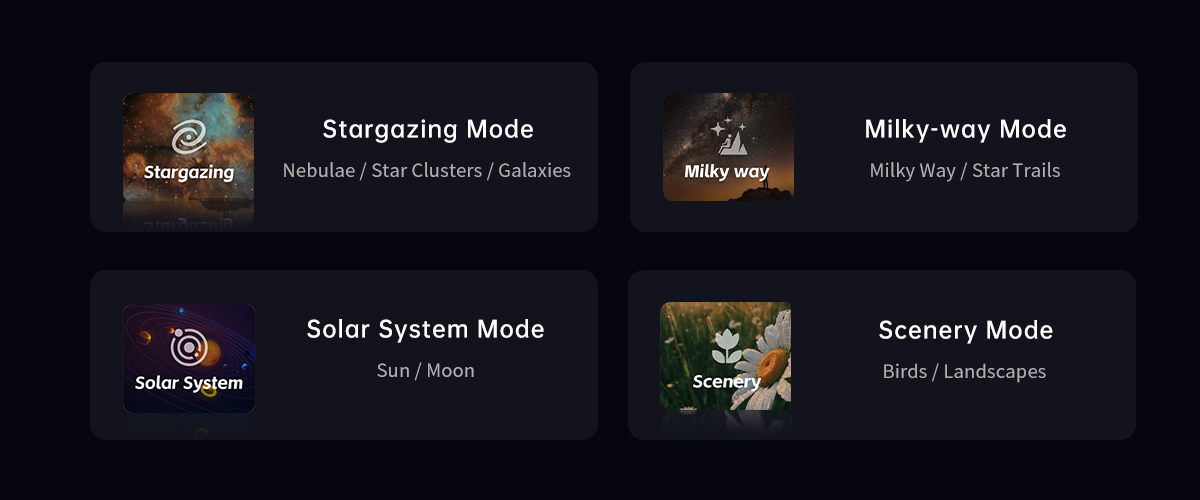
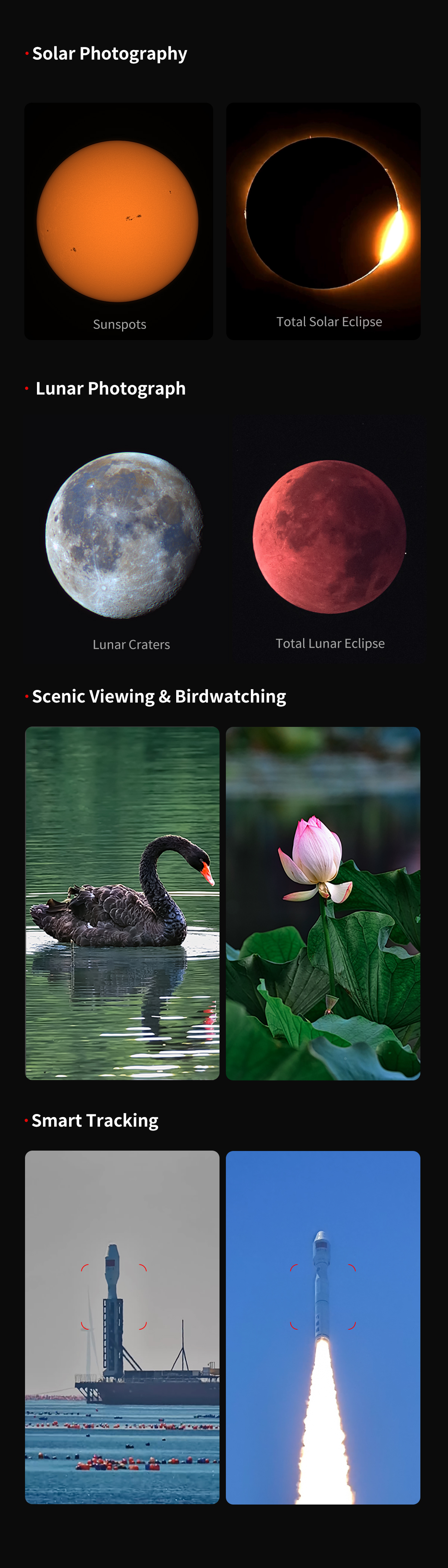
The S50 Pro provides four main operating modes. Stargazing Mode covers targets such as nebulae, star clusters and galaxies. Milky Way Mode is intended for Milky Way and star-trail imaging. Solar System Mode covers the Sun and Moon, while Scenery Mode is designed for terrestrial subjects such as birds and landscapes.
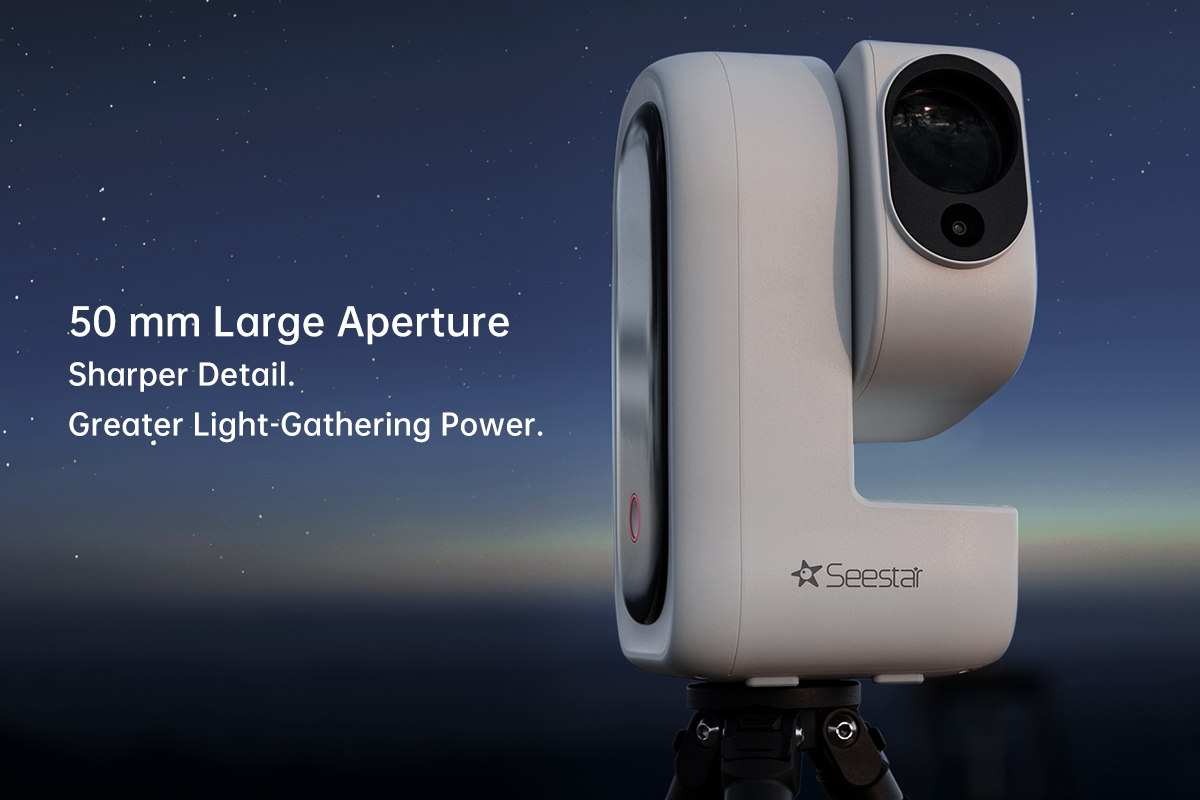
At the heart of the telephoto imaging system is a 50 mm aperture. ZWO states that this provides nearly three times the light-gathering area of a 30 mm aperture, increasing light collection and optical resolving capability for faint deep-sky structures as well as fine solar and lunar detail.
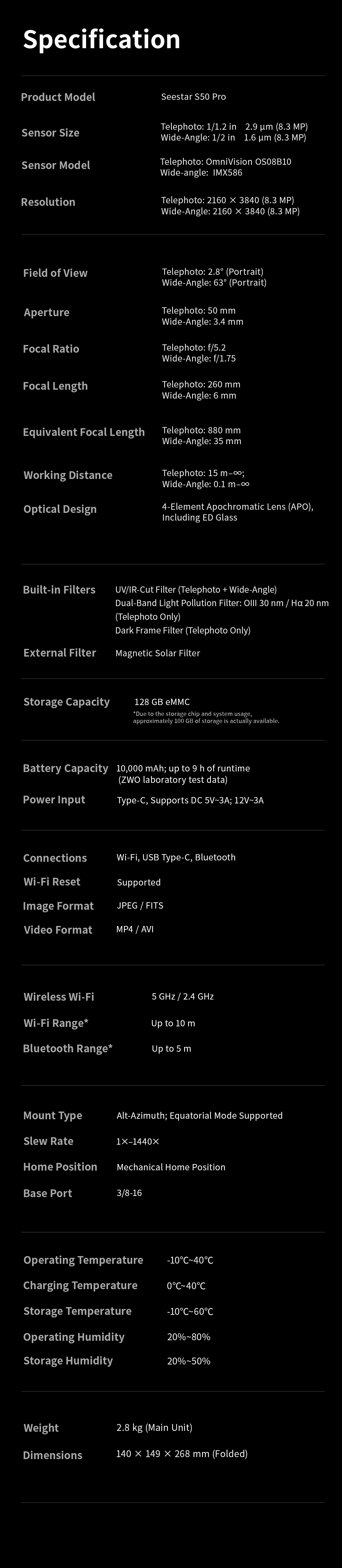
The telephoto channel has a 260 mm focal length and an F5.2 focal ratio. Its 1/1.2 inch sensor uses 2.9 micron pixels and provides 8.3 megapixels. The specified resolution is 2160 x 3840 pixels, with a 2.8 degree portrait field of view. ZWO specifies an equivalent focal length of 880 mm and a focusing range from 15 metres to infinity.
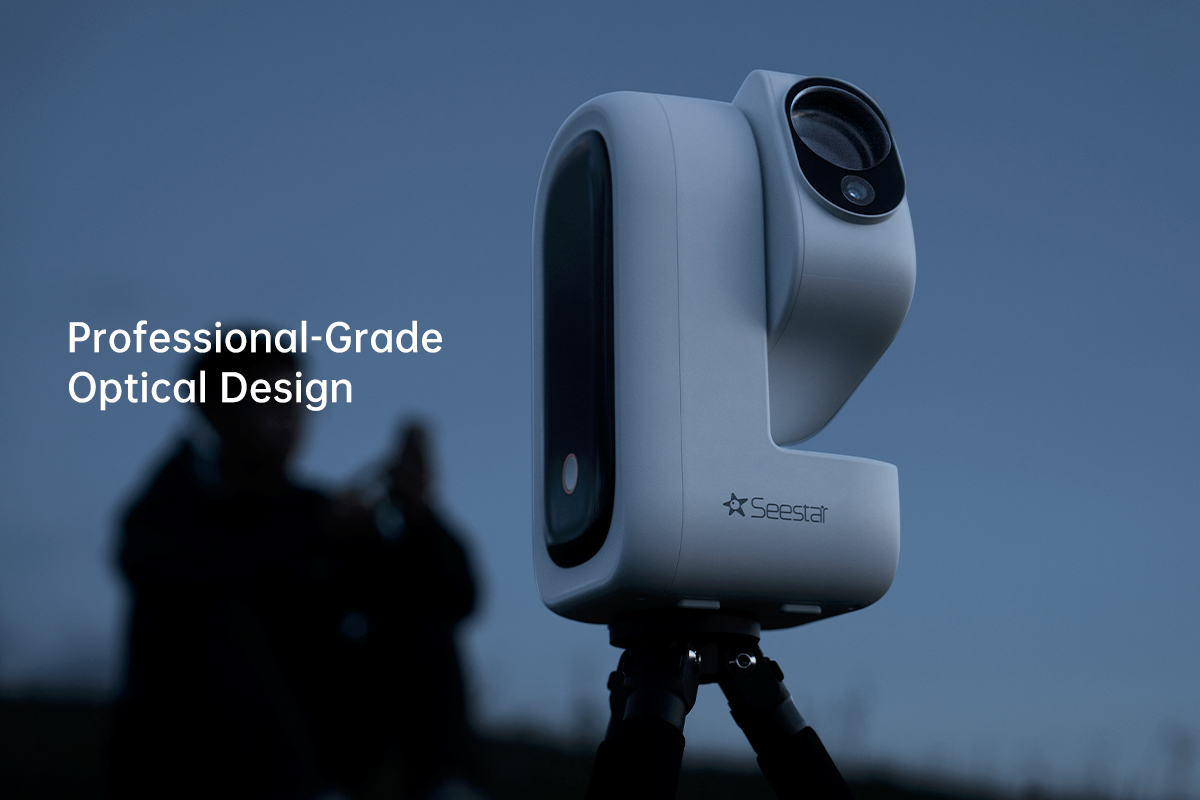
The S50 Pro uses a four-element apochromatic optical design incorporating Extra-low Dispersion glass. It is engineered to minimize chromatic aberration, providing rounder and sharper stars together with clean and neutral backgrounds. A folded optical path keeps the instrument compact and portable.
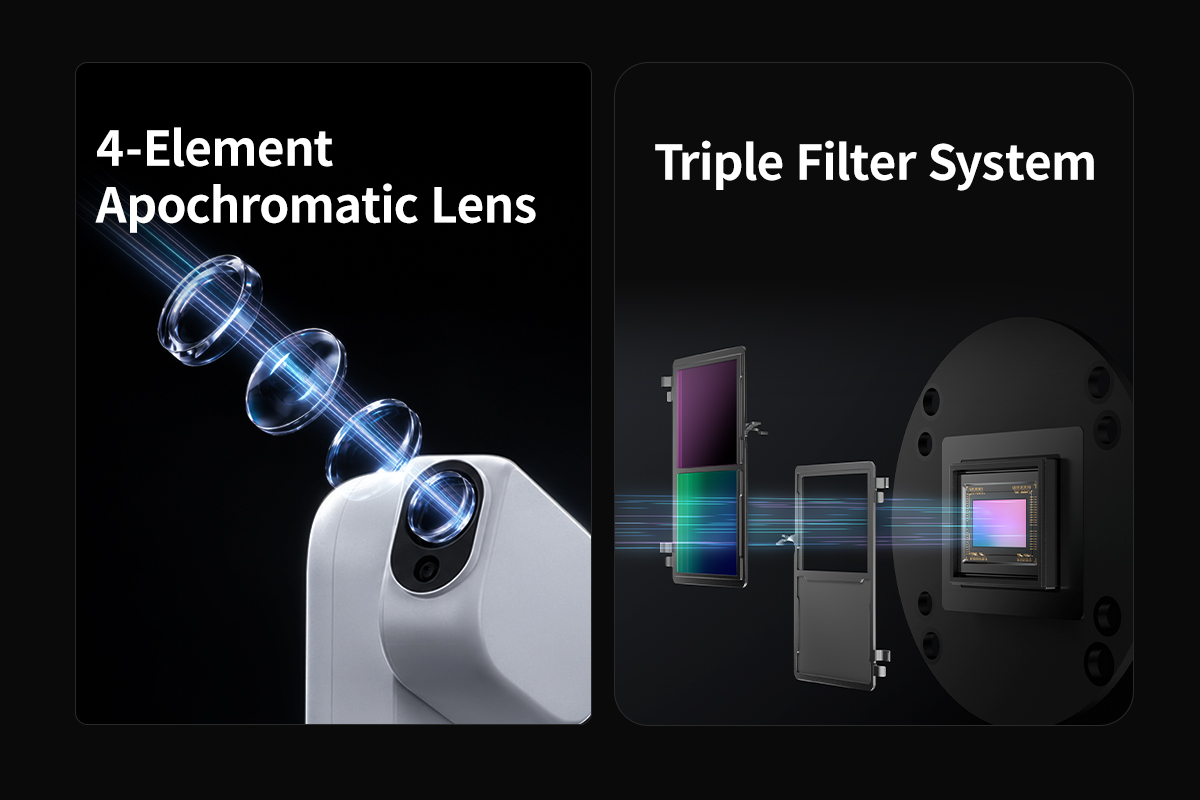
The optical system incorporates several filters. Both cameras include UV IR Cut filtering. The telephoto channel additionally incorporates a dual-band light-pollution filter with a 30 nm OIII band and 20 nm H-alpha band, together with a Dark Frame filter. A magnetic external solar filter is also supplied.
The S50 Pro includes a second wide-angle camera. It uses a 1/2 inch 8.3 MP sensor with 1.6 micron pixels. Resolution is also 2160 x 3840 pixels. The lens has a 3.4 mm aperture, 6 mm focal length and F1.75 focal ratio. Its portrait field of view reaches 63 degrees, with a specified equivalent focal length of 35 mm and focusing range from 0.1 metre to infinity.
The telephoto and wide-angle cameras work together. The telephoto camera concentrates on deep-sky detail, while the wide-angle camera records a much broader star field. Both cameras support 4K UHD imaging.
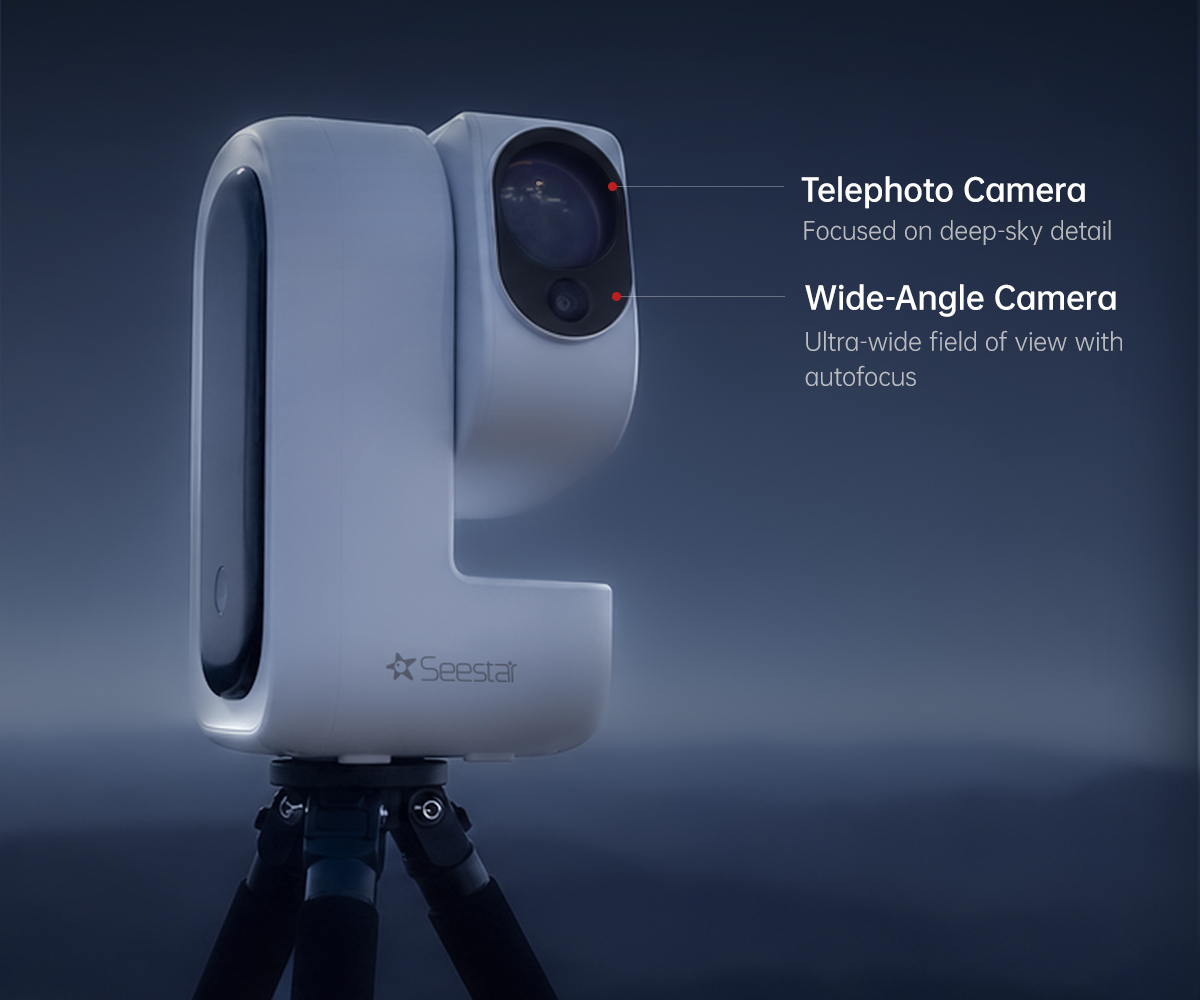
At 1x magnification, ZWO specifies 4K 3840 x 2160 capture for both cameras. Resolution decreases at 2x and 4x magnification. The real-time live preview stream is 1080p for both cameras.
The S50 Pro telephoto field also covers a wider area around targets than the original S50 while maintaining the detail provided by its 50 mm imaging system.
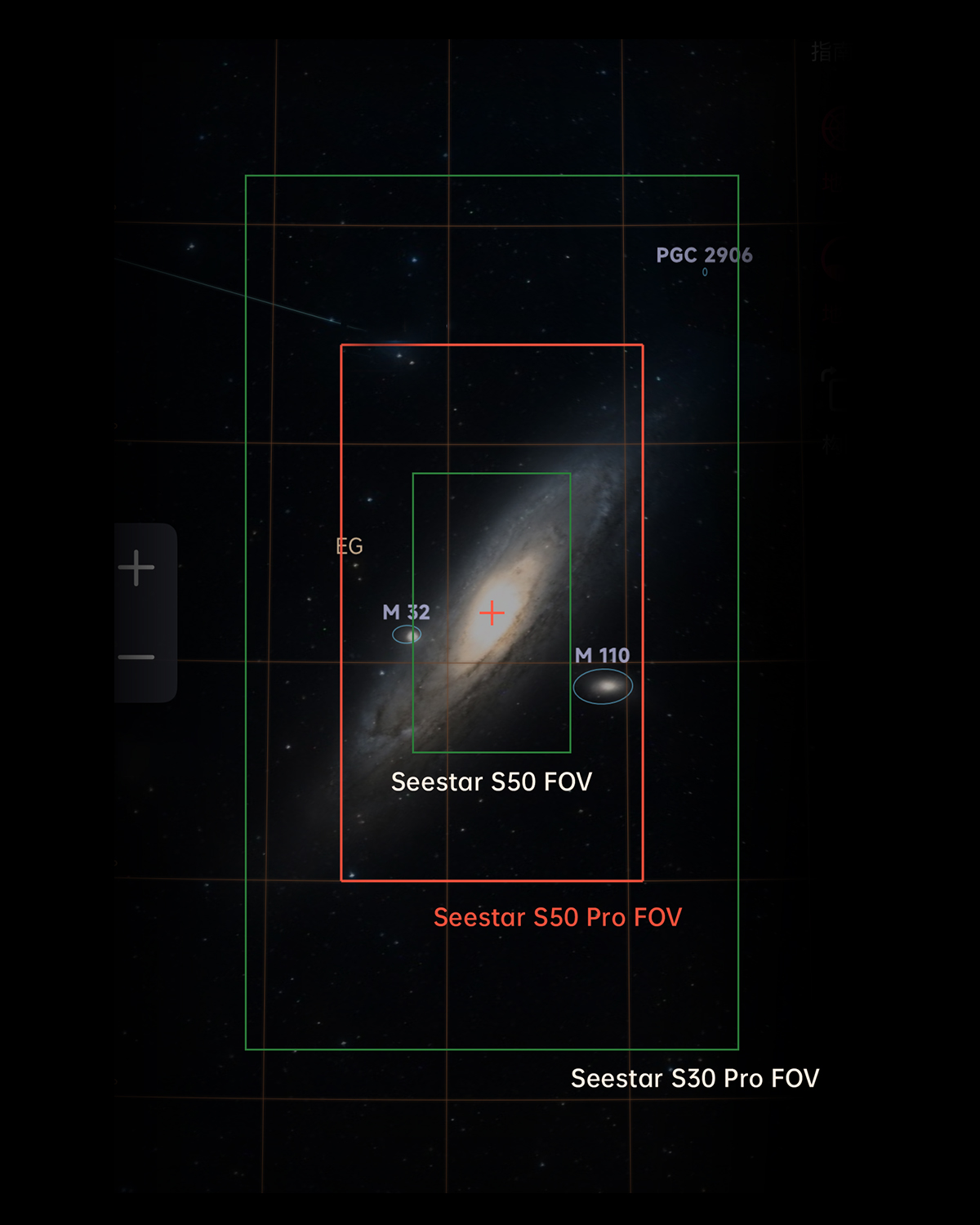
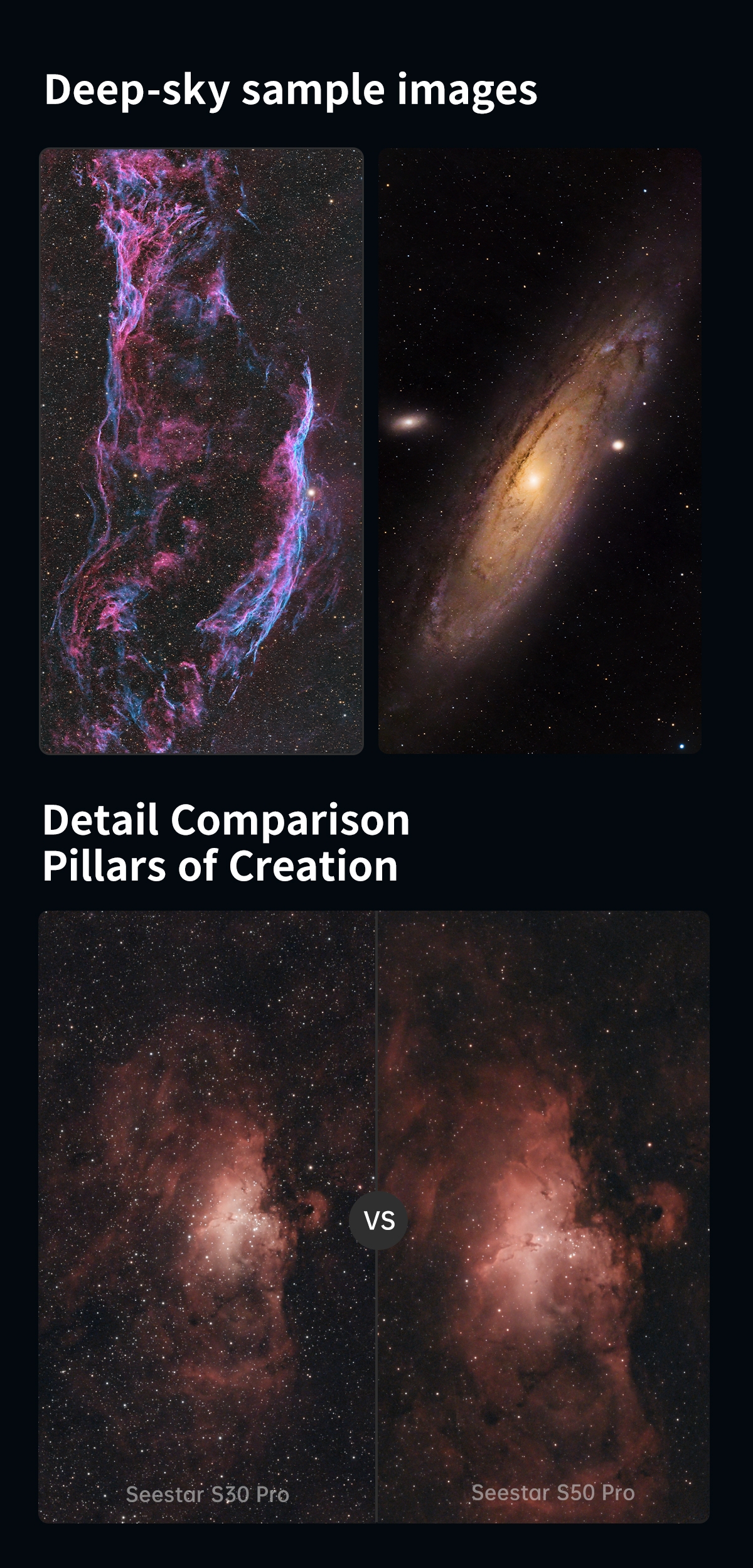
For objects larger than the telephoto field, DSO Mosaic Stitching captures multiple telephoto frames and combines them into a wider image while preserving telephoto detail. ZWO specifies output resolutions up to 8K. This can be used for deep-sky objects, lunar surfaces and other detail-rich scenes.
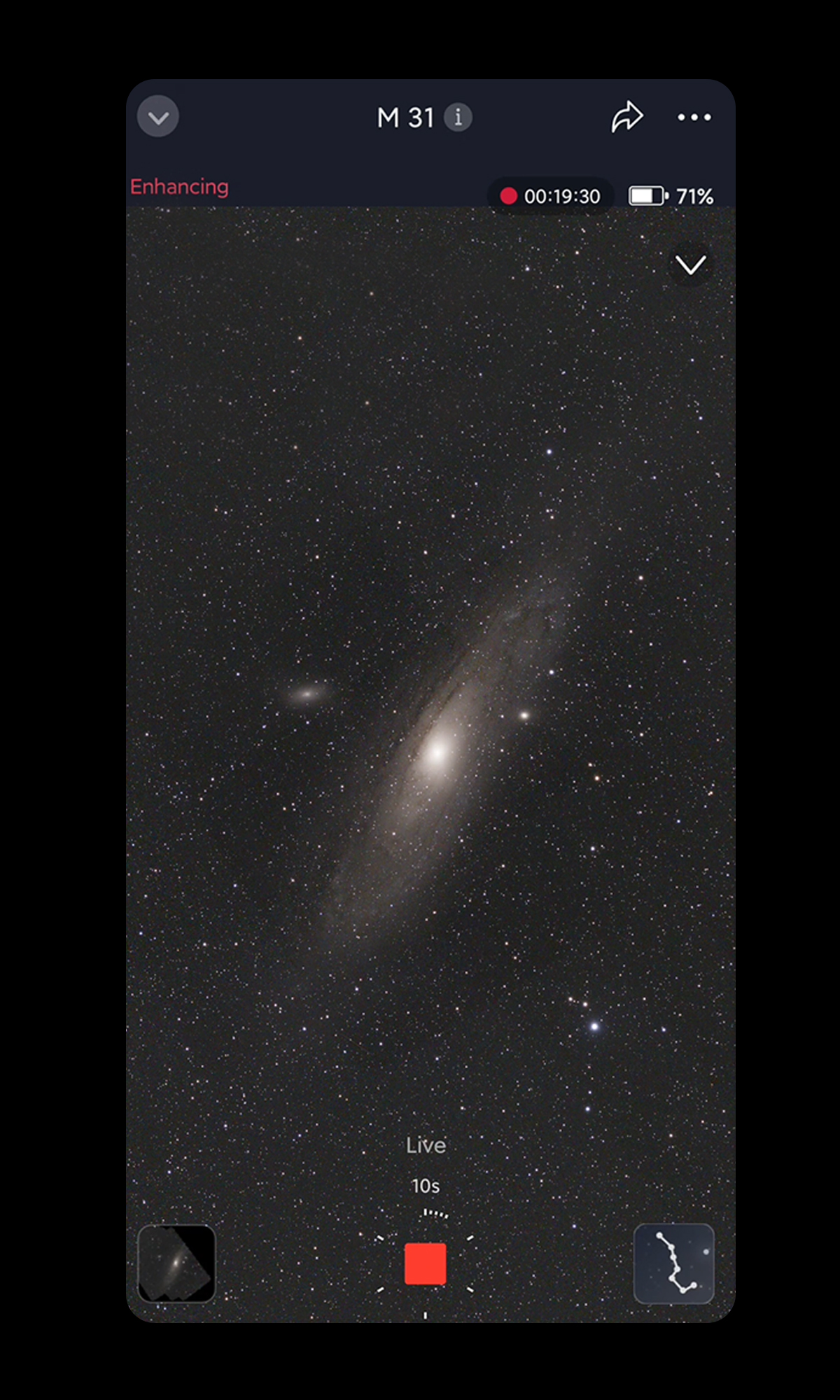
Official examples demonstrate the use of this function on extended nebulae and galaxies together with the wider field provided by the S50 Pro.
The integrated object database allows the user to select a target directly in the application. After a GOTO command, Seestar automatically locates, tracks and begins capturing the selected object.
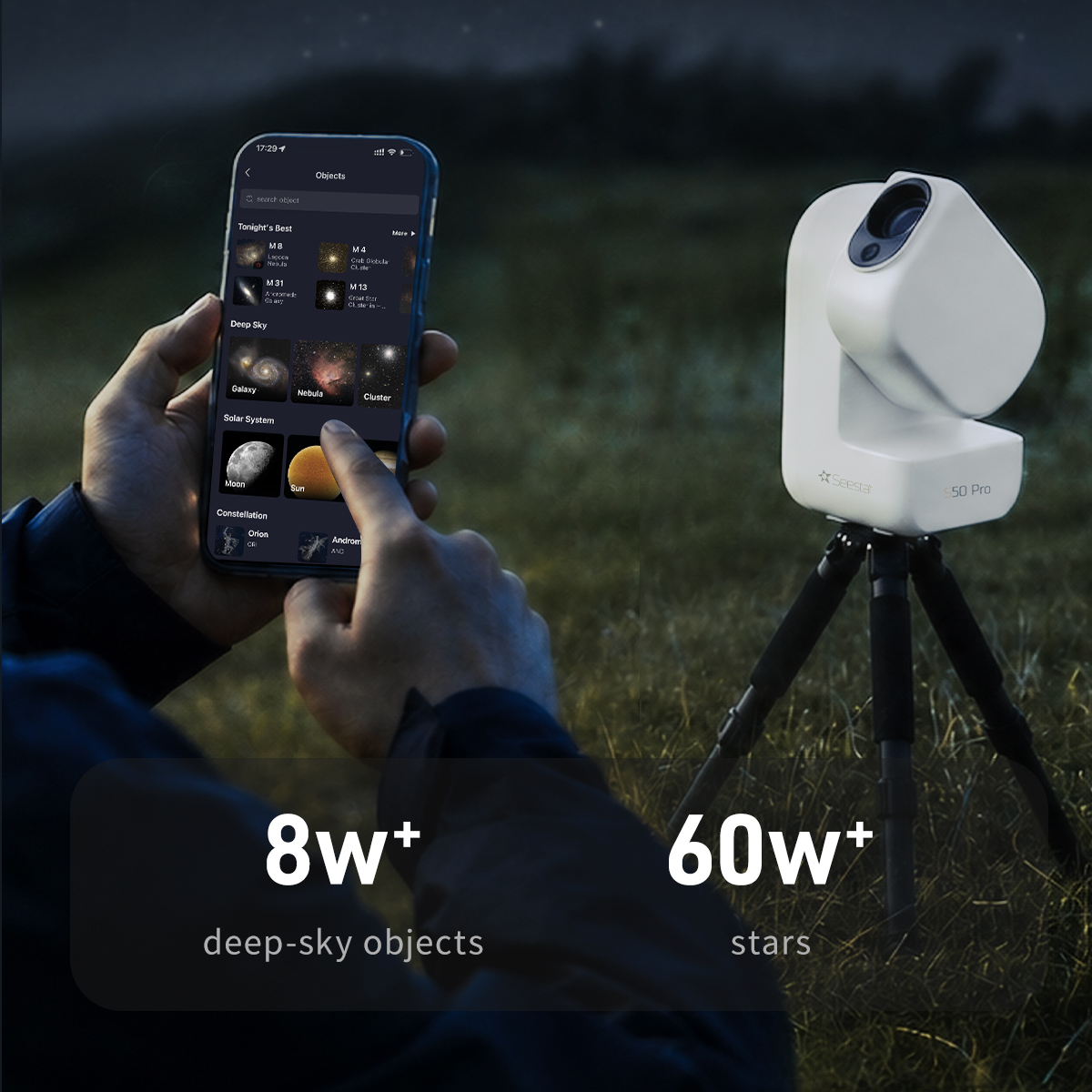
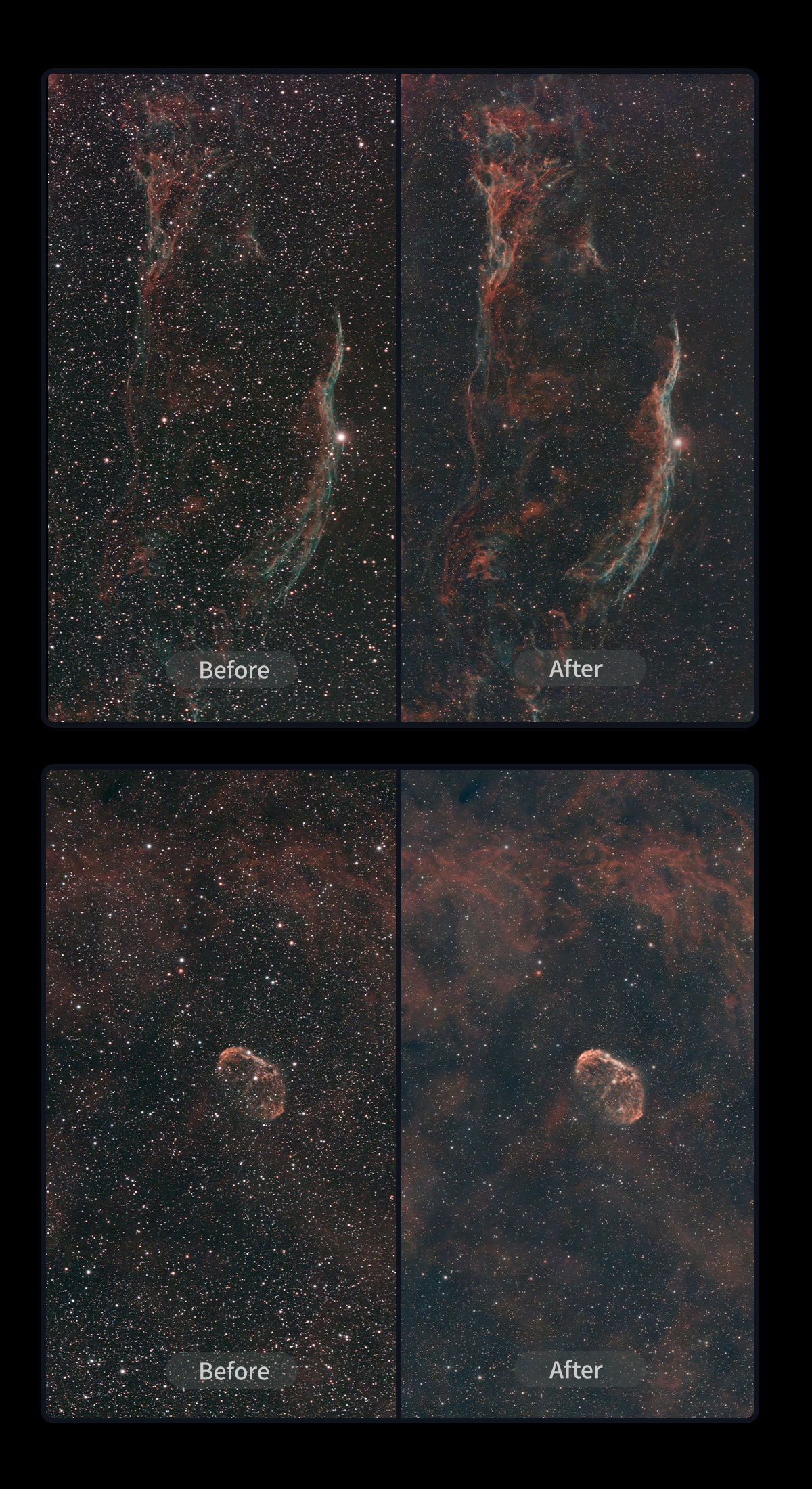
Image processing can also be performed directly within the Seestar environment. One-tap processing quickly provides a finished result, while advanced controls include star reduction, star removal, cropping, brightness, contrast, noise reduction and saturation adjustment.
Smart Enhancement optimizes noise in genuine astrophotographic captures and enhances stars already present in those images. ZWO explicitly states that this feature does not generate artificial astronomical content: the resulting images remain authentic telescope captures rather than AI-generated images.
Milky Way Mode uses the wide-angle camera and supports multiple stitching options. The system can automatically create Milky Way arch panoramas, with ZWO specifying output up to 8K.
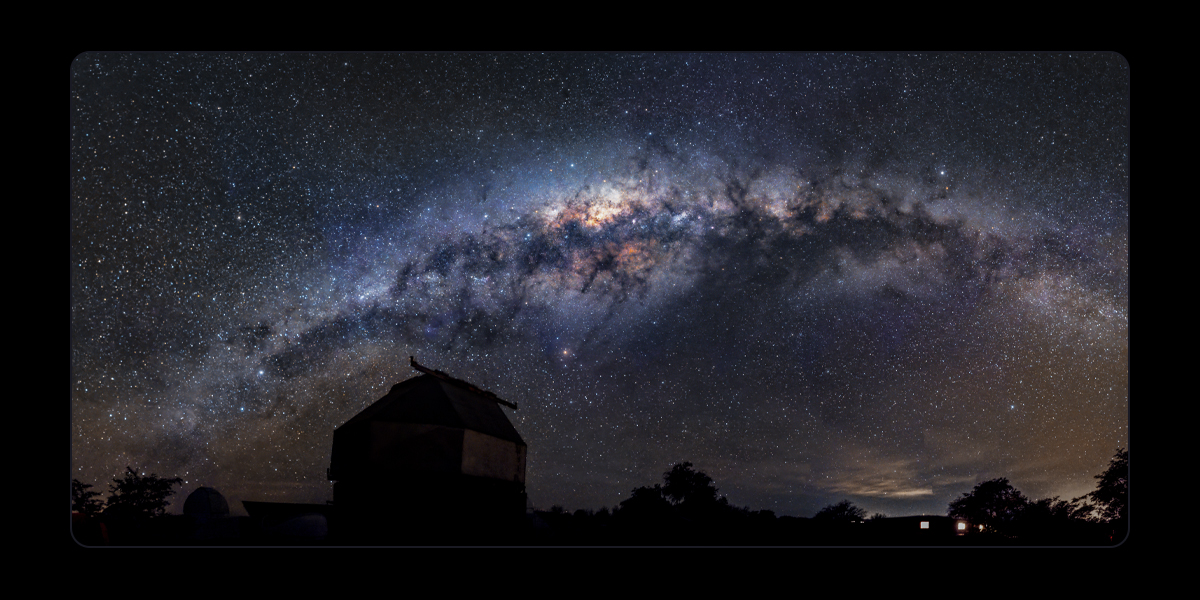
Freeze the Ground processes the sky and foreground separately. Seestar detects and locks the landscape while tracking continues on the sky. The landscape freeze duration can be customized, helping keep both the stars and terrestrial foreground sharp.
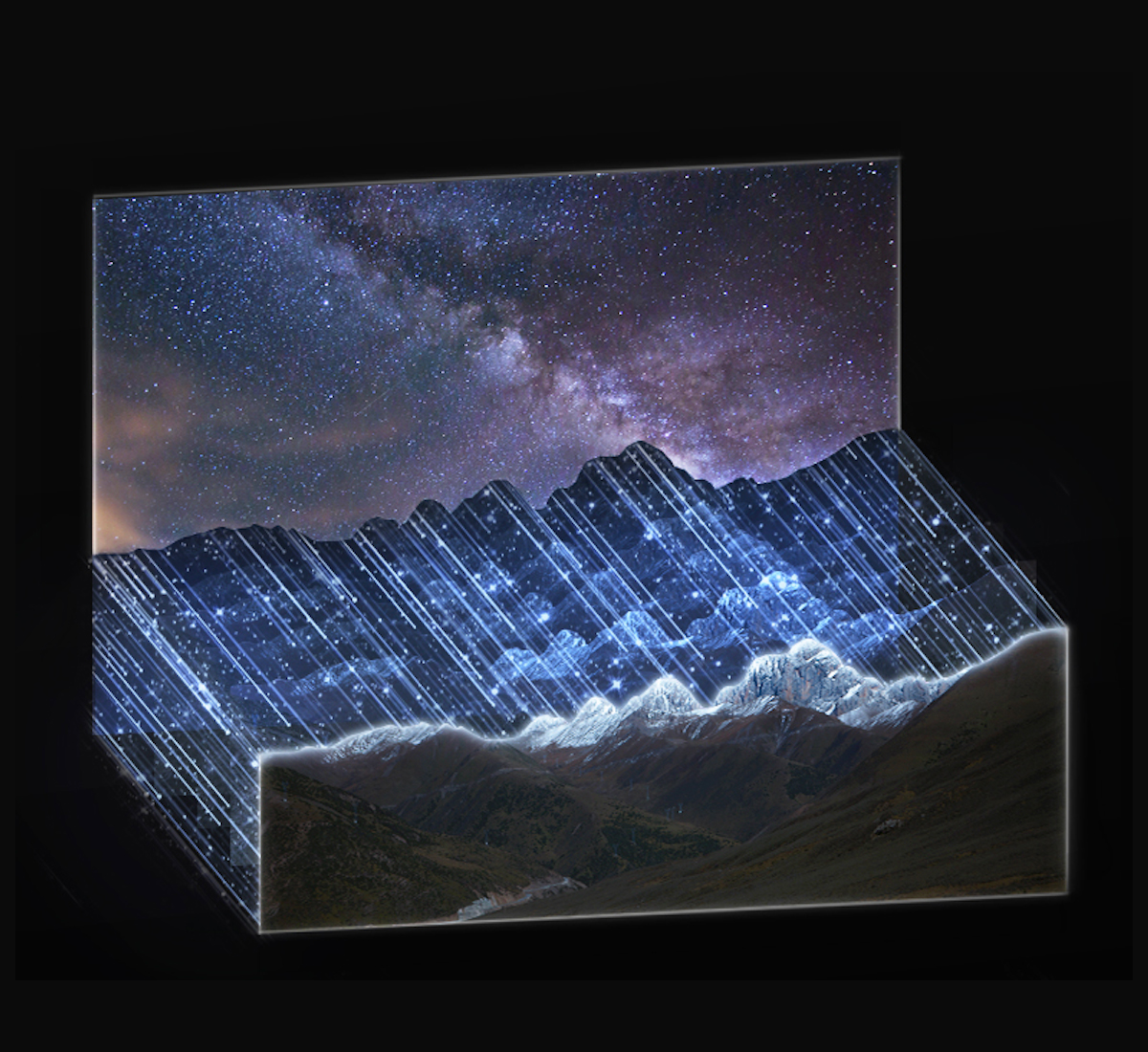
Milky Way imaging requires sufficiently dark skies. ZWO notes that under significant light pollution, Milky Way detail may be limited or may not be visible.
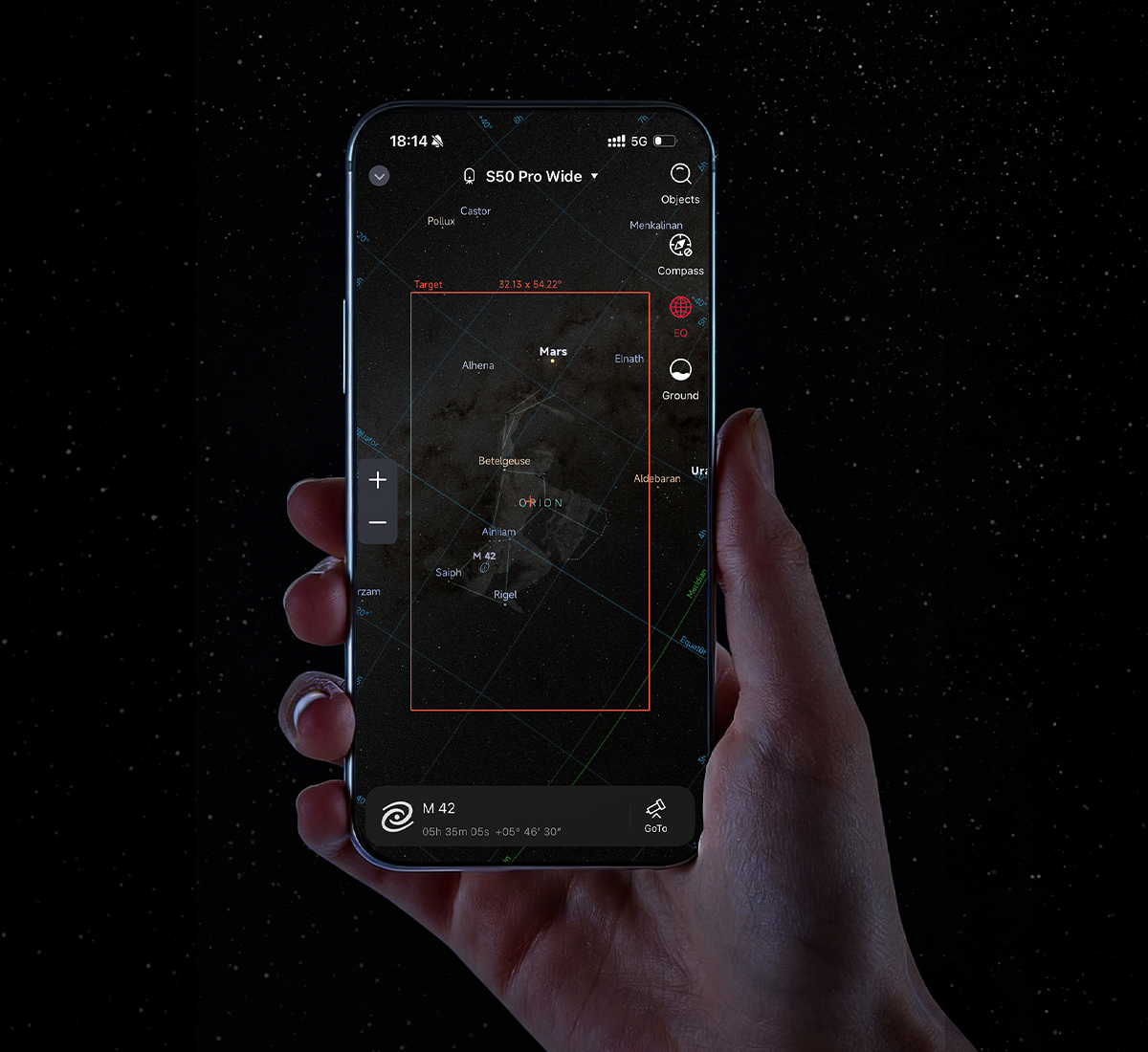
The S50 Pro also provides intelligent constellation recognition. Constellation lines and labels can be displayed, after which the identified target can be selected for automatic GOTO positioning.
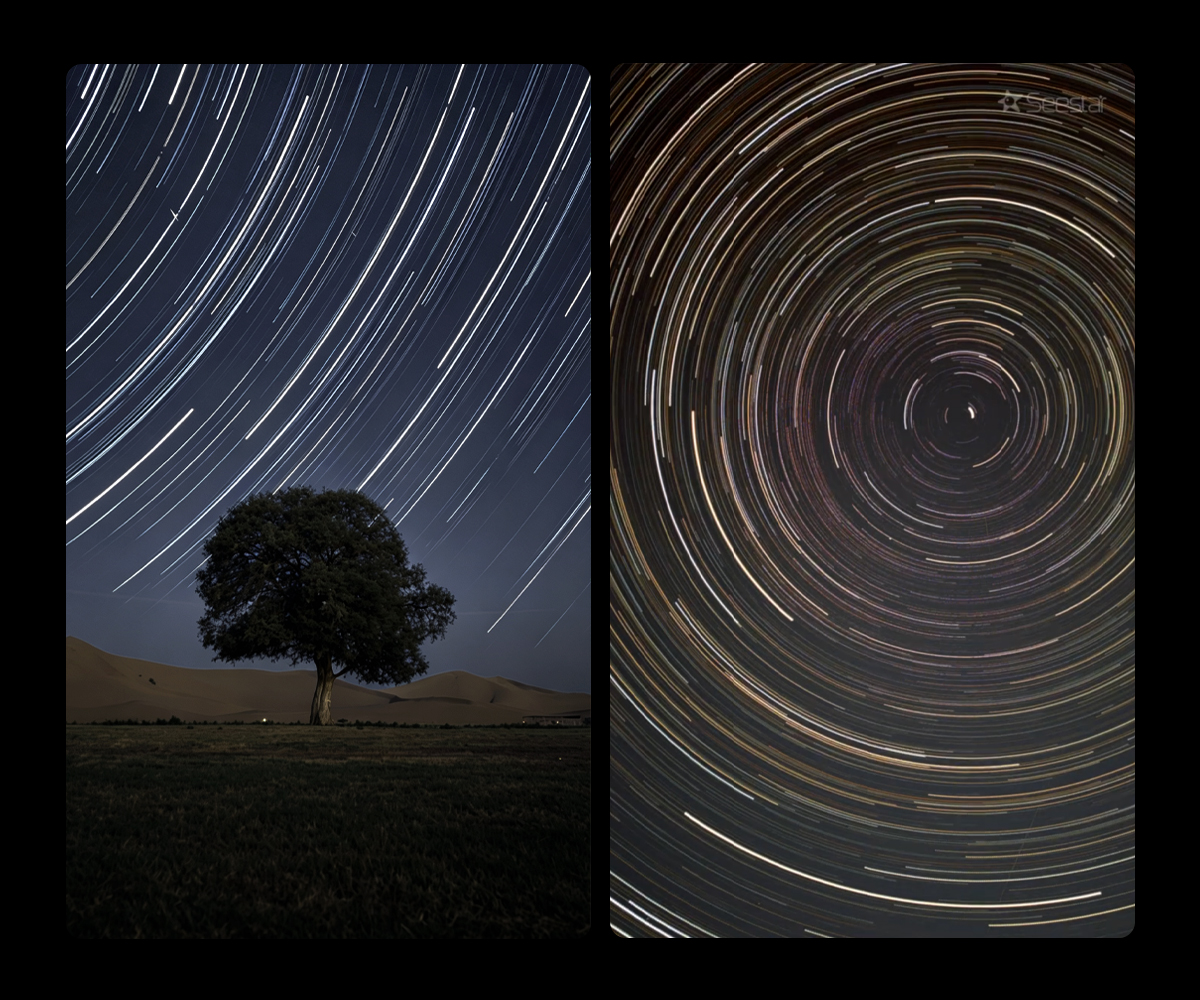
Star-trail capture is supported as well. Long-duration sequences can automatically be turned into dynamic videos showing the apparent movement of the night sky over time.
The S50 Pro is not limited to deep-sky imaging. It can capture sunspots, lunar surface detail and events such as solar and lunar eclipses. The supplied solar filter must always be installed before observing or imaging the Sun. ZWO warns that allowing the main camera to view the Sun directly without the filter may permanently damage the device.
The system can also operate as a telephoto viewing camera for terrestrial subjects, including birdwatching, distant landscapes, tracked subjects and rocket launches.
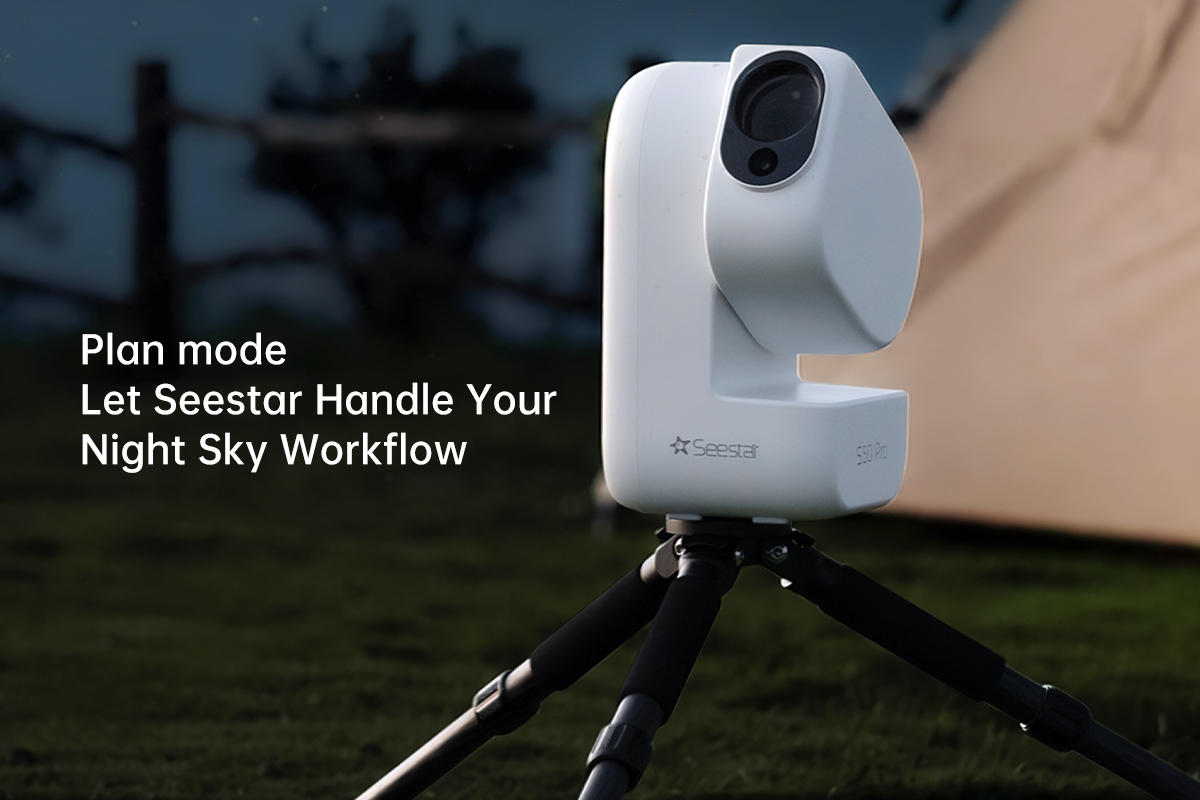
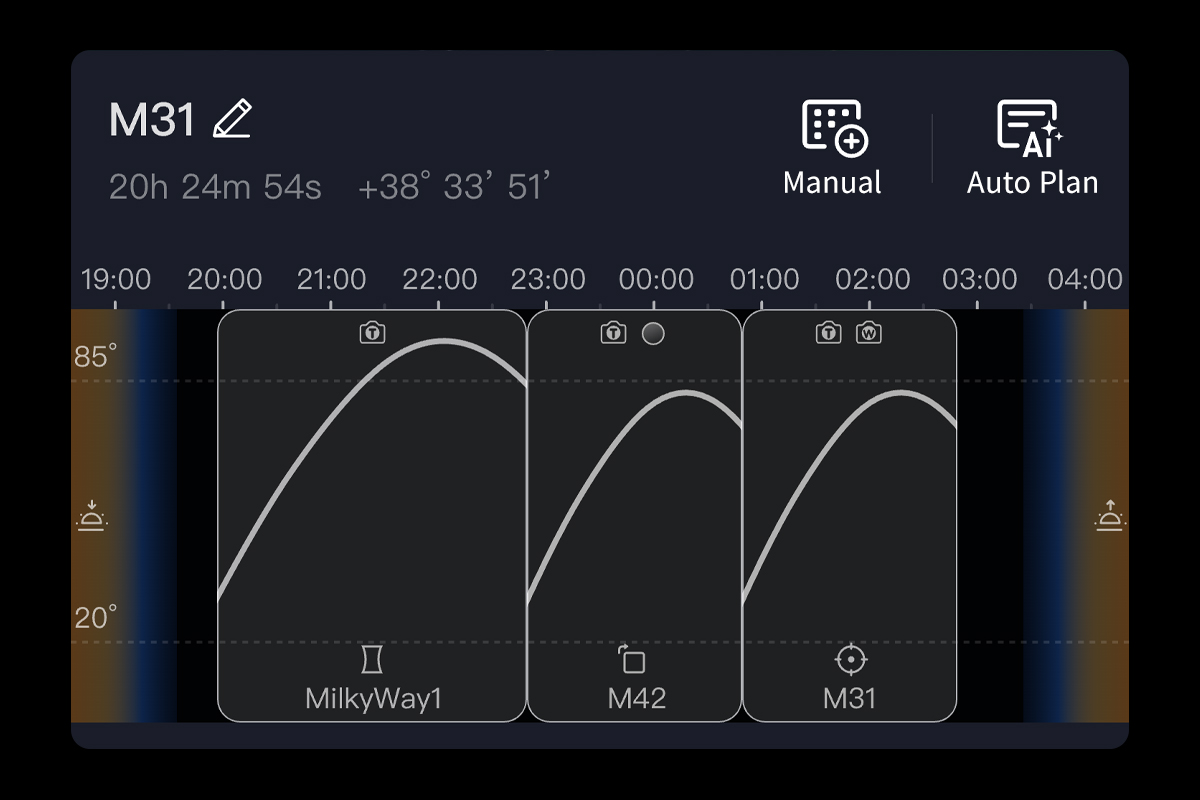
Plan Mode allows an imaging night to be scheduled automatically. Users can create a plan, define several targets and allow Seestar to switch automatically between them for efficient multi-target acquisition.
Weather remains the user's responsibility. ZWO states that sudden cloud cover, rain or strong winds may prevent task completion and that the telescope does not automatically power off under these conditions.
In addition to Alt-Azimuth operation, the S50 Pro supports Equatorial Mode to compensate for Earth's rotation. ZWO combines this mode with a precision drive system described as having near-zero backlash for smoother tracking and fine adjustment.
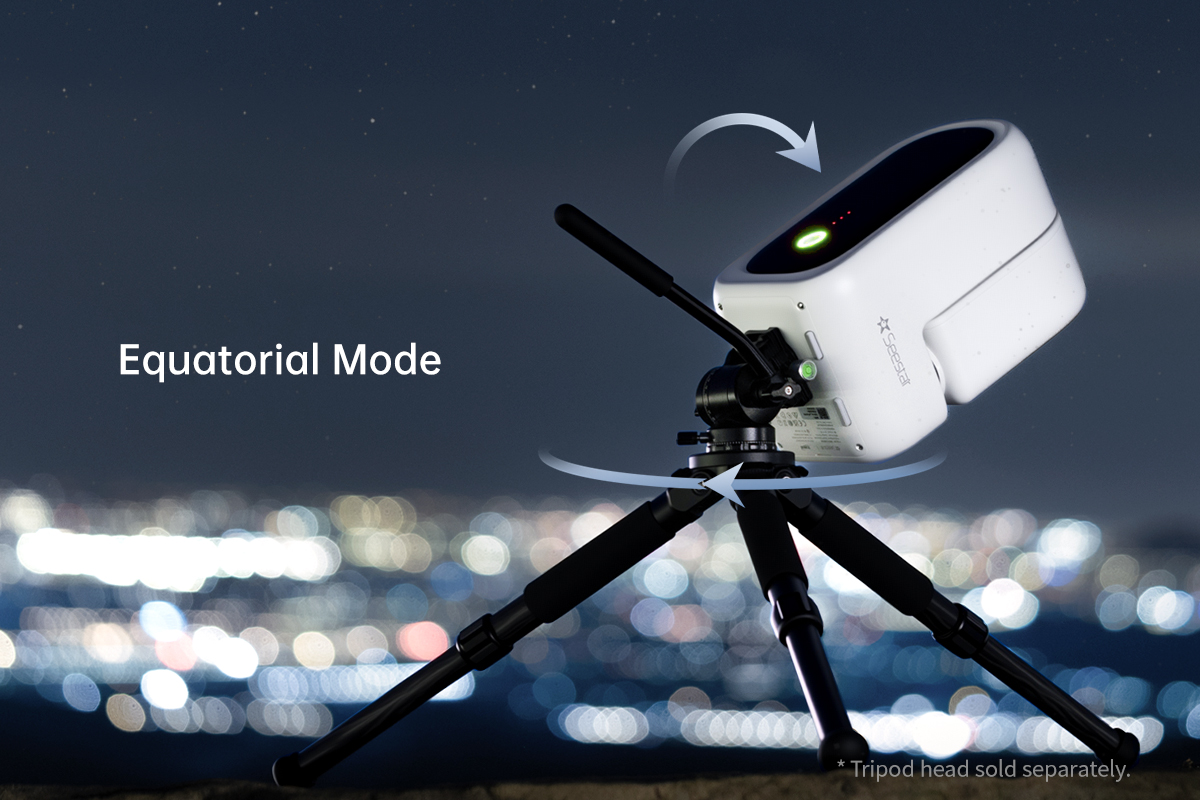
Long exposures of 60 seconds are supported only in Equatorial Mode and are not available in Alt-Azimuth Mode. Accurate polar alignment is required for precise tracking at these exposure lengths.
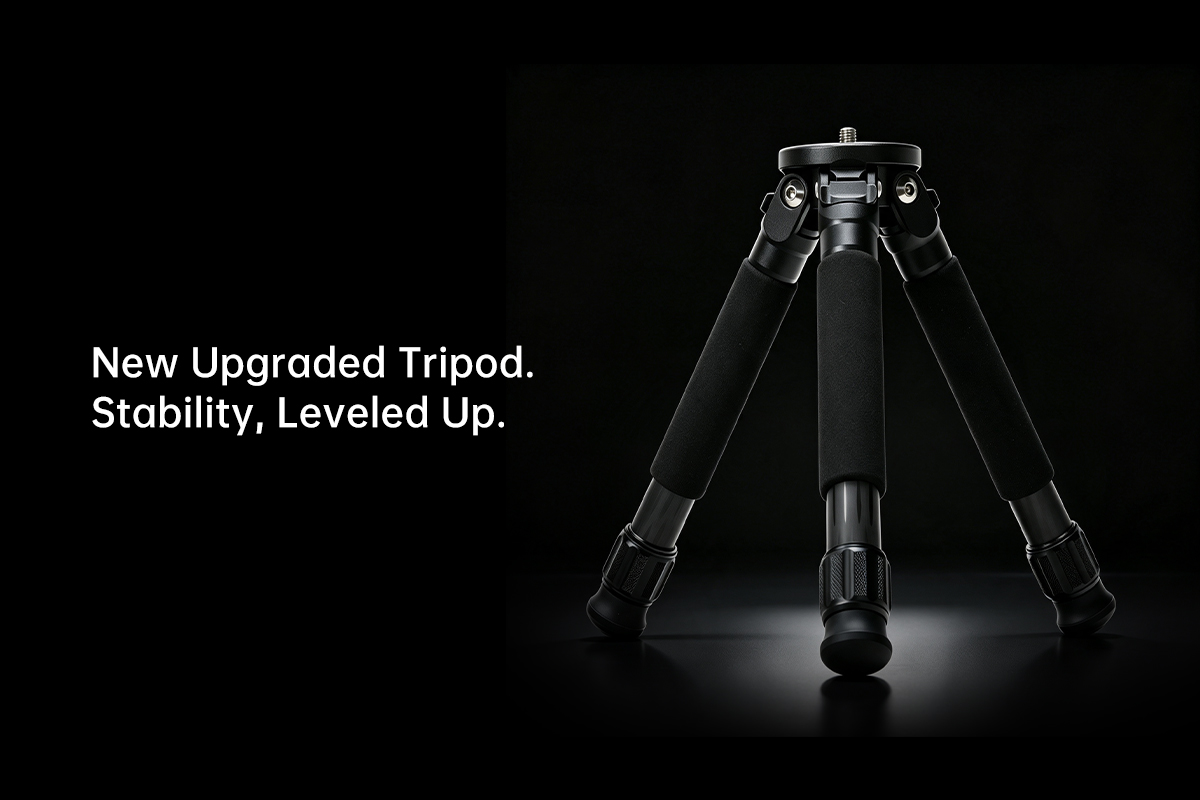
The supplied tripod has also been upgraded, providing additional angle adjustment angle options and a more balanced three-point load distribution for improved stability.
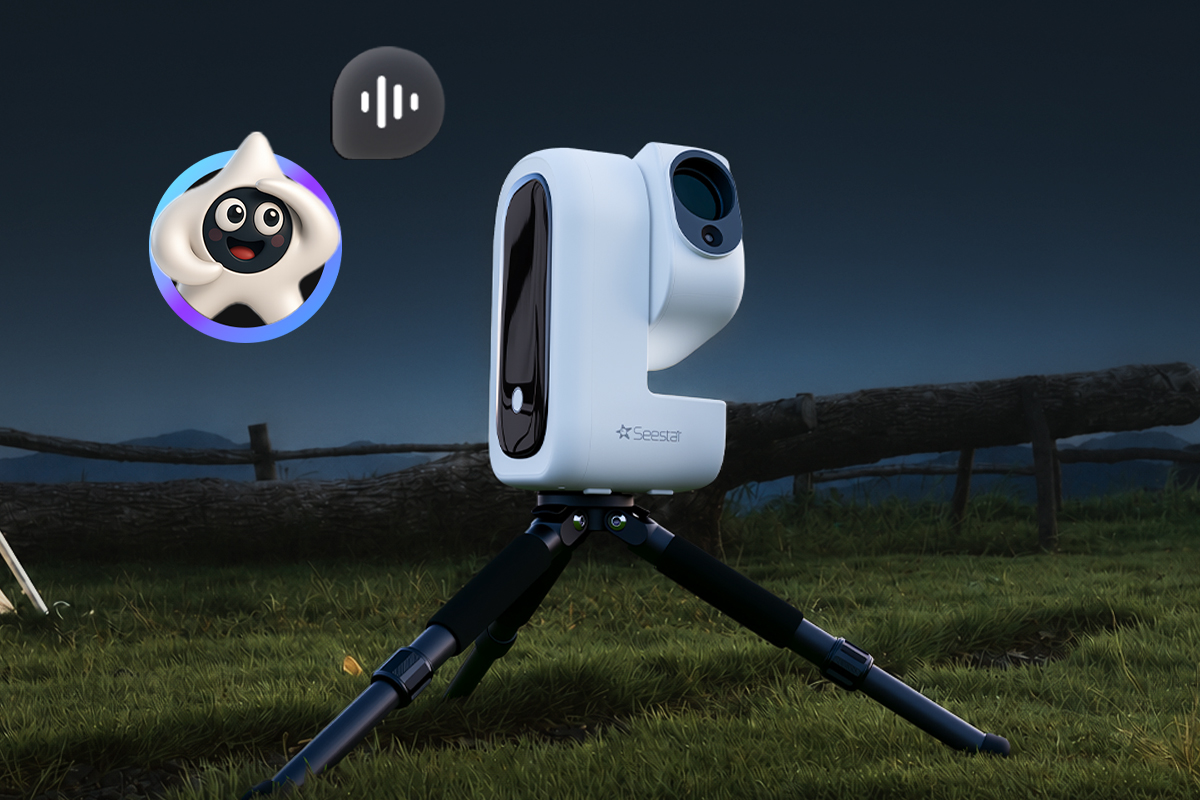
An AI assistant provides support for observing, imaging, celestial knowledge and operational guidance. The user can specify the desired celestial target and the system can search for it, perform GOTO positioning and start capture.
Remote control functions allow access to a device installed at another observing location for observation, capture and file management. This can allow continued imaging through a Seestar installed under better skies when the local location is cloudy, heavily light-polluted or in daylight. According to the supplied documentation, Telescope Network Remote Access is available as a limited-time free trial during the beta period.
The system is also open to more advanced workflows. It supports the open ASCOM Alpaca protocol and can connect to third-party astronomy software such as N.I.N.A., extending automated observing and advanced imaging possibilities.

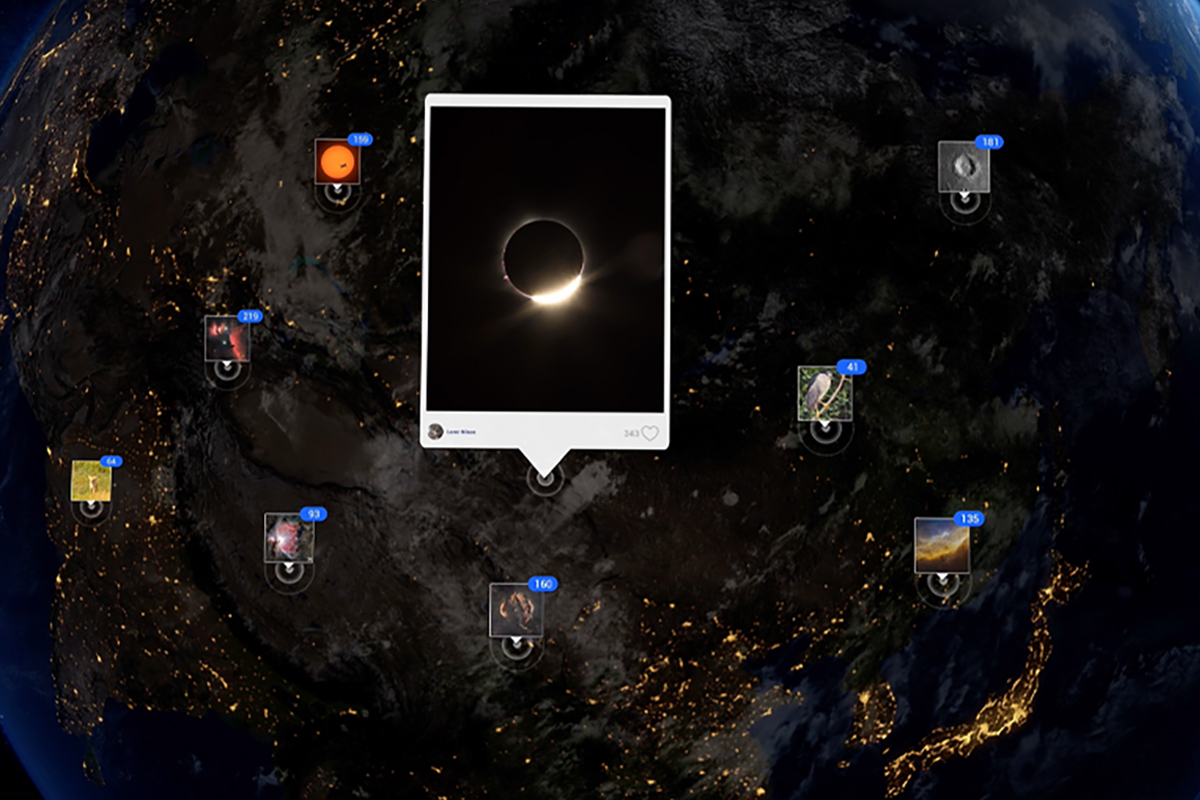
The ecosystem also includes AstroImg, a community for sharing images, exploring the sky and exchanging ideas with other astronomy enthusiasts.
Internal storage consists of 128 GB eMMC. ZWO notes that system usage and storage allocation leave approximately 101 GB available and that future system updates may affect available capacity.
The integrated battery has a capacity of 10,000 mAh. ZWO specifies up to 9 hours of runtime under laboratory conditions at ambient temperatures above 25 degrees Celsius, using Alt-Azimuth Mode and Telephoto Sensor Stargazing Mode. Actual runtime may therefore vary.
Connections include Wi-Fi, USB Type-C and Bluetooth. Wi-Fi operates on both 2.4 GHz and 5 GHz. ZWO specifies Wi-Fi range up to 10 metres in an open outdoor environment without interference and Bluetooth range up to 5 metres. Actual wireless range depends on real-world conditions.
NFC is also supported with a compatible smartphone. The telescope must be powered on, the phone unlocked, and Wi-Fi, Bluetooth, NFC and GPS enabled on the smartphone. NFC sensitivity depends on antenna placement within the phone. If the Seestar Wi-Fi name is changed, the NFC information must be updated manually.
Power input is provided through USB Type-C with DC 5 V 3 A and 12 V 3 A support. Images can be saved as JPEG or FITS files, while video formats include MP4 and AVI.
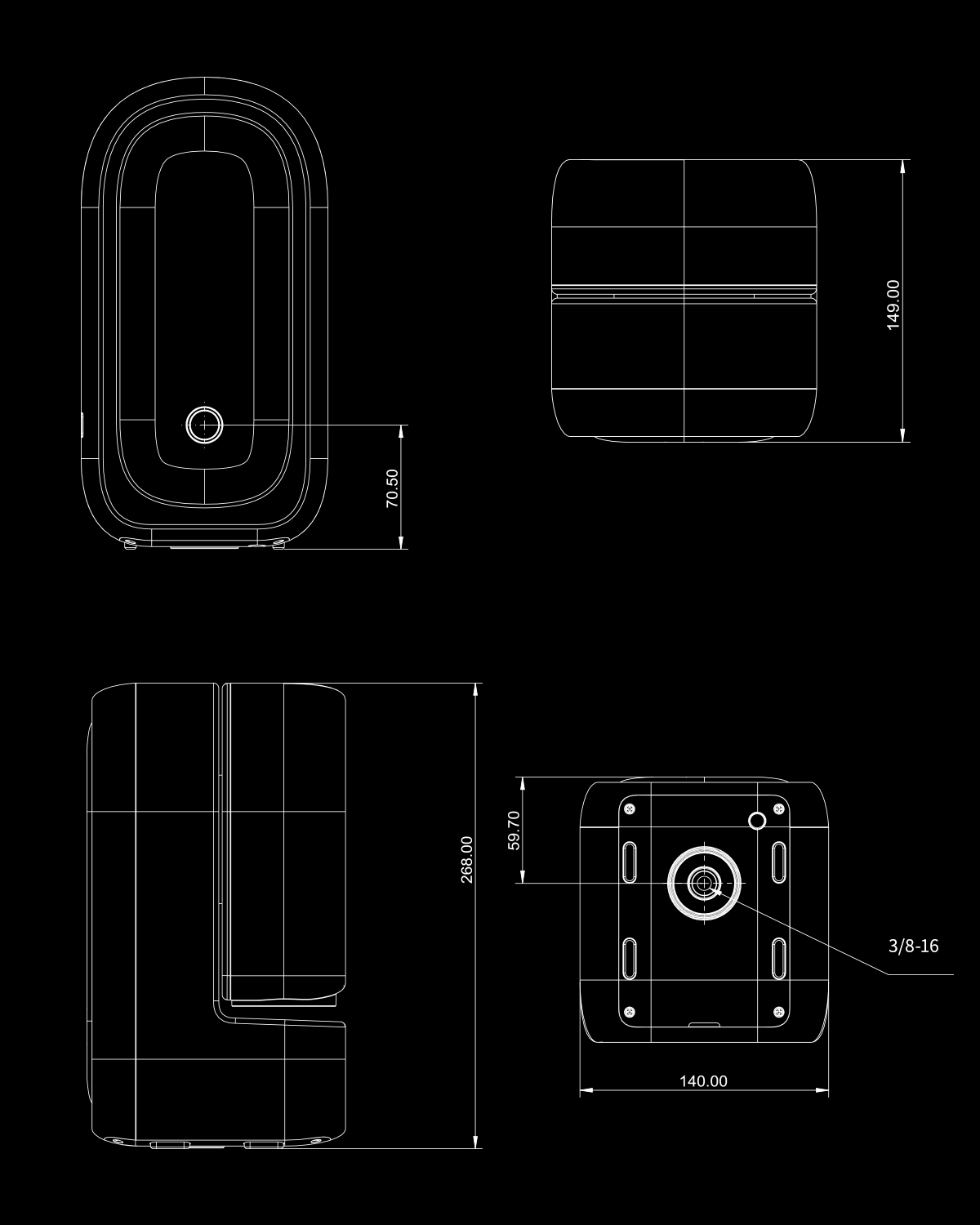
The S50 Pro uses an integrated Alt-Azimuth mount and also supports Equatorial Mode. Specified slew speeds range from 1x to 1440x. It includes a mechanical Home position and a 3/8-16 base mounting thread.
Folded dimensions are 140 x 149 x 268 mm and the main unit weighs 2.8 kg.
Operating temperature ranges from -10 to 40 degrees Celsius. Charging temperature is 0 to 40 degrees Celsius and storage temperature ranges from -10 to 60 degrees Celsius. Specified operating humidity is 20 to 80 percent, with storage humidity from 20 to 50 percent.
Imaging results depend on real-world conditions including light pollution, atmospheric transparency, parameter settings and stacking duration.
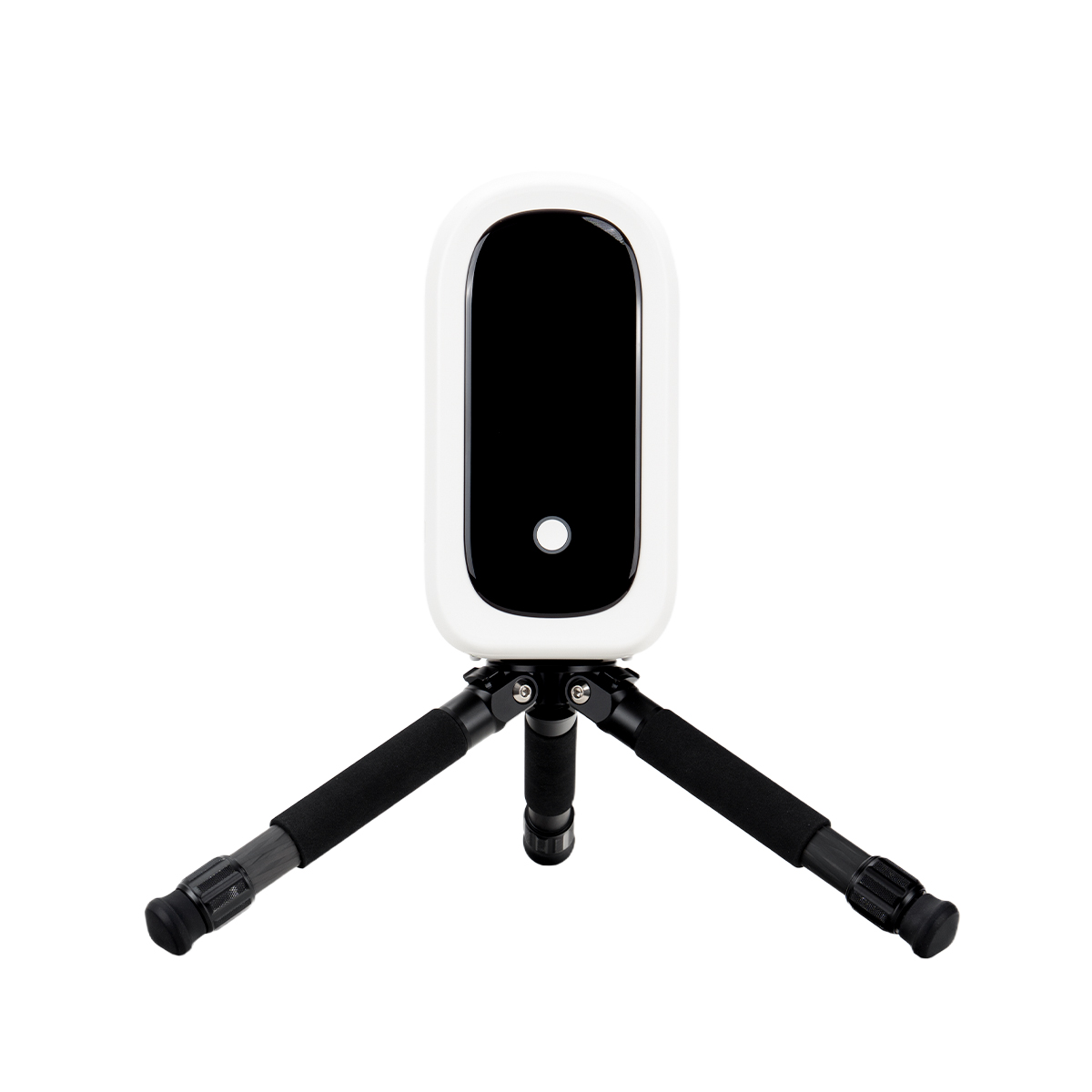
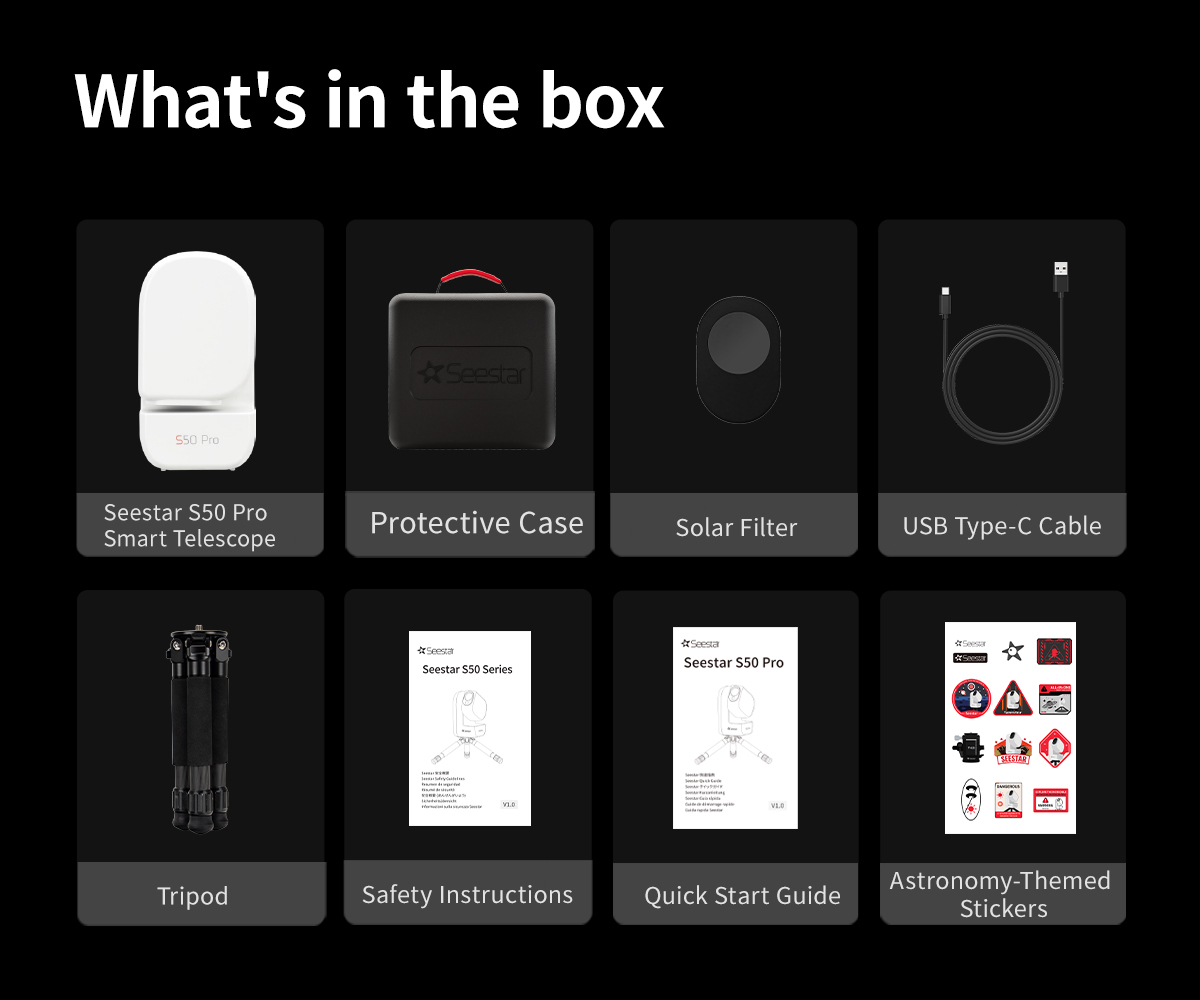
The package includes the Seestar S50 Pro, upgraded tripod, protective case, solar filter, USB Type-C cable, safety instructions, quick start guide and astronomy-themed stickers.
Compared with the original Seestar S50, the S50 Pro notably introduces a 1/1.2 inch 8.3 MP telephoto sensor instead of the 1/2.8 inch 2 MP sensor, a second wide-angle camera, a four-element apochromatic optical system, 260 mm focal length, Milky Way and star-trail imaging, a 10,000 mAh battery, 128 GB storage and NFC.
The ZWO Seestar S50 Pro combines a 50 mm apochromatic optical system, dual 4K cameras, a 1/1.2 inch main sensor, Alt-Azimuth and Equatorial modes, deep-sky, Milky Way, solar and lunar imaging in one automated portable system.