
No products
Prices are tax included

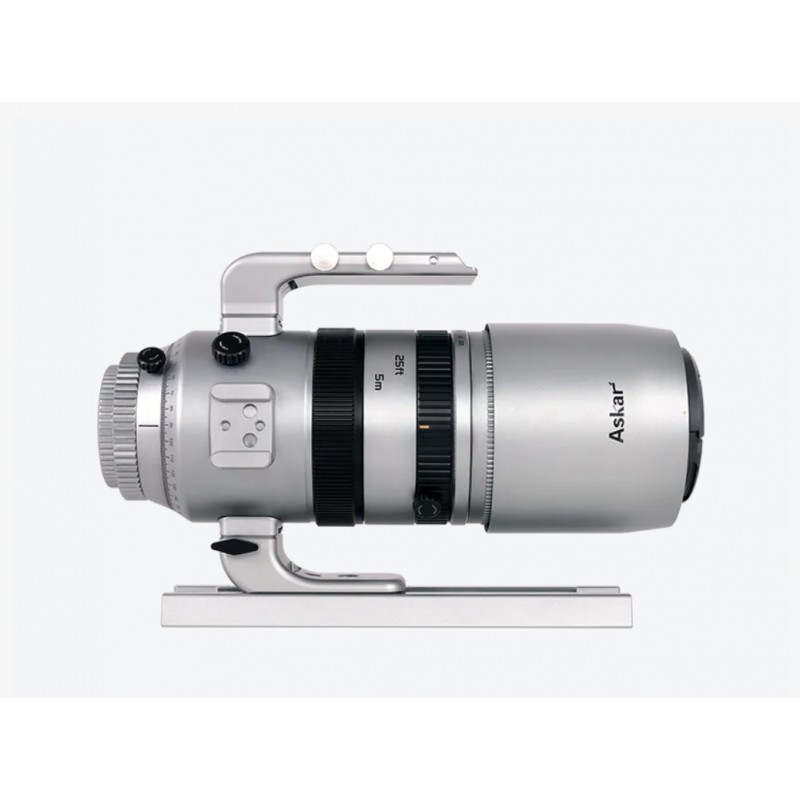
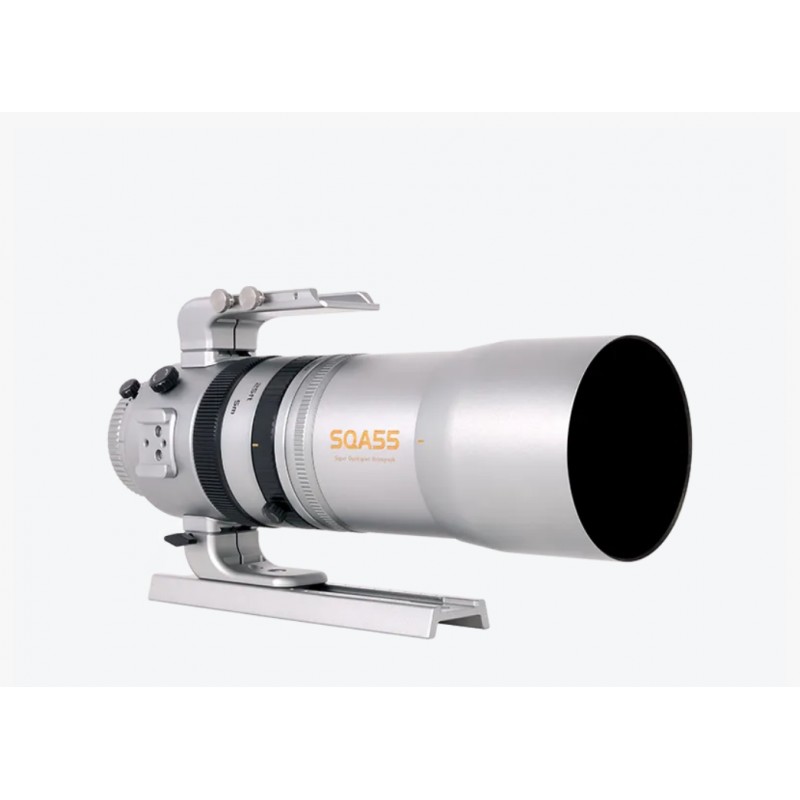
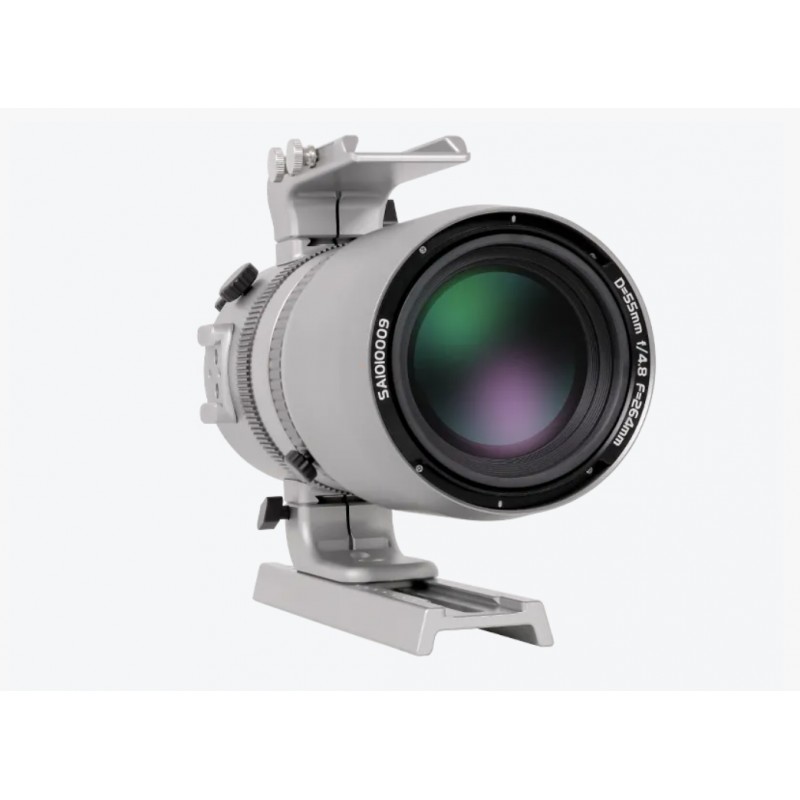
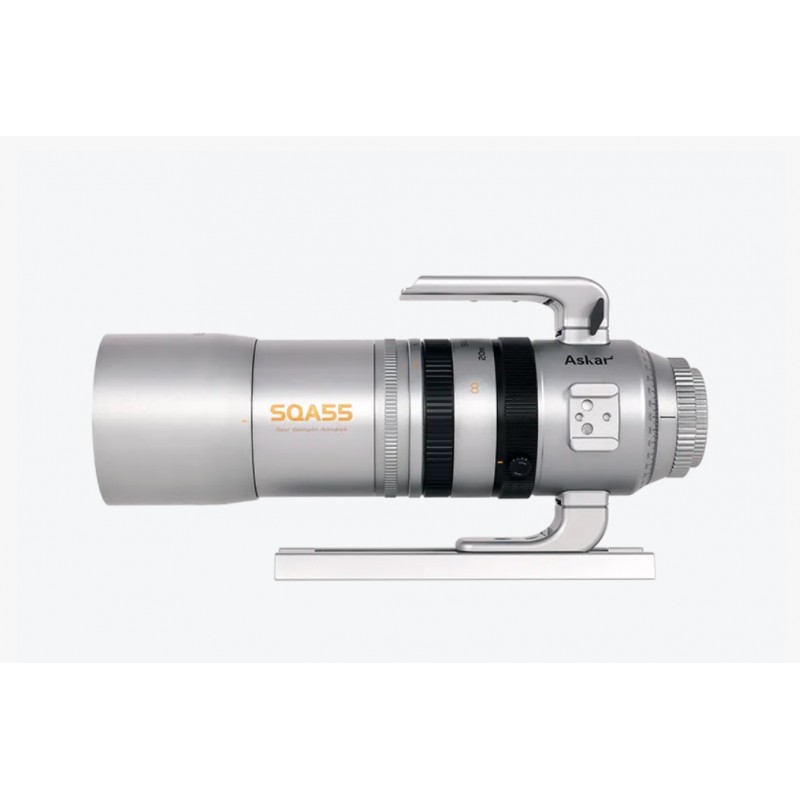
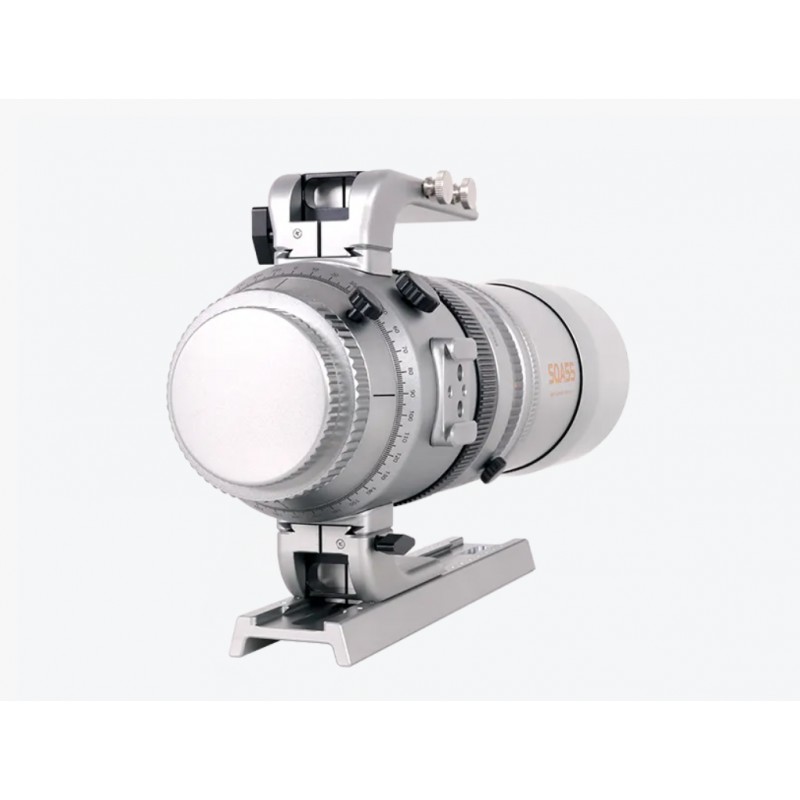
ASKAR REFRACTOR SQA55 PETZVAL
ASKAR REFRACTEUR SQA55
New product
ASKAR REFRACTOR SQA55 PETZVAL
Quintuplet air-spaced SD glass Petzval astrograph, suitable for both astrophotography and everyday photography.
Available immediately from the supplier. Please contact us for more information.
More info
ASKAR REFRACTOR SQA55 PETZVAL
ASTROGRAPH & CAMERA LENS | QUICK CHANGE
QUINTUPLET AIR-SPACED SD GLASS PETZVAL ASTROGRAPH

PETZVAL LENS STRUCTURE

SUPER FINE STAR POINT
Quintuplet air-spaced optical design including 1 piece of SD glass and 1 piece of ED glass.
The central star point has an RMS radius of less than 2.5 µm, and the corner star point is less than 4 µm, showing extremely fine star rendering.

DESIGN SPÉCIAL ET RÉVERSIBLE DU PARE-SOLEIL
Le pare-soleil est fixé par une rainure. Lorsqu’il n’est pas utilisé, il peut être rangé à l’envers sur le tube afin de réduire l’encombrement, et lorsqu’il est nécessaire, il suffit de le remettre sur l’objectif.

① FILTER THREAD
At the rear of the OTA, it is equipped with an M48 adapter including a built-in 2" filter thread for direct connection of 2" filters.
② QUICK RELEASE BASE POSITION
Four multifunction quick-release bases are located at the rear of the optical tube. They allow mounting various accessories for photography and astrophotography and are perfectly matched with SQA-series accessories.

VARIABLE-APERTURE LENS
The aperture range goes from F22 to F4.8, with a graded adjustment ring and engraved scale on the tube to prevent accidental movement and preserve settings.

CAMERA QUICK-RELEASE BASE
Quick-release buttons located on the top handle and bottom bracket allow manual conversion of the OTA into a camera lens quickly and without tools


HANDLE
The handle includes a finder base slot for attaching various astronomical accessories.
It also features a quick-release design and can be removed without tools

BRACKET
The bottom bracket features 1/4" and 3/8" threaded holes for attaching a tripod.

DOVETAIL PLATE
The plate is a standard 200 mm Vixen-style dovetail.
Its underside includes manual tightening screws and a quick-release knob, allowing assembly and removal without tools.

M67 FILTER THREAD
The front of the lens includes an M67 filter thread for attaching photographic filters, convenient for daily photography.
DIVERSIFIED PHOTOGRAPHY APPLICATIONS
The optical and mechanical design is optimized for both astronomical photography and everyday shooting.
It can connect to astronomy cameras for star capture or to DSLR/mirrorless cameras to be used as a photographic lens.

DUAL-SPEED FOCUSER DESIGN
Fine and coarse adjustments can be made independently.
Fine adjustment includes a central indicator point, ±1 mm focusing travel, and a locking screw.
Coarse adjustment features a reference focusing scale with imperial and metric markings.
For daily photography, focusing can be referenced against this scale.
The coarse adjustment wheel has MXL-type timing teeth for use with a belt-driven electronic focuser.
For astrophotography, the coarse adjustment can be rotated to the infinity mark, with reserve travel beyond infinity thanks to the self-flattened Petzval field correction.
With a connection distance between 50 mm and 60 mm, users can directly shoot once the OTA is in focus, making accessory attachment easy.
Coarse adjustment also includes a locking screw for individual fine-tuning.

DUAL ROTATOR DESIGN
The optical tube and 360° rotator have independent locking screws.
For daily shooting, the whole assembly can be rotated.
For astrophotography, the high-precision rotator can rotate independently and is engraved with a scale for angle setting and memorization.

OPTICAL PATH
The SQA55 uses a quintuplet air-spaced lens design including 1 SD glass element and 1 ED glass element.

MTF CHART
The Modulation Transfer Function (MTF) quantitatively describes image clarity, including resolution and contrast.
The vertical axis represents MTF value and the horizontal axis the distance from image center to the edge.
Across curves for low and high frequencies, even at the full-frame edge, sagittal and tangential deviations remain very small.
At low frequency (10 LP/mm), the value stays above 0.9, demonstrating the SQA55’s high resolution and sharpness.

RELATIVE ILLUMINATION
Relative Illumination (RI) represents combined light loss and attenuation at the frame edges.
The RI curve shows illumination (%) variation across the sensor.
Variations affect the image, with the vertical axis indicating illumination percentage and the horizontal axis distance from center to edge.
The SQA55 ensures high illumination of about 90% even at the full-frame edge, minimizing vignetting.

ZYGO OBJECTIVE TEST CHART
The ZYGO interferometer is internationally recognized as a reference instrument for testing optical lens quality.
Test results of the SQA55 demonstrate excellent star-forming performance.

GRAPHIQUE DE TEST ZYGO
L’interféromètre ZYGO est reconnu internationalement comme un instrument de référence pour tester la qualité des lentilles optiques.
Les résultats de test du SQA55 montrent une excellente qualité de formation des étoiles.


SQA55 AFkit Electronic Focuser Assembly Diagram
① Dévisser la vis de blocage du réglage grossier.
Aligner l’échelle de la bague de réglage grossier avec la marque “infini”.
Aligner la rainure centrale du support moteur EAF avec la base, puis le fixer à l’aide des deux vis de blocage d’origine du moteur de mise au point électronique.

② L’utilisateur sélectionne les vis en fonction de l’équipement et fixe le moteur de mise au point électronique sur la platine de connexion standard, sans besoin de serrer complètement.


